Diversification Rates: Measuring the Pulse of Evolution and Extinction
In the grand narrative of life on Earth, the number of species is constantly shifting. This movement is driven by two fundamental processes: the formation of new species and the disappearance of existing ones. In evolutionary biology, these dynamics are quantified through diversification rates.
Diversification is defined by two distinct metrics: the speciation rate (λ), which represents the rate at which new species emerge, and the extinction rate (μ), which tracks the rate at which living species vanish. These rates are typically reported on a per-lineage basis—meaning they measure the rate per lineage per unit of time—and are modeled using a birth–death process, a mathematical framework used to describe how populations grow and decline.
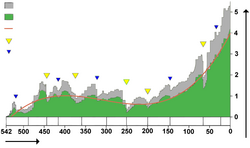
Key Facts
- Speciation (λ): The rate at which new species are formed.
- Extinction (μ): The rate at which existing species go extinct.
- Variability: Diversification rates fluctuate significantly across different time periods and throughout the tree of life.
- Estimation Methods: Rates can be calculated using fossil data, clade age/diversity data, or phylogenetic trees.
- Survivorship Bias: Estimates can be influenced by biases, such as the "Push of the past."
Methods for Estimating Diversification Rates
Because we cannot observe every evolutionary event in real-time, scientists rely on several specialized methodologies to reconstruct the history of life. These methods vary depending on the type of biological data available.
Fossil Time Series
One way to estimate rates is by analyzing time-series data from fossil occurrences. In an ideal scenario with perfect data, researchers would simply count every speciation and extinction event within a specific timeframe. However, the fossil record is inherently incomplete.
To account for this, sophisticated statistical methods are used to address the fact that some lineages may not have been sampled. These models consider the probability of a lineage being preserved, which often depends on environmental factors or physical traits, such as whether an organism possesses hard body parts that fossilize easily. It is important to note that many fossil-based estimates focus on higher-level taxonomic groups, such as genera (groups of closely related species) or families, rather than individual species.
Clade Age and Diversity
Another approach involves examining the ages and diversity levels of monophyletic clades—groups of organisms that consist of a single common ancestor and all its descendants. By looking at the relationship between the age of a clade and the number of species it contains, scientists can estimate the net diversification rate.
For example, if a clade is 100 million years old and contains 1,000 species, a formula derived from the birth–death model can be applied to estimate its diversification. When data for multiple clades are available, researchers can even attempt to separate the speciation and extinction rates.
Phylogenetic Trees
Phylogenetic trees, which are diagrams representing the evolutionary relationships between organisms, provide a powerful tool for estimation. For these calculations to be accurate, the trees must include branch lengths, which represent the amount of evolutionary change or time passed.
Using maximum likelihood and Bayesian statistical approaches, scientists can extract speciation and extinction rates from these trees. This method also allows researchers to test whether rates have changed over time or across different branches, helping to link evolutionary speed to specific environmental or biological factors.
Summary of Estimation Approaches
| Method | Primary Data Source | Key Considerations |
|---|---|---|
| Fossil Time Series | Fossil occurrences | Must account for incomplete sampling and fossilization bias. |
| Clade Age & Diversity | Age and species count of clades | Uses birth-death models to estimate net rates. |
| Phylogenetic Trees | Evolutionary trees with branch lengths | Uses statistical modeling (Bayesian/Maximum Likelihood). |
Frequently Asked Questions
What is the difference between speciation and extinction rates?
Speciation (λ) is the rate at which new species are created, while extinction (μ) is the rate at which existing species disappear from the biological record.
Why is the fossil record difficult to use for exact calculations?
The fossil record is incomplete. Not all organisms leave fossils, and even when they do, we may not have precise data on exactly when a species emerged or went extinct.
What is a monophyletic clade?
A monophyletic clade is a group that includes a single common ancestor and all of its descendants.
How do scientists use phylogenetic trees to study evolution?
By using trees that include branch lengths, scientists apply statistical methods to estimate rates of change and determine if those rates are influenced by specific environmental factors.
What does it mean to report rates on a per-lineage basis?
It means the rate is expressed as the number of events (speciation or extinction) occurring within a single lineage over a specific unit of time.