Fort Rosalie: The Colonial Stronghold of the Natchez Bluffs
Perched atop the bluffs overlooking the Mississippi River in present-day Natchez, Mississippi, Fort Rosalie stands as a silent witness to the turbulent shifts of power in colonial North America. Established in 1716, this site served as a strategic military and trading hub, transitioning through French, British, and Spanish control before becoming part of the early United States.
Key Facts
- Established: 1716 by the French under Jean-Baptiste Le Moyne, Sieur de Bienville.
- Architecture: A log-built fort featuring blockhouses and a protective stockade.
- Major Conflict: The Natchez Revolt of 1729, which led to the destruction of the original settlement.
- Name Changes: Renamed Fort Panmure under British rule (1763).
- Current Status: Part of the Natchez National Historical Park and a contributing property of a U.S. Historic district.
The French Era and the Natchez Revolt
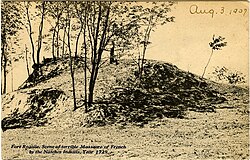
Fort Rosalie was born out of conflict. Following the First Natchez War in 1716, the French commander Jean-Baptiste Le Moyne de Bienville forced the Natchez people—the Indigenous inhabitants of the region—to provide the labor and materials necessary to build the fort. Located near the Natchez Grand Village, the fort became the center of French colonial government and a base for expanding tobacco plantations.
As French settlers encroached further into Natchez territory, tensions escalated throughout the 1720s. This friction culminated on November 29, 1729, in a coordinated revolt. Natchez fighters seized Fort Rosalie and destroyed much of the surrounding French settlement, killing most of the men and capturing hundreds of women and children.
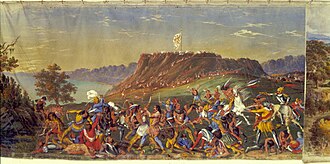
The French response was swift and brutal. In early 1730, French forces and their Choctaw allies recaptured the ruined fort. By 1731, continued military campaigns had effectively dismantled the Natchez as a unified political nation. Many survivors were enslaved and deported to Caribbean plantations, while others sought refuge with the Creek, Cherokee, and Chickasaw peoples. The French subsequently rebuilt the fort in the early 1730s.
Transition to British and Spanish Rule
The geopolitical landscape shifted in 1763 following the Treaty of Paris, which ended the Seven Years' War. France ceded the fort to Great Britain, which renamed the installation Fort Panmure in honor of William Maule, the Earl of Panmure.
British control lasted for 16 years until 1779, during the American Revolutionary War. Spain, having declared war on Great Britain, launched a campaign led by Bernardo de Galvez, the Governor of Spanish Luisiana. After Galvez conquered Baton Rouge, Fort Panmure capitulated without a fight. Spanish forces maintained control until 1798, intervening only in 1781 to suppress a rebellion by local settlers aligned with the British.
The American Era and Modern Legacy
In 1798, the United States assumed control of the territory. Natchez became the first capital of the newly established Mississippi Territory. However, the military utility of the fort declined, and the U.S. government abandoned the site in 1804.
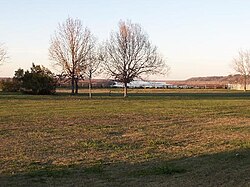
While the physical structures of the fort are gone, the city of Natchez grew around the foundation laid by Fort Rosalie. Today, the site is preserved as part of the Natchez National Historical Park, commemorating the complex interactions between European powers and Indigenous peoples.
| Period | Controlling Power | Name of Fort | Key Event |
|---|---|---|---|
| 1716–1763 | France | Fort Rosalie | Natchez Revolt (1729) |
| 1763–1779 | Great Britain | Fort Panmure | Cession via Treaty of Paris |
| 1779–1798 | Spain | Fort Panmure | Capture by Bernardo de Galvez |
| 1798–1804 | United States | N/A | Establishment of Mississippi Territory |
Frequently Asked Questions
Who built Fort Rosalie and why?
The fort was built in 1716 by the French under the direction of Jean-Baptiste Le Moyne de Bienville. It was established as a military and trading post to support French colonial expansion in North America.
What happened during the Natchez Revolt of 1729?
The Natchez people launched a coordinated attack on November 29, 1729, seizing Fort Rosalie and destroying much of the French settlement. This event led to a series of French reprisals that eventually ended the Natchez as a unified political nation.
Why was the fort renamed Fort Panmure?
After the British won the Seven Years' War, France ceded the territory via the Treaty of Paris in 1763. The British renamed the fort Fort Panmure after William Maule, the Earl of Panmure.
How did the Spanish acquire the fort?
During the American Revolutionary War, Spanish forces led by Governor Bernardo de Galvez conquered the region. Fort Panmure capitulated in 1779 following the fall of Baton Rouge.
What can be seen at the site today?
The fort was abandoned by the United States in 1804. Today, the location is part of the Natchez National Historical Park, where visitors can learn about the site's colonial history.