Fords: The History and Engineering of River Crossings
A ford is a shallow section of a river or stream that allows people, animals, or vehicles to cross by wading or driving through the water. While some fords occur naturally due to the geography of the riverbed, others are intentionally constructed to facilitate travel. Unlike bridges, fords are simple, cost-effective crossings, though they are subject to the whims of nature and can become impassable during floods or heavy rain.
The term "ford" serves as both a noun, describing the physical location of the crossing, and a verb, describing the act of crossing the water.
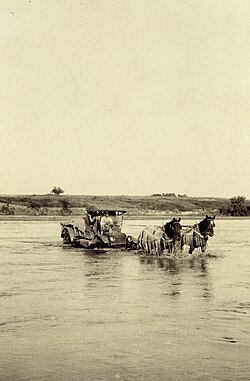
Key Facts
- Cost: Significantly cheaper to implement than bridges.
- Capacity: Can often support more weight than a bridge, provided the riverbed is stable.
- Risk: Prone to flooding, making them unreliable during adverse weather.
- Modern Use: Primarily found on minor roads, paths, or specialized rallying courses.
- Global Presence: Common in the UK (over 2,000 fords) and historically integrated into New Zealand's state highways.
Engineering and Design
Because fords require little to no design effort and no falsework (temporary supports used during construction), they are the most basic form of river crossing. However, natural riverbeds may not always support heavy vehicles. To address this, engineers sometimes install a submerged concrete floor to provide a stable surface.
To improve safety, these constructed fords may include:
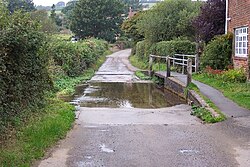
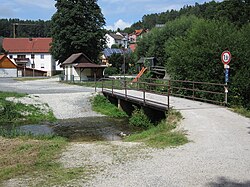
- Curbs (kerbs): Placed on the downstream side to prevent vehicles from slipping off the slab, which can become slippery due to algae growth.
- Depth Markers: Posts that indicate the current water level so drivers can determine if it is safe to cross.
- Footbridges: Adjacent bridges that allow pedestrians to cross "dryshod" (without getting their feet wet).
A related structure is the low-water crossing. This is essentially a low bridge that allows for dry passage when water levels are low but functions as a ford when high water covers the deck.
Watersplashes and Specialized Crossings
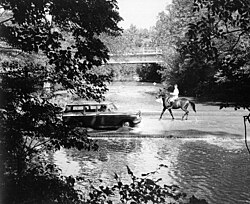
In certain regions, a road that runs below the water level of a stream is known as a watersplash. These are common in the United Kingdom—with notable examples in Brockenhurst, Wookey, and Swinbrook—and are frequently used in rally racing. Some enthusiasts even track these features on dedicated websites.
Watersplashes are found globally, including in Canada, Italy, South Africa, Finland, and on Tennessee backroads, where they are locally called "underwater bridges." In Israel and former British mandate areas, these were sometimes referred to as "Irish bridges," a term linked to the Anglo-Irish war.
The Influence of Fords on Geography and Language
Because fords were critical nodes on ancient trade routes, many towns grew around them. This is reflected in the etymology of countless place names across Europe and beyond.
| Language/Root | Term | Example Place Names |
|---|---|---|
| English | Ford / Wade | Oxford, Hertford, Stafford, Biggleswade |
| German | Furt | Frankfurt, Schweinfurt, Klagenfurt |
| Dutch | Voorde | Amersfoort, Zandvoort, Vilvoorde |
| Latin | Traiectum | Utrecht, Maastricht, Dordrecht |
| Afrikaans | Drift | Rorke's Drift, Velddrift |
| Slavic | Brod | Slavonski Brod, Makedonski Brod |
| Old Norse | Vað | Wath-in-Nidderdale, Yanwath |
Strategic Military Importance
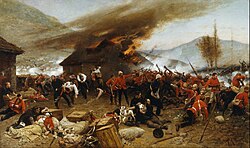
Historically, fords were high-value strategic targets. Armies positioned themselves near river crossings to defend their territory or launch attacks. Consequently, many famous battles were fought at fords, ranging from the Battle of Fulford (1066) in England to the Battle of Rorke's Drift (1879) in South Africa and the Battle of Davydiv Brid (2022) in Ukraine.
Frequently Asked Questions
What is the difference between a ford and a bridge?
A ford is a shallow crossing where the traveler moves through the water, whereas a bridge is a structure that carries the traveler over the water. Fords are cheaper and can support more weight but are susceptible to flooding.
What is a "watersplash"?
A watersplash is a specific type of ford or stretch of road that runs below the water level of a stream, often creating a splash as vehicles pass through. They are popular in rally racing.
Why are so many city names derived from the word "ford"?
Fords were essential for trade and travel before the widespread construction of bridges. Towns naturally developed at these crossing points because they were the only viable places for people and goods to cross rivers.
Are fords safe for modern cars?
Many modern fords are shallow enough for cars, but they can be dangerous during heavy rain. In the UK, the AA notes that many flood-related vehicle breakdowns occur at fords. Drivers should check depth markers before attempting to cross.