Forced Labour: History, Forms, and Modern Global Impact
Forced labour, also known as unfree labour, refers to any work relationship where individuals are compelled to work against their will. This coercion is typically enforced through threats of violence, detention, destitution, or extreme hardship directed at the worker or their family members. While often associated with historical atrocities, forced labour remains a critical global issue in the modern era.
The scope of unfree labour is broad, encompassing everything from chattel slavery and serfdom to penal labour and modern human trafficking. However, international standards provide specific boundaries. Under the International Labour Organization (ILO) Forced Labour Convention of 1930, work performed as part of compulsory military service for purely military purposes is not classified as forced labour.
Key Facts
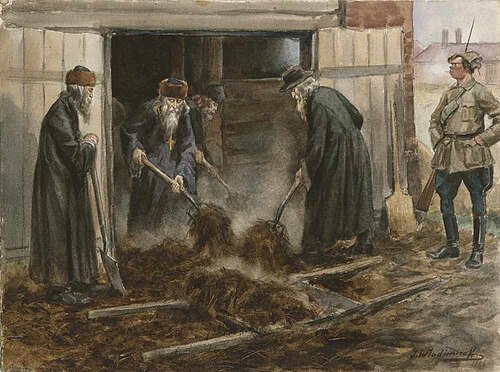
- Global Scale: The ILO estimates that at least 27.6 million people are victims of forced labour on any given day.
- Private vs. State: 86% of forced labour is imposed by private actors, while 14% is state-imposed.
- Economic Impact: Global profits from forced trafficked labour exploited by private agents are estimated at US$44.3 billion annually.
- Vulnerability: Adult migrant workers are more than three times more likely to experience forced labour than non-migrant workers.
- Industrialized Nations: Over US$15 billion of the profits from trafficked labour originate in industrialized countries.
Forms of Unfree Labour
Slavery and Chattel Slavery
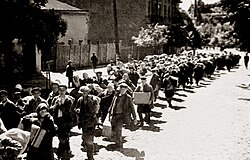
Chattel slavery is one of the most extreme forms of unfree labour. In this system, people are legally regarded as property for life, meaning they can be bought, sold, or transferred. Typically, the enslaved person receives no personal benefit from their work. A prominent historical example is the transatlantic slave trade (16th–19th centuries), where 10 to 12 million Black Africans were forcibly transported to the Americas via the Middle Passage.
While chattel slavery was hereditary and systematized in the Americas, other systems like the trans-Saharan and Indian Ocean slave trades varied in legal structure and scale. In Japan, while slavery was officially banned in the late 16th century, indentured labour and penal forced labour persisted.
Serfdom and Mandatory Services
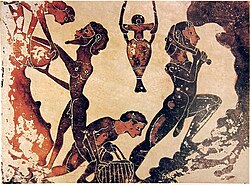
Other forms of unfree labour include serfdom and various mandatory services based on social status. Historically, this included the corvée (unpaid labour exacted by a state) and vetti-chakiri. In some industrial contexts, the truck system was used, where workers were paid in goods rather than cash—goods that were often undesirable or difficult to exchange. Many countries eventually passed Truck Acts to mandate cash payments.
Penal Labour and Labour Camps
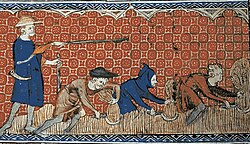
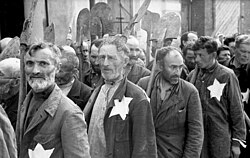
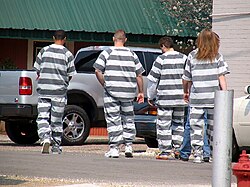
Penal labour involves the use of prisoners for work. In the 20th century, this expanded into massive systems of political repression. Notable examples include the Nazi concentration camps, the Soviet Gulag, and the forced labour systems of the Empire of Japan during the Pacific War, such as the construction of the Burma Railway.
During World War II, approximately 12 million forced labourers (including many Polish and Soviet citizens known as Ost-Arbeiter) were used in the German war economy. Over 2,000 German companies, including Siemens, Volkswagen, and Bayer, profited from this slave labour. In Asia, the Japanese military mobilised over 10 million Chinese workers and between 4 and 10 million romusha (manual labourers) in Java, the latter of whom suffered a death rate of 80%.
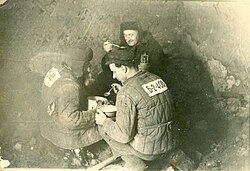
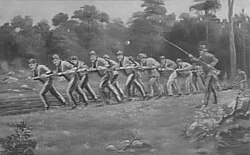
Prison labour also took the form of transportation; for instance, over 165,000 convicts were sent to Australian colonies between 1788 and 1868. In more recent history, China's laogai (labour reform) system is estimated to have processed over 50 million people in the last 50 years.
Modern Perspectives and Legal Frameworks
Economic theories regarding unfree labour have evolved. In the 1960s and 70s, some argued that unfree labour was an obstacle to capitalist growth. However, by the 1980s, evidence from India and Latin America suggested that agribusiness and commercial farming often reintroduced or reproduced unfree relations to maximize profit.
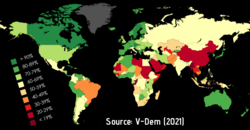
Today, the ILO combats these practices through several fundamental conventions, including the Abolition of Forced Labour Convention (C105). Despite these laws, private exploitation remains dominant, with 63% of forced labour occurring in non-sexual sectors and 23% in commercial sexual exploitation.
Certain forms of civil conscription are still permitted under the 1930 Convention. Examples include the "Bevin Boys" in the UK (1943–1948) who were conscripted for coal mines, and temporary civil mobilisations in Belgium, Portugal, and Greece to maintain public services during economic crises.
Summary of Forced Labour Types
| Type | Primary Characteristic | Historical/Modern Example |
|---|---|---|
| Chattel Slavery | Human beings treated as legal property | Transatlantic Slave Trade |
| Penal Labour | Work imposed as punishment or detention | Soviet Gulags, Chinese Laogai |
| Debt Bondage | Labour pledged to repay a debt | Modern trafficking in agribusiness |
| Corvée | Unpaid labour required by the state | Pre-modern state infrastructure projects |
| Civil Conscription | Mandatory service for national interest | UK Bevin Boys (coal mining) |
Frequently Asked Questions
What is the difference between forced labour and slavery?
While slavery is a form of forced labour, it specifically involves the ownership or total control of one person by another. Forced labour is a broader term that includes any work performed under threat, including penal labour or debt bondage, where the person may not be legally "owned" but is not free to leave.
Is military service considered forced labour?
No. According to the ILO Forced Labour Convention of 1930, work or service required by compulsory military service laws for purely military purposes is excluded from the definition of forced labour.
Who are the primary perpetrators of forced labour today?
The majority of forced labour is now imposed by private actors (86%), with a significant portion occurring in non-sexual commercial sectors and commercial sexual exploitation. State authorities account for the remaining 14%.
How does the "truck system" relate to unfree labour?
The truck system is an exploitative payment method where workers are paid in goods instead of cash. Because these goods are often overpriced or non-exchangeable, it traps workers in a cycle of dependency and poverty, effectively creating an unfree labour relationship.
What are the economic drivers of modern forced labour?
Modern forced labour is often driven by the desire for high profits through the reduction of labour costs. This is particularly evident in agribusiness, commercial fishing, and industrialised nations where trafficked victims are exploited for cheap labour.