Force: The Fundamental Principles of Classical and Modern Physics
In the simplest terms, a force is a push or a pull exerted on an object. Whether it is the invisible grip of gravity holding us to the Earth or the magnetic attraction of a refrigerator magnet, forces are the primary drivers of motion. In physics, a force is any influence that can cause a mass to accelerate, changing its velocity or direction.
The study of force has evolved from ancient philosophical observations to the highly precise mathematical frameworks of quantum mechanics and relativity. By understanding how forces interact, scientists can predict everything from the trajectory of a falling ball to the decay of subatomic particles.
Key Facts
- SI Unit: The standard unit of force is the newton (N), defined as 1 kg·m/s².
- Core Formula: In classical mechanics, force is calculated as F = ma (mass times acceleration).
- Fundamental Interactions: There are four primary forces in nature: strong, electromagnetic, weak, and gravitational.
- Mediators: In the Standard Model of particle physics, forces are transmitted via particles called gauge bosons.
- Equilibrium: An object is in equilibrium when the net force acting upon it is zero.
The Evolution of Force Concepts
Pre-Newtonian Views
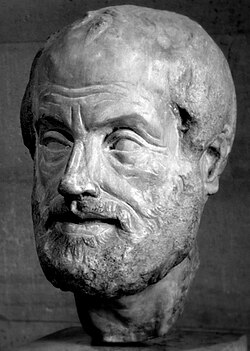
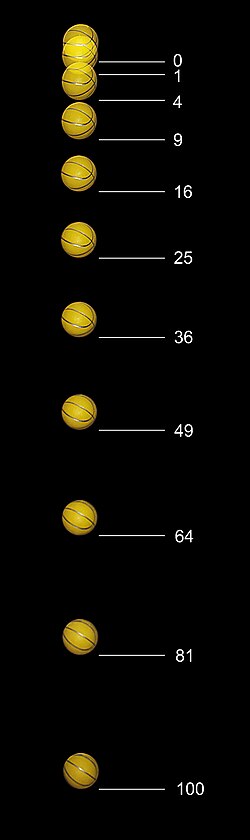
Early understandings of motion were dominated by Aristotle, who viewed force as the cause of "unnatural motion." This perspective persisted for centuries until Galileo Galilei identified inherent contradictions in Aristotle's descriptions, paving the way for a more mathematical approach to dynamics.

Newtonian Mechanics
Sir Isaac Newton revolutionized physics in 1689 with his Principia. He established three fundamental laws of motion that form the basis of classical mechanics. While Newton used geometrical language, modern physics expresses these laws using vectors and differential calculus.
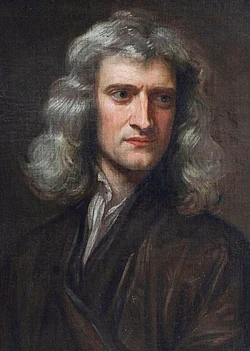
Newton's laws describe how forces affect motion: the first law deals with inertia, the second defines the relationship between force, mass, and acceleration, and the third establishes that every action has an equal and opposite reaction.
Combining Forces and Equilibrium
Rarely does a single force act on an object. Instead, multiple forces are often present, which are combined using vector addition to find the net force.
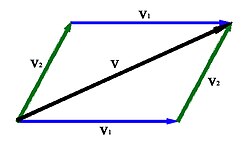
To analyze these interactions, physicists use free body diagrams, which isolate an object and represent all acting forces as vectors. This allows for the resolution of forces into components to determine the object's resulting motion.
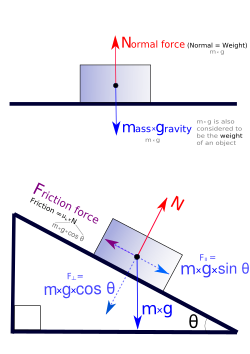
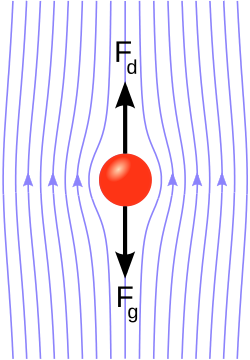
When the sum of all forces acting on an object is zero, the object is in equilibrium. This can be static equilibrium (the object remains at rest) or dynamic equilibrium (the object moves at a constant velocity). A classic example of dynamic equilibrium is terminal velocity, where the drag force of air resistance equals the force of gravity.
Common Types of Forces in Classical Mechanics
Classical mechanics identifies several distinct types of forces that govern everyday physical interactions:
- Gravitational Force: The attraction between two masses.
- Electromagnetic Force: The interaction between electrically charged particles.
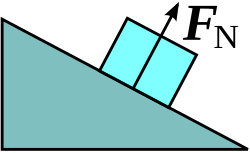
- Normal Force (FN): The support force exerted by a surface perpendicular to the object resting on it.
- Friction: The force resisting the relative motion of solid surfaces.
- Tension: The pulling force transmitted through a string, rope, or cable.
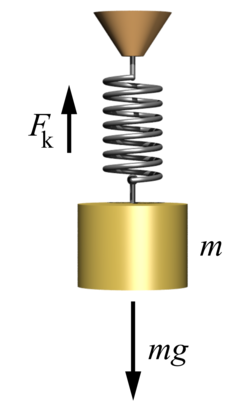
- Spring Force (Fk): The restorative force that responds to the load or displacement of a spring.
- Centripetal Force: The force that keeps an object moving in a circular path.
Modern Physics and Fundamental Interactions
As science progressed into the 20th century, Albert Einstein's theory of relativity refined our understanding of gravitation and inertia, particularly for objects moving near the speed of light. Simultaneously, quantum mechanics led to the development of the Standard Model.
The Standard Model posits that forces are not just "pushes" but are mediated by the exchange of gauge bosons. The four fundamental interactions are categorized by their strength and the particles they affect.

| Interaction | Acts On | Mediating Particle | Relative Strength (Quarks) |
|---|---|---|---|
| Strong | Color charge (Quarks, Gluons) | Gluons (g) | 1 |
| Electromagnetic | Electric charge | Photon (γ) | 1/137 |
| Weak | Flavor (Quarks, Leptons) | W, Z bosons | 10-6 |
| Gravitational | Mass-Energy | Graviton (theoretical) | 10-39 |
Research in the 1970s and 1980s revealed that the electromagnetic and weak forces are actually manifestations of a single electroweak interaction.
Derived Concepts and Advanced Applications
Rotation and Torque
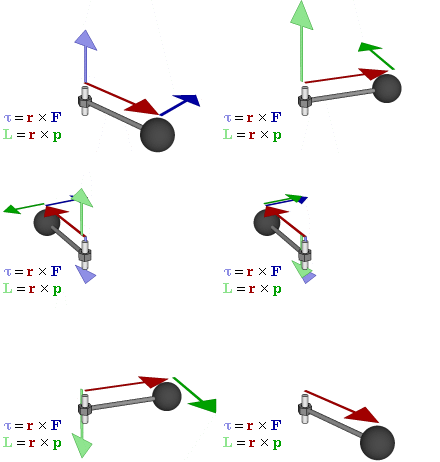
When a force causes an object to rotate, it creates torque. This relationship involves the force vector, the momentum of the system, and the axis of rotation.
Yank
In specialized fields like biomechanics, the term yank is used to describe the rate of change of force over time.
Gravity Detection
Modern technology has allowed for the extreme precision of force detection. Instruments such as GRAVITY are used to probe gravitational forces with immense accuracy.
![Instruments like GRAVITY provide a powerful probe for gravity force detection.[73]](/images/50/aa/50aabeb2c173d8bde76359f750342cf6eaa722324783b657960625f0d1f28699.jpg)
Frequently Asked Questions
What is the difference between mass and force?
Mass is a measure of the amount of matter in an object and its resistance to acceleration (inertia). Force is the actual push or pull exerted on that mass to cause it to move or change direction.
How is a Newton defined?
One newton (N) is the amount of force required to accelerate a mass of one kilogram at a rate of one meter per second squared (1 kg·m/s²).
What happens when an object reaches terminal velocity?
Terminal velocity occurs when the force of air resistance (drag) increases to the point where it exactly balances the force of gravity. At this point, the net force is zero, and the object stops accelerating, continuing at a constant speed.
What are gauge bosons?
Gauge bosons are force-carrying particles in the Standard Model of particle physics. They act as the messengers that transmit fundamental forces between matter particles, such as photons for electromagnetism and gluons for the strong nuclear force.
What is the difference between static and dynamic equilibrium?
Static equilibrium occurs when an object is at rest and the net force is zero. Dynamic equilibrium occurs when an object is moving at a constant velocity (constant speed in a straight line) and the net force is zero.