Flanders: The Heart of the Low Countries
Flanders (Dutch: Vlaanderen) is a vibrant community and region in the northern part of Belgium. Characterized by its flat landscapes, fertile soil, and a rich tapestry of artistic and political history, Flanders serves as a critical economic engine for Europe. While it accounts for only 45% of Belgium's total land area, it is home to more than half of the country's population, reflecting its high urban density and industrial importance.
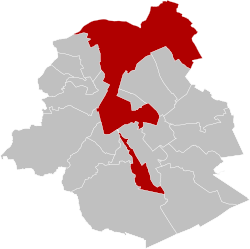
Geographically, Flanders encompasses the entire Belgian coastline along the North Sea. It shares borders with the French department of Nord to the southwest, the Dutch provinces of Zeeland, North Brabant, and Limburg to the north and east, and the Walloon provinces of Hainaut, Walloon Brabant, and Liège to the south. A unique administrative feature is the Brussels-Capital Region, an officially bilingual enclave situated within the Flemish Region.
![A Flemish lady and gentleman in the year 1400, illustrated in the manuscript "Théâtre de tous les peuples et nations de la terre avec leurs habits et ornemens divers, tant anciens que modernes, diligemment depeints au naturel". Painted by Lucas d'Heere in the 2nd half of the 16th century. Preserved in the Ghent University Library.[10]](/images/0f/3d/0f3d13a7081915f6ab1c251d581709c6ad455738a766c2305f0b3fe30036c331.jpg)
Key Facts
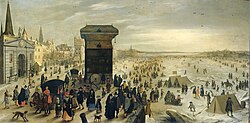
- Official Language: Dutch.
- Population: 6,821,770 (as of January 1, 2024).
- Total Area: 13,626 km².
- GDP: €367.496 billion (2024).
- Major Cities: Antwerp, Ghent, Bruges, Leuven, Aalst, and Hasselt.
- Government: Led by the Flemish Government and the Flemish Parliament.
Historical Evolution
Early Power and the Middle Ages
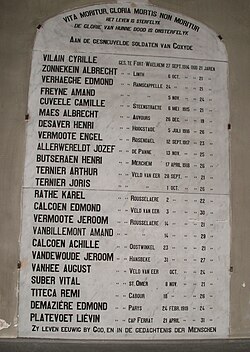
Flanders rose to prominence starting in the 12th century. Its autonomous urban communes became powerful enough to resist French annexation, most notably during the Battle of the Golden Spurs on July 11, 1302, near Kortrijk. However, this independence was short-lived, and the region eventually fell under the indirect influence of the French Crown. The subsequent centuries brought challenges, including the Black Death of 1348 and the Anglo-French Hundred Years' War, which disrupted trade and shifted the woolen industry toward England.
From the Southern Netherlands to Independence
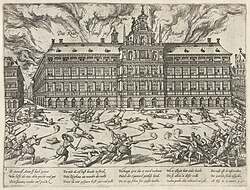
Between 1581 and 1795, the region was part of the Southern Netherlands. Following a period of French and Napoleonic rule, it was integrated into the United Kingdom of the Netherlands in 1815. Tensions soon grew between the Roman Catholic south and the Protestant north, as well as between different political ideologies. This culminated in the Belgian Revolution of 1830, sparked by a performance of the opera La Muette de Portici in Brussels.
By 1831, the Kingdom of Belgium was recognized by major European powers, and Flanders became a core part of this new constitutional monarchy. The Treaty of London (1839) eventually finalized the borders, though Belgium lost the eastern halves of Limburg and Luxembourg.
The Flemish Movement and Autonomy
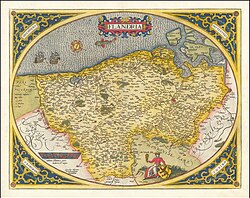
The late 19th and early 20th centuries saw the rise of the Flemish Movement, which sought greater linguistic and cultural recognition. Key milestones included the introduction of Dutch in public secondary schools in 1873 and the legal equalization of Dutch and French in 1898. The first Flemish university opened in 1930, further cementing the region's cultural identity.
In the 21st century, the push for autonomy intensified. The 2007–2011 political crisis highlighted a growing desire for Flemish self-governance, with parties like the New Flemish Alliance (N-VA) gaining significant influence in the Flemish Parliament.
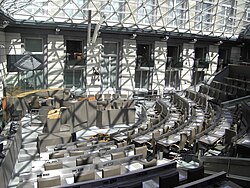
Geography and Administration

The Flemish Diamond and Urbanization
Flanders is highly urbanized and sits within the "Blue Banana," a corridor of high population density stretching across Western Europe. The most densely populated area is known as the Flemish Diamond, an agglomeration surrounding Mechelen and connecting the cities of Brussels, Antwerp, Ghent, and Leuven.
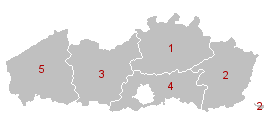
Administrative Divisions
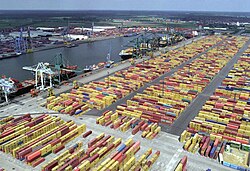
The region is divided into five provinces, each with its own capital and administrative arrondissements. The Port of Antwerp stands as a global logistics hub and is the second-largest port in Europe.
| Province | Capital | Population | Area (km²) | Density (per km²) |
|---|---|---|---|---|
| Antwerp | Antwerp | 1,926,522 | 2,876 | 652 |
| East Flanders | Ghent | 1,572,002 | 3,007 | 509 |
| Flemish Brabant | Leuven | 1,196,773 | 2,118 | 549 |
| West Flanders | Bruges | 1,226,375 | 3,197 | 376 |
| Limburg | Hasselt | 900,098 | 2,427 | 363 |
Economy and Infrastructure
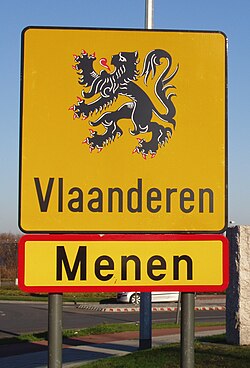
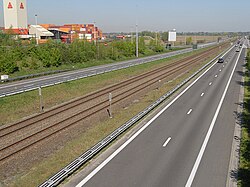
Flanders boasts a high-productivity economy with a GDP per capita significantly above the EU average. Its economic strength is driven by export-oriented industries and world-class infrastructure, such as the A12 motorway and the massive Port of Antwerp. The region transitioned from the Belgian franc to the euro in 2002.
Culture and Society
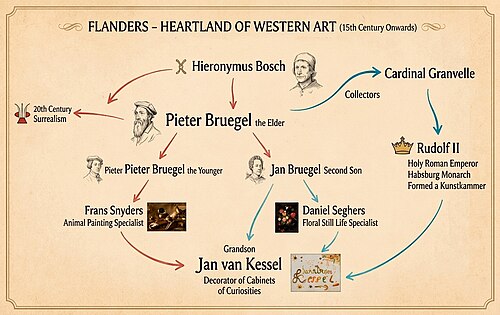
Flanders is widely regarded as a heartland of Western art, famous for the Flemish Primitives and a long tradition of painting and sculpture. The region's identity is deeply tied to the Dutch language, though Brussels remains a complex bilingual zone where approximately 51% of respondents in a 2006 survey claimed to be bilingual.
While there is a minority movement advocating for full independence, the majority of the population remains proud of their Belgian identity. Approximately 75% of residents oppose the dissolution of Belgium, with students showing the highest levels of national pride (90%).

Frequently Asked Questions
What is the official language of Flanders?
The official language of Flanders is Dutch.
What is the "Flemish Diamond"?
The Flemish Diamond is the highly urbanized and densely populated area formed by the agglomerations of Brussels, Antwerp, Ghent, and Leuven, surrounding the city of Mechelen.
How does the population of Flanders compare to the rest of Belgium?
Despite occupying only 45% of Belgium's territory, Flanders is home to 58% of the Belgian population, totaling over 6.8 million people as of 2024.
What was the significance of the Battle of the Golden Spurs?
Fought on July 11, 1302, this battle saw autonomous Flemish urban communes defeat a French attempt at annexation, becoming a symbol of Flemish identity.
Which is the largest city in Flanders?
Antwerp is the largest city in Flanders, with a population exceeding 500,000 citizens.