Field Research: Methods and Applications Across Scientific Disciplines
Field research, often referred to as fieldwork or field studies, is the process of collecting raw data outside of a controlled environment such as a laboratory, library, or traditional workplace. By stepping away from the artificial constraints of a lab, researchers can observe phenomena as they occur in their natural settings, providing a level of authenticity and context that is impossible to replicate indoors.
The methodologies employed in field research vary significantly depending on the discipline. While a biologist might spend weeks silently observing animal behavior in a rainforest, a social scientist might immerse themselves in a community to conduct interviews and study social structures. Despite these differences, the core objective remains the same: to gather empirical evidence from the real world.
Key Facts
- Definition: The collection of raw data in natural environments rather than controlled settings.
- Scope: Used across diverse fields including biology, anthropology, economics, sociology, and management.
- Core Tool: Field notes are essential for recording observations, methodological shifts, and personal reflections.
- Goal: To contrast observed behavior with theoretical understandings and capture the influence of environmental contexts.
The History and Evolution of Fieldwork
Field research has a deep history, particularly within cultural anthropology. Early pioneers like Alfred Radcliffe-Brown (1910) and Bronisław Malinowski (1922) established the foundational models for immersive study. Historically, this often involved studying "primitive" cultures, though modern fieldwork encompasses any circumscribed area of study, from industrial settings to education systems.
In other disciplines, the approach has evolved from rigid analysis to contextual understanding. For example, in ethnomusicology, early scholars focused on analyzing music as a scientific object outside its context. By the mid-20th century, researchers like George Herzog began emphasizing the importance of extended residency and the social function of music, shifting the field toward a more holistic, cultural approach.
Conducting Field Research: Documentation and Tools
A critical component of any field study is the maintenance of field notes. These records ensure that raw observations are preserved and that the researcher's process is transparent. Field notes are generally categorized into four distinct types:
| Note Type | Brief Description |
|---|---|
| Jot Notes | Quick keywords or phrases recorded during active observation. |
| Field Notes Proper | Detailed descriptions of physical context, participants, behavior, and nonverbal communication. |
| Methodological Notes | Reflections and new ideas on how to refine the research project. |
| Journals and Diaries | Personal reactions, frustrations, and assessments of life in the field. |
Field Research Across Disciplines
Biology and Ecology
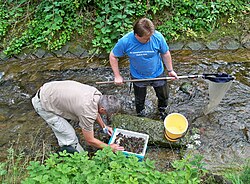
In biological sciences, field research is indispensable. It typically involves studying free-living wild animals in their natural habitats without altering their behavior or environment. This research extends beyond animals to include the study of plants (plantae), fungi, microbes, and the complex ecological interactions between different species.
Economics and Consumer Research
Economic field research aims to look beneath the surface of prevailing theories to see how behavior actually manifests. Nobel laureates Elinor Ostrom and Oliver Williamson have advocated for mixed methods, arguing that "top-down" policy solutions often fail because they ignore local institutional contexts. Ostrom specifically combined field case studies with lab work to challenge assumptions about how groups cooperate to solve common pool problems.
In the business world, field research is applied as a form of anthropology. Consumer marketing research uses these techniques to immerse researchers in the target market's environment to better understand purchasing behaviors.
Management and Sociology
In management, Henry Mintzberg revolutionized the field by moving from "prescriptive" schools (which told managers what they should do) to a "descriptive" school (which observed what managers actually do). His research revealed that a manager's job is often fragmented, irregular, and reactive rather than a series of orderly decisions.
In sociology, Pierre Bourdieu popularized intensive fieldwork. His decade of work as a participant-observer in Algerian society, specifically studying the Kabyle people, demonstrated the power of combining different research strategies to interpret complex social clashes.
Other Applications
- Law: Researchers study how legal systems function in practice, accounting for social and cultural influences.
- Public Health: Field research often takes the form of epidemiology, gathering data on pathogens, vectors, and social contacts during epidemics.
Frequently Asked Questions
What is the difference between field research and laboratory research?
Field research takes place in the natural environment where the subject lives or operates, whereas laboratory research occurs in a controlled setting where variables can be manipulated by the researcher.
What are "jot notes" in fieldwork?
Jot notes are brief keywords or phrases written down quickly while the researcher is in the field to serve as reminders for more detailed entries later.
How does field research benefit economic policy?
It allows policymakers to understand local systems of knowledge and institutional contexts, preventing the failure of "cookie-cutter" or top-down solutions that do not fit the specific needs of a community.
Who are some notable figures in anthropological fieldwork?
Key figures include Bronisław Malinowski, Margaret Mead, Claude Lévi-Strauss, and Alfred Reginald Radcliffe-Brown, who helped set the standards for ethnographic study.
What did Henry Mintzberg discover about management through fieldwork?
He found that management is not a sequential or orderly process, but is instead fragmented and characterized by a continuous series of reactions to internal and external requests.