Field Marshal Viscount Allenby: The Commander of the Sinai and Palestine Campaign
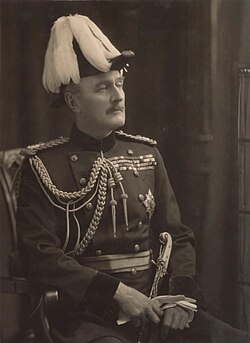
Field Marshal Edmund Henry Hynman Allenby, 1st Viscount Allenby, was a towering figure in the British Army and a pivotal imperial governor. While perhaps best known for his strategic triumphs in the Middle East during the First World War, Allenby's career spanned decades of conflict, from the rugged terrains of South Africa to the complex political landscape of post-war Egypt.
Known for his imposing physical presence and a volatile temperament that earned him the nickname "The Bull," Allenby combined rigorous discipline with a capacity for large-scale operational planning. His leadership of the Egyptian Expeditionary Force (EEF) fundamentally altered the map of the Middle East by dismantling Ottoman control in Palestine.
Key Facts
- Full Name: Edmund Henry Hynman Allenby, 1st Viscount Allenby.
- Primary Achievement: Led the Egyptian Expeditionary Force (EEF) to victory in the Sinai and Palestine Campaign.
- Notable Conquests: Captured Jerusalem in December 1917 and Damascus in 1918.
- Political Role: Served as the High Commissioner in Egypt from 1919 to 1925.
- Military Rank: Attained the highest rank of Field Marshal.
- Nickname: "The Bloody Bull" or "The Bull," referring to his explosive temper and barrel-chested frame.
Early Life and Military Beginnings
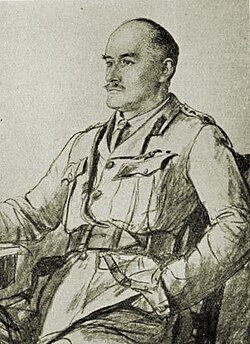
Born on April 23, 1861, in Brackenhurst, Nottinghamshire, Allenby was educated at Haileybury College. Interestingly, he did not initially seek a military career, attempting first to enter the Indian Civil Service. After failing that entry exam, he turned to the Royal Military College, Sandhurst, and was commissioned as a lieutenant in the 6th (Inniskilling) Dragoons on May 10, 1882.
His early service took him to South Africa for the Bechuanaland Expedition (1884–85). By 1897, he had risen to the rank of major, serving as a brigade major in Ireland before the outbreak of the Second Boer War.
The Second Boer War
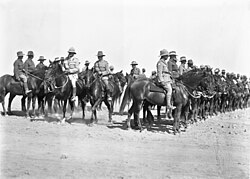
The Second Boer War served as a proving ground for Allenby's cavalry leadership. He participated in several key actions, including those at Colesberg, Klip Drift, and Dronfield Ridge in 1900. His capabilities were further demonstrated during the defeat of Boer General Jan Smuts at Tevreden in October 1900.
By the end of the conflict, Allenby had reached the rank of local colonel. Lord Kitchener praised him as a "popular and capable Cavalry Brigadier," and he was appointed a Companion of the Order of the Bath (CB) in 1902 for his distinguished service.
Interwar Years and the Rise of "The Bull"
Returning to Britain, Allenby commanded the 5th Royal Irish Lancers and later the 4th Cavalry Brigade. His expertise in mobile warfare led to his appointment as inspector of cavalry in 1910. It was during this period that his reputation for sudden, bellowing outbursts of rage became well-known, cementing his nickname as "The Bull." Standing 6 feet 2 inches tall with a powerful build, he was a formidable presence to both his allies and subordinates.
First World War: From the Western Front to Palestine
The Western Front
During the early stages of the First World War, Allenby served on the Western Front, participating in the Battle of Mons and the First and Second Battles of Ypres. In 1917, he led the Third Army during the Battle of Arras. However, the offensive devolved into costly trench warfare, leading to a loss of confidence from the BEF commander, Sir Douglas Haig. Although promoted to full general for his service, Allenby was replaced in June 1917.
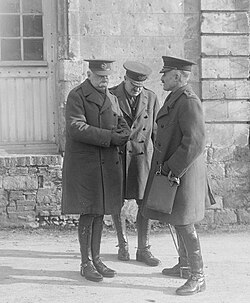
The Sinai and Palestine Campaign
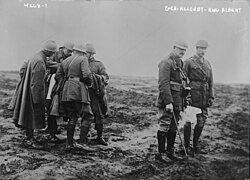
Allenby's career saw a dramatic resurgence when he was appointed to lead the Egyptian Expeditionary Force (EEF). His objective was to push the Ottoman Empire out of Palestine. Despite requesting more reinforcements than were available, Allenby strategically managed his forces to advance from the Gaza–Beersheba line toward Jerusalem.
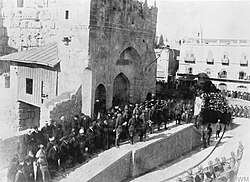
The campaign was marked by several decisive victories, including the Battle of Beersheba and the Battle of Mughar Ridge. In a gesture of respect for the Holy City, Allenby entered Jerusalem on foot on December 11, 1917, rather than on horseback.
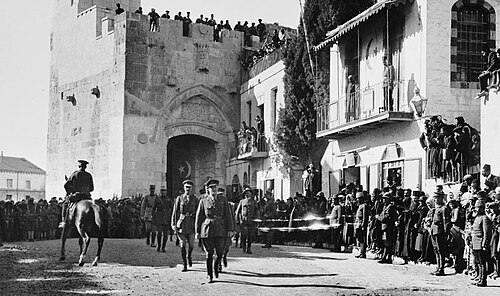
Following the fall of Jerusalem, Allenby continued his offensive, culminating in the Battle of Megiddo and the capture of Damascus. These victories effectively broke the Ottoman hold on the region, though the German spring offensive on the Western Front eventually forced him to divert 60,000 men away from the Middle East in 1918.
High Commissioner in Egypt
From October 1919 to June 1925, Allenby served as the High Commissioner in Egypt. His tenure was marked by intense political instability and riots. While he initially took a hard line—deporting nationalist leader Zaghlul and executing rioters—he later advocated for the end of martial law and the drafting of an Egyptian Constitution.
His term ended on a contentious note following the assassination of Sir Lee Stack, the Sirdar of the Egyptian Army. Allenby's draconian response, which included a £500,000 fine imposed on the Egyptian government, led to his resignation in May 1925.
Summary of Military and Political Career
| Period | Role/Conflict | Key Outcome/Achievement |
|---|---|---|
| 1882–1899 | Early Service | Commissioned in 6th (Inniskilling) Dragoons; Bechuanaland Expedition. |
| 1899–1902 | Second Boer War | Promoted to local colonel; awarded Companion of the Order of the Bath. |
| 1914–1917 | Western Front (WWI) | Commanded Third Army at the Battle of Arras. |
| 1917–1919 | Sinai and Palestine Campaign | Captured Jerusalem and Damascus; defeated Ottoman forces. |
| 1919–1925 | High Commissioner in Egypt | Managed transition to limited self-government; oversaw constitutional drafting. |
Legacy and Death
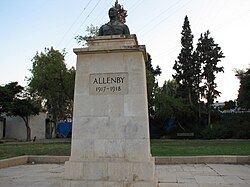
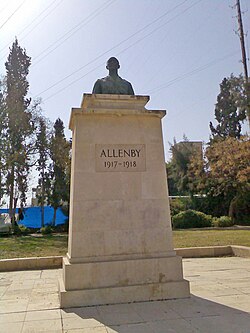
Allenby retired to England and passed away on May 14, 1936, at the age of 75. He is buried in Westminster Abbey. While he once modestly predicted that T.E. Lawrence would be the one remembered by history, Allenby's strategic brilliance remains a subject of study in military history. He is commemorated by a blue plaque in South Kensington and monuments in Beer Sheva.
Frequently Asked Questions
Why was Allenby called "The Bull"?
He earned the nickname due to his powerful physical frame—standing 6 feet 2 inches with a barrel chest—and his tendency for sudden, explosive outbursts of rage toward his subordinates.
How did Allenby enter Jerusalem in 1917?
Out of respect for the Holy City, General Allenby dismounted his horse and entered Jerusalem on foot on December 11, 1917.
What was Allenby's role in Egypt after World War I?
He served as the High Commissioner in Egypt from 1919 to 1925, where he balanced the suppression of riots with the implementation of limited self-government and a new constitution.
Which major battles did Allenby lead during the Palestine Campaign?
His most significant victories included the Battle of Beersheba, the Battle of Jerusalem, and the decisive Battle of Megiddo, leading to the capture of Damascus.
Where is Field Marshal Allenby buried?
He is interred in Westminster Abbey in London.