Egyptian Expeditionary Force
The Egyptian Expeditionary Force (EEF) was a major military formation of the British Empire during the First World War. Established on March 10, 1916, the force was created to secure the Suez Canal and launch a strategic offensive against the Ottoman Empire in the Middle East. While officially a British imperial entity, the EEF was a diverse coalition, integrating manpower from various sources to achieve its objectives in the challenging terrains of Sinai and Palestine.
The composition of the EEF extended beyond British regulars. It relied heavily on hundreds of thousands of Egyptian Arabs, primarily serving in transport and labour corps, as well as irregular soldiers. The force also included detachments from the French Republic and the Kingdom of Italy, international volunteer units such as the Jewish Legion, and coordinated closely with the forces of the Arab Revolt.
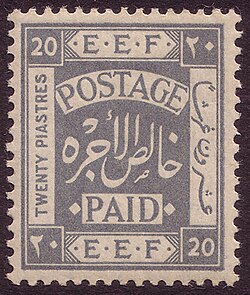
Key Facts
- Active Period: 1916–1919.
- Primary Objective: Guarding the Suez Canal and conducting the Sinai and Palestine campaign.
- Notable Commanders: General Archibald Murray (1916–1917) and General Edmund Allenby (1917–1919).
- Key Allies: French Republic, Kingdom of Italy, and Arab Revolt forces.
- Final Outcome: The collapse of Ottoman resistance leading to the Armistice of Mudros on October 30, 1918.
Early Operations and the Push into Palestine
Initially formed from the Mediterranean Expeditionary Force and the Force in Egypt, the EEF began as a defensive shield for the Sultanate of Egypt. Early efforts were split between the Western Frontier Force, which engaged in the Senussi campaign (1915–1917), and the Eastern Force, which successfully defended the Suez Canal at the Battle of Romani in August 1916.
Following Romani, the EEF transitioned to an offensive posture. Victories at the Battle of Magdhaba (December 1916) and the Battle of Rafa (January 1917) allowed the British to recapture significant Egyptian territory. However, the momentum slowed in southern Palestine with two defeats at the First and Second Battles of Gaza in March and April 1917.
The Allenby Command and the Fall of Jerusalem
In June 1917, General Edmund Allenby took command, bringing a new level of organization to the force. He restructured the EEF into the XX Corps, XXI Corps, and the Desert Mounted Corps. This reorganization paved the way for a decisive breakthrough on October 31, 1917, when the capture of Beersheba compromised the Ottoman defensive line stretching from Gaza to Beersheba.
A series of rapid victories—including the Battle of Tel el Khuweilfe, the Third Battle of Gaza, and the Battle of Hareira and Sheria—forced the Ottoman army to withdraw from Gaza. The EEF then pursued the enemy toward Jerusalem, capturing approximately 50 miles (80 km) of territory through victories at the Battle of Mughar Ridge and the Battle of Jerusalem between November and December 1917.
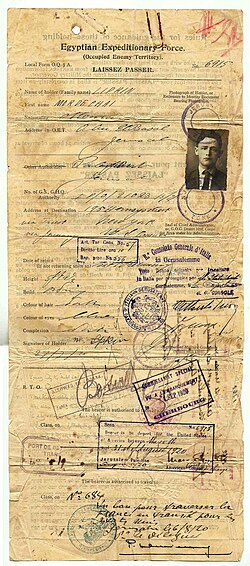
The Final Offensive and the Armistice
The EEF faced a temporary setback in early 1918 when troops were transferred to France to counter the German spring offensive (Operation Michael). Despite this, and two failed attempts to capture Es Salt during the Transjordan attacks, Allenby launched a final, massive offensive known as the Battle of Megiddo.
Using maneuver warfare, the EEF created gaps in Ottoman lines at the battles of Tulkarm and Tabsor. This allowed the Desert Mounted Corps to encircle Ottoman infantry in the Judean Hills and capture key hubs including Nazareth, Afulah, Beisan, Jenin, and Tiberias. The subsequent Battles of Sharon and Nablus, along with the Third Transjordan attack, effectively destroyed three Ottoman armies.
The EEF pursued the remaining German and Ottoman forces to Damascus and Aleppo. The campaign concluded on October 30, 1918, with the signing of the Armistice of Mudros. In the aftermath, the captured territories were administered under the British Mandate of Palestine and the Mandate for Syria and the Lebanon.
EEF Campaign Summary
| Category | Details |
|---|---|
| Commanders | Archibald Murray, Edmund Allenby |
| Major Campaigns | Senussi campaign, Sinai and Palestine campaign |
| Key Victories | Romani, Beersheba, Jerusalem, Megiddo |
| Opponent | Ottoman Empire (supported by Germany) |
| Result | Ottoman surrender; creation of British Mandates |
Frequently Asked Questions
What was the primary purpose of the Egyptian Expeditionary Force?
The EEF was initially formed to guard the Suez Canal and Egypt against Ottoman threats before expanding its mission to conduct an offensive campaign through Sinai and Palestine.
Who were the most notable commanders of the EEF?
The force was led by General Archibald Murray from 1916 to 1917, and subsequently by General Edmund Allenby from 1917 to 1919.
Was the EEF composed only of British soldiers?
No. While officially part of the British Empire, it included French and Italian detachments, the Jewish Legion, and hundreds of thousands of Egyptian Arabs serving in labour, transport, and irregular combat roles.
What was the significance of the Battle of Megiddo?
The Battle of Megiddo was a decisive victory where the EEF used maneuver warfare to encircle and destroy three Ottoman armies, leading to the eventual capture of Damascus and Aleppo.
How did the EEF campaign end?
The campaign ended with the signing of the Armistice of Mudros on October 30, 1918, which ceased hostilities between the Ottoman Empire and the Allied powers.