Ferrybridge History: From Neolithic Monuments to Industrial Power
Ferrybridge is a location defined by its strategic position where the Great North Road crosses the River Aire. Its story spans millennia, evolving from a prehistoric ceremonial site into a vital hub of transport and industrial production in the West Riding.
Prehistoric and Early Settlements
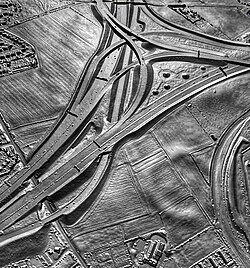
The area's human history begins in the Neolithic period (the New Stone Age), evidenced by the Ferrybridge Henge. This prehistoric ceremonial monument was constructed between 4,500 and 1,500 BC. Further archaeological finds in the vicinity include a chariot burial dating back 2,400 years.
Following the prehistoric era, Anglo-Saxon settlements were established along this stretch of the river. Ferrybridge and its neighbor, Knottingley, developed closely linked histories, fostering local industries such as shipbuilding, brewing, potteries, and glassmaking.
Conflict and Infrastructure
Ferrybridge played a role in the Wars of the Roses. In March 1461, on the eve of the Battle of Towton, the Battle of Ferrybridge took place. This engagement between the Lancastrians and Yorkists resulted in a Lancastrian victory and the death of the Yorkist leader, Lord Fitzwalter.
The physical crossing of the river has long been of primary importance. The current Ferry Bridge is a Grade I listed building, designed by John Carr of York in 1797 and completed by Bernard Hartley of Pontefract in 1804. For a period following its construction, a toll was required to cross the bridge until 1810.
The Evolution of Navigation and Trade
Until the late 17th century, Knottingley served as a critical inland port because the River Aire was not navigable beyond that point. This changed in 1699 with the construction of the Aire and Calder Navigation Canal, authorized by the first navigation scheme act of Parliament (1698). This allowed barges to travel further upstream to Leeds, reducing Knottingley's importance as a port.
Further infrastructure developments occurred in 1820 when Parliament authorized a new canal. Opened in 1826, this new Aire and Calder Navigation Canal connected the port of Goole with the River Aire at Ferrybridge. The Ferrybridge lock officially opened at 10 a.m. on July 20, 1826.
Industrialization and the Modern Era
As the Industrial Revolution progressed, Ferrybridge emerged as a significant center for glass production. Transport links were further enhanced by the opening of the Ferrybridge railway station in 1882 on the Swinton and Knottingley Joint Railway, though the station eventually closed in 1965.
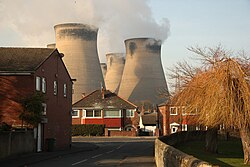
The 20th century marked a shift toward energy production. Three power stations were constructed on a single site: the first in the 1920s, the second in the 1950s, and the third, Ferrybridge 'C' Power Station, in the 1960s. During the construction of the 'C' station in 1965, high winds caused three of its cooling towers to collapse. While a fourth natural gas power station was planned, soaring gas prices prevented its construction.
Key Facts
- Neolithic Heritage: Ferrybridge Henge dates from 4,500-1,500 BC.
- Military History: The Battle of Ferrybridge (1461) was a Lancastrian victory.
- Architectural Landmark: The Grade I listed Ferry Bridge was designed by John Carr in 1797.
- Canal Milestone: The 1699 Aire and Calder Navigation was the first navigation scheme authorized by an act of Parliament.
- Energy Hub: Three successive power stations were built on one site between the 1920s and 1960s.
| Period/Year | Event/Feature | Significance |
|---|---|---|
| 4,500-1,500 BC | Ferrybridge Henge | Prehistoric ceremonial monument |
| 1461 | Battle of Ferrybridge | Lancastrian victory over Yorkists |
| 1804 | Ferry Bridge Completion | Grade I listed crossing of River Aire |
| 1826 | New Navigation Canal | Connected Goole to Ferrybridge |
| 1882-1965 | Railway Station | Served the Swinton and Knottingley line |
| 1920s-1960s | Power Stations | Three stations built on one site |
Frequently Asked Questions
What is Ferrybridge Henge?
Ferrybridge Henge is a prehistoric ceremonial monument from the Neolithic period, constructed between 4,500 and 1,500 BC.
Who designed the Ferry Bridge?
The bridge was designed by John Carr of York in 1797 and built by Bernard Hartley of Pontefract in 1804.
What happened during the Battle of Ferrybridge?
Occurring in March 1461, it was an engagement between the Lancastrians and Yorkists that ended in a Lancastrian victory and the death of the Yorkist leader, Lord Fitzwalter.
How did the Aire and Calder Navigation Canal affect the region?
The 1699 canal diminished Knottingley's importance as an inland port by allowing barges to navigate further upstream to Leeds. A later canal opened in 1826, connecting the port of Goole to Ferrybridge.
What happened to the Ferrybridge 'C' Power Station during construction?
In 1965, three of the cooling towers for the Ferrybridge 'C' Power Station collapsed due to high winds during the construction process.