Ferrocentral: The Rise and Fall of a Private Argentine Railway
Ferrocentral, a name derived from the Spanish words for "Central Rail," was a private railway company that played a pivotal role in reviving passenger rail travel in Argentina during the early 21st century. Operating from its primary hub at the Retiro Mitre station in Buenos Aires, the company sought to reconnect the capital with the northern provinces, filling a void left by previous decades of rail decline.
The company operated across a diverse network, utilizing two distinct track standards. Its long-distance routes ran on the Indian gauge (5 ft 6 in or 1,676 mm) tracks of the Ferrocarril Mitre, while its regional services utilized the metre gauge (1,000 mm or 3 ft 3 3/8 in) tracks of the Ferrocarril Belgrano.
Key Facts
- Founded: 2004/2005 by Nuevo Central Argentino and Ferrovías.
- Headquarters: Buenos Aires, Argentina.
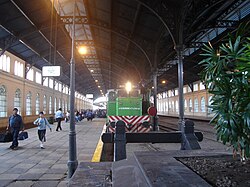
- Primary Hub: Retiro Mitre station.
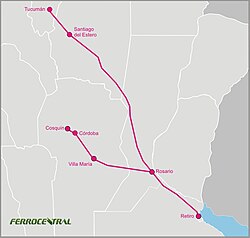
- Service Areas: Buenos Aires, Córdoba, Santa Fe, Santiago del Estero, and Tucumán.
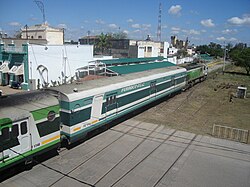
- Locomotives: Long-distance services were powered by GT22 diesel locomotives.
- Fate: Became defunct in 2014 after services were absorbed by the state-owned Trenes Argentinos.
History and Evolution
The Path to Privatization and Revival
The roots of Ferrocentral's operations lie in the legacy of Ferrocarriles Argentinos, the former national passenger railroad corporation. Following the privatization process that began in 1991, many of the country's rail services were discontinued indefinitely. Ferrocentral was established in 2005 as a joint venture between Ferrovías (operator of the Belgrano Norte Line) and Nuevo Central Argentino (the freight concessionary for Ferrocarril Mitre) to restore passenger connectivity between Buenos Aires and Córdoba.
Expansion of Services
By 2006, the company expanded its reach to Tucumán, incorporating stops in Rosario and La Banda in the Santiago del Estero Province. Due to the high demand for cargo transport during the day, most of Ferrocentral's passenger services operated during late-night and early-morning hours.
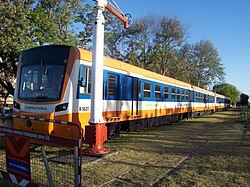
In 2007, Ferrocentral further diversified its portfolio by reopening the Tren de las Sierras ("Mountain Range Train") in Córdoba Province. This regional service connected the cities of Córdoba and Cosquín, supported by a $10 million investment from the National Government to reopen the line.
Operational Challenges and Nationalization
Despite its growth, the company faced criticism regarding its customer service. Users reported significant difficulties with the online ticket purchasing system and a chronic lack of seat availability.
The transition back to state control began in 2013 when the Ministry of Transport, led by Florencio Randazzo, signed a resolution transferring the Córdoba and San Miguel de Tucumán services to SOFSE (Trenes Argentinos) and the Administración de Infraestructuras Ferroviarias (ADIF). By November 2014, the Argentine government fully took over the services to Rosario, Tucumán, and Córdoba, rendering Ferrocentral inactive.
Service Overview (as of October 2014)
Ferrocentral managed a variety of routes with varying frequencies and journey times, ranging from short regional hops to long-haul journeys across the country.
| Start Point | End Point | Journey Time (h) | Days per Week | Year Opened |
|---|---|---|---|---|
| Retiro | Rosario Norte | 9 | 3 | 2005 |
| Retiro | Córdoba | 14 | 4 | 2005 |
| Retiro | Tucumán | 24 | 2 | 2005 |
| Córdoba | Villa María | 3 | 2 | 2004 |
| Alta Córdoba | Cosquín | 2 | 7 | 2007 |
Frequently Asked Questions
What was Ferrocentral?
Ferrocentral was a private Argentine railway company founded in 2004/2005 that operated long-distance and regional passenger trains, primarily connecting Buenos Aires to northern provinces.
Which locomotives did Ferrocentral use for long-distance travel?
The company utilized GT22 diesel locomotives to power its long-distance passenger services.
What was the Tren de las Sierras?
The Tren de las Sierras was a regional service in Córdoba Province connecting the cities of Córdoba and Cosquín, which was reopened by Ferrocentral in 2007 with government funding.
Why did Ferrocentral cease operations?
The company became inactive in November 2014 after the Argentine government, through the state-owned company Trenes Argentinos S.A., took over its primary services to Rosario, Tucumán, and Córdoba.
What track gauges did the company use?
Ferrocentral used the 5 ft 6 in (1,676 mm) Indian gauge for its Ferrocarril Mitre routes and the 1,000 mm (3 ft 3 3/8 in) metre gauge for its Ferrocarril Belgrano regional services.