Ferrocarriles Argentinos: The Rise and Fall of Argentina's State Railway
For decades, Ferrocarriles Argentinos (FA) stood as the backbone of Argentine transport and a symbol of national sovereignty. As a state-owned enterprise, it managed one of the most extensive railway networks in the world, connecting remote villages to bustling urban centers and driving the industrialization of the nation.
The journey of FA is a dramatic saga of ambitious expansion, technological innovation, political turmoil, and eventual dissolution, followed by a modern effort to revive the legendary brand.
The Path to Nationalization
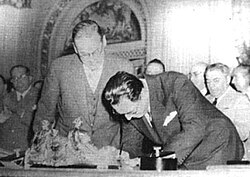
The foundation of Ferrocarriles Argentinos began in the mid-1940s. In April 1946, executives from British railway companies began negotiating the sale of their assets to the Argentine state. This process was supported by the reestablishment of tax exemptions under the "Mitre Law" (Law n° 5,315).
The transition occurred in stages. On December 17, 1946, the government acquired French-owned companies—including the Compañía General de Buenos Aires and the Province of Santa Fe—for approximately A$ 182,796,173 (roughly US$45 million). Shortly after, the government negotiated the purchase of British railways for £150 million, a sum paid through exports of meat and cereals to Great Britain.
On March 1, 1948, under the leadership of President Juan Perón, the Argentine government officially took over the British railways. This move was framed as an act of sovereignty intended to catalyze the development of domestic industry.
Network Expansion and Organization
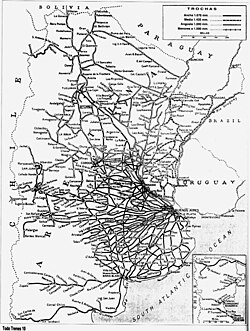
Following nationalization, the network grew rapidly. By 1954, it reached a historic peak of 47,000 kilometers, making it the largest railway network in Latin America. To manage this vast infrastructure, the system was organized into six primary divisions:
- Belgrano: Serving the north and northwest, including Salta, Jujuy, and Tucumán.
- Mitre: Connecting Buenos Aires with Santa Fe, Córdoba, and Tucumán.
- Urquiza: Covering the Mesopotamia region (Entre Ríos, Corrientes, Misiones).
- Roca: Serving the south, from Buenos Aires to Santa Cruz.
- San Martín: Linking Buenos Aires to Mendoza and San Juan.
- Sarmiento: Connecting Buenos Aires to Córdoba and Mendoza.
Technological Innovation and Local Manufacturing
The era of nationalization sparked a drive for domestic production. In October 1951, the first Argentine-made diesel locomotive, the Justicialista (CM1), was launched. Produced by the Fábrica Argentina de Locomotoras (FAdeL) and designed by engineer Pedro Sacaggio, this locomotive significantly reduced travel times, completing the 400-km trip to Mar del Plata in just four hours.
Later, a consortium known as GAIA (Gruppo Aziende Italiane e Argentine) produced 200 locomotives between 1964 and 1970. While GAIA's performance was mixed, the state also partnered with Fiat Ferroviaria to produce railcars. This led to the creation of Materfer, a specialized factory in Ferreyra, Córdoba, which became a hub for railcar production.
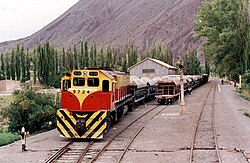
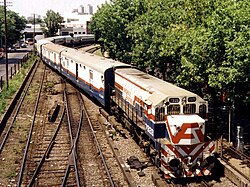
Beyond local efforts, FA imported high-quality rolling stock, including Werkspoor locomotives from the Netherlands and EMD GT22 and G22 diesel locomotives from the United States, many of which remained in service for decades.
The Era of Rationalization and Decline
The decline of the network began with the Larkin Plan in the 1950s. Proposed by US General Thomas B. Larkin, the plan sought to increase efficiency by reducing the "redundant" network to 29,000 km. Under President Arturo Frondizi, this led to the closure of thousands of kilometers of track and the layoff of 6,000 workers, sparking a massive 42-day strike in 1961.
Further deterioration occurred during the military dictatorship led by Jorge Videla starting in 1976. The regime closed another 6,300 km of track, eliminated half of all passenger services, and reduced the workforce by 40%. By 1980, the network had shrunk to 31,110 km, and a thousand stations were closed.
Privatization and Dissolution
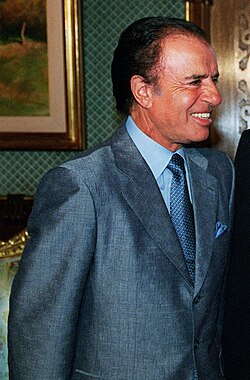
The final blow came in the 1990s under President Carlos Menem. In 1991, metropolitan services were separated into a new company, FEMESA, as a precursor to privatization. By 1992, an "emergency diagram" for long-distance services was introduced, which sharply reduced frequencies and eliminated luxury services.
This period of decline left many rural villages isolated, accelerating urban migration. On July 7, 1995, Ferrocarriles Argentinos was officially declared in a state of liquidation and ceased operations.
The Modern Revival
The story of the Argentine railways did not end in 1995. In 2008, the government created SOFSE (Operadora Ferroviaria Sociedad del Estado) to manage newly acquired assets. By 2015, a legislative proposal was passed to revive the Ferrocarriles Argentinos brand, effectively re-nationalizing the railways and integrating SOFSE under the historic marque.
Key Facts
- Founded: March 1, 1948, through the nationalization of British and French railways.
- Peak Size: 47,000 km of track in 1954, the largest in Latin America.
- Key Manufacturer: Materfer in Córdoba became a primary producer of railcars.
- The Larkin Plan: A controversial 1950s efficiency plan that began the reduction of the network.
- Dissolution: The company was liquidated on July 7, 1995.
- Revival: The brand was legally revived in 2015 to oversee re-nationalized lines.
| Period | Key Event | Impact |
|---|---|---|
| 1948 | Nationalization | State takeover of foreign-owned rail lines. |
| 1954 | Maximum Extension | Network reached 47,000 km. |
| 1960s | Larkin Plan | Reduction of redundant lines and workforce. |
| 1976-1980 | Military Dictatorship | Massive closures and 40% staff reduction. |
| 1995 | Liquidation | FA ceased operations; services privatized. |
| 2015 | Re-nationalization | Revival of the FA brand and state management. |
Frequently Asked Questions
How did Argentina pay for the British railways?
The acquisition of the British railways for £150 million was paid for through the export of meat and cereals to Great Britain, which then transferred the funds to the former owners.
What was the Larkin Plan?
The Larkin Plan was a proposal by US General Thomas B. Larkin to increase efficiency by reducing the Argentine railway network from its peak to approximately 29,000 km, leading to significant closures and labor unrest.
What was the significance of the Justicialista locomotive?
The Justicialista (CM1) was the first diesel locomotive produced domestically in Argentina by FAdeL, symbolizing the country's push for industrial independence.
Why did many rural villages suffer during the 1990s?
The closure of long-distance passenger services under the Menem administration left many small towns isolated, forcing younger residents to migrate to larger cities for opportunities.
Is Ferrocarriles Argentinos still operating today?
While the original company was liquidated in 1995, the brand and state-led railway management were revived in 2015 through the integration of SOFSE and other re-nationalized assets.