Female Sperm Storage: Mechanisms of Sexual Selection and Reproductive Strategy
In many animal species, the act of mating does not lead to immediate fertilization. Instead, females employ a biological process known as female sperm storage, where sperm cells are temporarily retained within the reproductive tract before an oocyte (egg) is fertilized. This mechanism is a critical stage in internal fertilization, acting not only as a biological reservoir but also as a sophisticated tool for sexual selection.
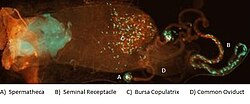
The anatomical sites for this storage vary widely across taxa. Some animals possess specialized organs dedicated solely to retention, such as the spermatheca in insects or sperm storage tubules in birds. Others utilize general regions of the reproductive tract that are enriched with specific receptors, such as the caudal portion of the cow oviduct, which uses sperm-associating annexins to hold sperm in place.
Key Facts
- Biological Purpose: Maintains sperm viability and allows fertilization to occur independently of the timing of mating.
- Sperm Preparation: In mammals, storage enables capacitation and motility hyperactivation, making sperm physiologically capable of fertilizing an egg.
- Paternity Control: Enables cryptic female choice, where females influence which male fertilizes their eggs.
- Evolutionary Conflict: Drives antagonistic coevolution, leading to complex genitalia and specialized storage structures.
- Control Mechanisms: Regulated by muscular contractions and the female nervous system.
Biological Functions of Sperm Storage
Female sperm storage serves several vital roles that enhance reproductive success and offspring quality:
- Sperm Support: It maintains the viability of sperm until ovulation occurs and, in mammals, facilitates the biochemical transitions necessary for fertilization.
- Prevention of Polyspermy: In some mammals, such as pigs, storage helps decrease the incidence of polyspermy (the fertilization of an egg by more than one sperm).
- Temporal Flexibility: It allows mating, ovulation, and fertilization to happen at different times or in different environments, a common trait in insects, amphibians, reptiles, and birds.
- Sustained Fertility: Some insects use storage to maintain prolonged fertility over a longer period.
- Competitive Arena: Storage sites act as a venue for sperm competition, where sperm from different males compete for access to the oocyte.
Antagonistic Coevolution and Sexual Conflict
The interaction between male and female reproductive strategies often leads to antagonistic coevolution. This is a process where the sexual morphology of one sex evolves in response to the traits of the other to maximize individual reproductive success.
Females have developed complex and variable storage sites—including seminal receptacles, spermathecae, and pseudospermathecae—to increase their choice in sperm selection. Some storage sites even produce proteases that break down proteins in male seminal fluid to filter sperm.
Males have evolved counter-adaptations to overcome these female barriers. For example, some insects possess spiny genitalia that anchor the male during copulation and physically remove the sperm of previous males from the female's storage organs.
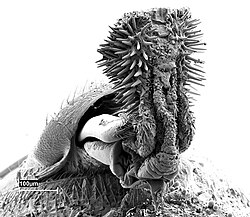
Other adaptations include behavioral and structural changes. Bed bugs utilize traumatic insemination to bypass traditional routes and deliver sperm faster to the mesospermalege and eventually the spermathecae (seminal conceptacles). In Drosophila, there is a correlation between male sperm tail length and the size of the female seminal receptacle; longer tails are more successful in larger receptacles, while shorter tails fare better in smaller ones.
Cryptic Female Choice and Genetic Diversity
By storing and separating sperm from multiple partners, females can engage in cryptic female choice. This allows them to manipulate paternity after mating has occurred. This ability is documented in birds, reptiles, gastropods, arachnids, and insects.
For instance, females in the tortoise family Testudinidae combine long-term sperm storage with polyandrous behavior (mating with multiple males). This provides access to a diverse pool of genetically different sperm, allowing the female to maximize the genetic quality and number of offspring in each clutch.
Physiological Mechanisms of Storage
Muscular Contractions
The movement of sperm into and out of storage organs is often driven by muscle contractions. In Rhodnius prolixus, rhythmic peristaltic contractions of the oviduct move sperm into the spermathecal duct. In the boll weevil, similar contractions release sperm for fertilization. These movements can be triggered by the female's nervous system or by male secretions in the ejaculate, such as the glycoprotein ACP36D in Drosophila, which alters the shape of the uterus to grant sperm access to storage organs.
The Role of the Nervous System
The female nervous system coordinates fluid absorption, hormone release, and muscular contractions. Research on Drosophila melanogaster showed that replacing the female nervous system with a masculinized one impaired sperm storage, proving the necessity of a female-specific nervous system.
In the migratory locust (Locusta migratoria), the presence of an egg triggers a specific neural loop (involving the VIIIth ganglion and various N2B nerves) that initiates the contractions needed to release sperm. Similarly, in the Caribbean fruit fly (Anastrepha suspensa), an abdominal ganglion innervates the spermathecae, allowing the female to control the volume of sperm taken in or released.
Summary of Sperm Storage Characteristics
| Taxon | Storage Structure | Primary Mechanism/Feature |
|---|---|---|
| Insects | Spermatheca / Seminal Receptacles | Muscular contractions and neural control |
| Birds | Sperm Storage Tubules | Temporal separation of mating and fertilization |
| Mammals (Cows) | Caudal Oviduct | Sperm-associating annexins |
| Reptiles (Tortoises) | Long-term storage sites | Polyandry and cryptic female choice |
Frequently Asked Questions
What is cryptic female choice?
Cryptic female choice is the ability of a female to influence which male's sperm fertilizes her eggs after mating has already occurred, often by manipulating stored sperm from multiple partners.
How does antagonistic coevolution affect reproductive organs?
It creates an evolutionary "arms race" where females develop complex storage organs to control paternity, and males evolve traits—such as spiny genitalia or traumatic insemination—to bypass those controls and ensure their own reproductive success.
What is the purpose of capacitation in mammals?
Capacitation is a biochemical transition that occurs during sperm storage, rendering the sperm physiologically capable of penetrating and fertilizing an oocyte.
How do insects move sperm into storage organs?
Sperm movement is typically achieved through rhythmic muscular contractions of the reproductive tract, which can be triggered by the female's nervous system or specific proteins found in the male's ejaculate.
Why is sperm storage beneficial for the offspring?
By storing sperm from multiple males, females can increase the genetic diversity of their offspring and ensure that eggs are fertilized by the highest quality sperm available.