Farnham History: From Colonial Roots to the War of 1812
Named after Farnham in Surrey, England, the community of Farnham carries a rich legacy of colonial settlement and military conflict. From its early agricultural foundations to its role in pivotal American conflicts, the area serves as a living museum of Virginia's historical evolution.
The Legacy of North Farnham Church
At the heart of the area's history is the North Farnham Church, constructed in 1737. For nearly three centuries, this structure has witnessed significant shifts in American history, bearing physical scars from the conflicts that shaped the nation.
During the War of 1812, the church became the site of the Skirmish at Farnham Church. This engagement occurred between the Virginia militia and a British fleet commanded by Admiral George Cockburn. To this day, bullet holes remain in the church walls as a testament to this clash.
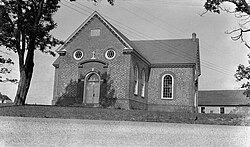
The church's utility shifted during the American Civil War, when Union soldiers repurposed the building as a stable. To preserve its architectural heritage, the church underwent major restorations in 1872 and again in 1924.
Local Landmarks and Estates
Scotts Corner
Located near the intersection of Virginia State Route 602 and Virginia State Route 612, Scotts Corner is a notable locality within Farnham. The origin of its name is subject to two primary theories: it may be named for Henry B. Scott, a prominent mid-19th-century landowner, or for the Bruce family, Scottish immigrants who owned land in Farnham during the mid-17th century.
Linden Farm
Another cornerstone of the region is Linden Farm, also referred to as Dew House. This early 18th-century estate spans 282 acres of historic land. Recognizing its architectural and historical significance, it was added to the National Register of Historic Places in 1977.
Key Facts
- Origin: Named after Farnham, Surrey, England.
- North Farnham Church: Built in 1737; survived the War of 1812 and the Civil War.
- Military Conflict: The Skirmish at Farnham Church involved Admiral George Cockburn's British fleet and the Virginia militia.
- Linden Farm: A 282-acre estate listed on the National Register of Historic Places since 1977.
- Scotts Corner: A locality potentially named after Henry B. Scott or the 17th-century Bruce family.
| Site Name | Established/Date | Significance |
|---|---|---|
| North Farnham Church | 1737 | Site of War of 1812 skirmish; used as Civil War stable. |
| Linden Farm (Dew House) | Early 18th Century | 282-acre estate on the National Register of Historic Places. |
| Scotts Corner | Mid-17th to Mid-19th Century | Locality linked to the Bruce family or Henry B. Scott. |
Frequently Asked Questions
Where does the name Farnham come from?
Farnham takes its name from the town of Farnham located in Surrey, England.
What happened during the Skirmish at Farnham Church?
The skirmish was a conflict during the War of 1812 between the Virginia militia and a British fleet led by Admiral George Cockburn, which left bullet holes in the church walls.
How was North Farnham Church used during the Civil War?
During the Civil War, Union soldiers used the church building as a stable.
What is the significance of Linden Farm?
Linden Farm, also known as Dew House, is an early 18th-century farm covering 282 acres and has been listed on the National Register of Historic Places since 1977.
Who is Scotts Corner named after?
It is believed to be named either for Henry B. Scott, a prominent landowner in the mid-1800s, or the Bruce family, who were Scottish immigrants and landowners in the mid-17th century.