Exile and Banishment: A History of Forced and Voluntary Displacement
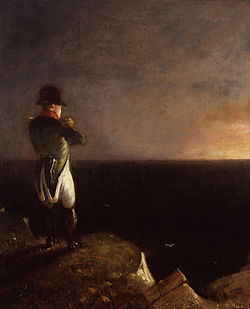
Exile, at its core, is the state of being barred from one's native country. While often viewed as a penal expulsion—known as banishment—it can also manifest as expatriation or a prolonged absence driven by circumstance or a higher purpose. While typically associated with individuals or ethnic groups, exile can also affect social entities, such as governments or religious institutions, forcing them to operate from foreign soil.
The experience of exile ranges from the agony of forced removal to the strategic choice of voluntary departure. Whether used as a tool of state control, a means of survival, or a form of political protest, exile has shaped the movement of people and the evolution of law across millennia.
Key Facts
- Roman Law: Distinguished between deportation (forced exile with loss of citizenship/property) and relegation (milder exile preserving rights).
- British Transportation: Under the Transportation Act of 1718, approximately 50,000 convicts were systematically sent to overseas colonies in the 18th century.
- Diaspora: A term used to describe the exile of a large group or an entire nation, whether voluntary or forced.
- Tax Exile: A modern form of voluntary exile where wealthy individuals move to low-tax jurisdictions to protect assets.
- Government in Exile: A political body that maintains its claim to legitimacy while operating outside its home territory.
The Legal Foundations of Banishment
In ancient Rome, exsilium served as both a voluntary option and a capital punishment alternative to death. The severity depended on the legal classification: deportation was a lifelong sentence involving the total loss of property and citizenship, whereas relegation was a more lenient version that allowed the individual to keep their status.
Throughout medieval Europe, banishment remained a staple of judicial systems. Germanic tribes, including the Franks and Danes, utilized it frequently. In 12th-century England, criminals could claim sanctuary in a church; if they confessed and swore never to return without royal permission, they were granted safe passage into exile—a practice that lasted until 1623.
The Netherlands also relied heavily on this practice; between 1650 and 1750, at least 97 percent of non-capital sentences in Amsterdam included some form of banishment.
Systematic Exile and Penal Colonies
As empires expanded, exile became a tool for populating frontier territories. The Russian Empire and Qing China used banishment to settle remote borders. In Britain, the process became industrialized with the Transportation Act of 1718, which turned the colonies into destinations for serious criminals. Many of these convicts were sold as servants upon arrival.
France similarly employed colonial banishment, though on a smaller scale, continuing the practice into the mid-20th century. Eventually, as habitable unsettled land decreased and modern prison systems evolved, the use of penal colonies became obsolete.
In the United States, banishment fell out of favor. While the Supreme Court ruled in Cooper v. Telfair (1800) that the state could banish those who took up arms against the U.S., it is rarely applied to ordinary crimes. Today, banishment is primarily seen in isolated instances, such as within Native American tribal lands or specific judicial circuits in Georgia.
Voluntary Exile: Taxes, Law, and Persecution
Not all exile is mandated by a court. Some individuals choose to leave their homelands to avoid specific pressures. A tax exile is a wealthy person who relocates to a jurisdiction with lower taxes. Notable examples include author Arthur Hailey, who moved to the Bahamas, and the Rolling Stones, who relocated to France in 1971 to avoid seizing of assets, subsequently recording the album Exile on Main Street.
Others flee to avoid legal prosecution. Asil Nadir, for instance, spent 17 years in the Turkish Republic of Northern Cyprus to avoid UK prosecution regarding the failed company Polly Peck. In more dire circumstances, individuals flee to avoid violence or political persecution. Following the 1948 Communist coup in Czechoslovakia, nuns were internally exiled to small villages along the northern border.
Group Exile and the Concept of Diaspora
When an entire population is displaced, the result is a diaspora. History is marked by such events, including the Assyrian exile of the Israelites in 720 BCE and the Babylonian deportation of Judeans in 586 BCE. More recently, the Crimean Tatars were subjected to ethnic cleansing in 1944, with 200,000 people forcibly moved to Central Asia.
Political upheavals also create vast diasporas. Following the Partitions of Poland, many Poles formed communities (Polonia) in France and the U.S. Similarly, over a million Cubans have left their island since the Cuban Revolution, identifying as political exiles.

Exile in Art and Literature
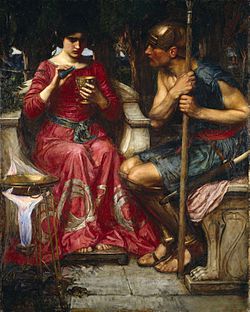
The theme of displacement has long fascinated creators. In mythology, the story of Medea involves her flight to Athens and subsequent exile from the Polis after a conflict with Theseus.
In the 20th century, the rise of National Socialism in Germany forced many intellectuals and artists into exile. This gave birth to a distinct body of "exile literature." Authors like Klaus Mann and Anna Seghers wrote from abroad, with Mann's Der Vulkan and Seghers' Das siebte Kreuz capturing the fragmented experience of the emigrant community.



| Type of Exile | Nature | Primary Motivation | Example |
|---|---|---|---|
| Banishment | Forced | Penal/Punishment | British Transportation Act |
| Diaspora | Forced/Voluntary | Ethnic/National Displacement | Crimean Tatars |
| Tax Exile | Voluntary | Financial Preservation | The Rolling Stones |
| Political Exile | Forced/Voluntary | Avoidance of Persecution | Cuban Revolution emigrants |
Frequently Asked Questions
What is the difference between deportation and relegation in Roman law?
Deportation was a severe form of forced exile that resulted in the lifelong loss of both citizenship and property. Relegation was a milder alternative that allowed the exiled person to retain their citizenship and assets.
What was the British Transportation Act of 1718?
This act systematized the practice of banishing serious criminals to British overseas colonies. Throughout the 18th century, about 50,000 people were transported, many of whom were sold as servants.
What defines a "government in exile"?
A government in exile is a political entity that has been forced to relocate outside its home country but continues to claim legal legitimacy and authority over that country.
Why do some people become tax exiles?
Wealthy individuals, often creative professionals like musicians or authors, may move to jurisdictions with lower tax rates to avoid high taxes on their earnings and prevent the seizure of assets by their home government.
How does a diaspora differ from individual exile?
While individual exile involves a single person, a diaspora refers to the displacement of a large group, an ethnic community, or an entire nation, often resulting in the formation of scattered communities across the globe.