Evolutionary Arms Races: The Endless Cycle of Adaptation and Counter-Adaptation
In the natural world, survival is rarely a static achievement. Instead, it is often the result of an evolutionary arms race—an ongoing struggle between competing sets of co-evolving genes, behaviors, and physical traits. Much like a geopolitical arms race, this biological process involves a cycle of escalating adaptations and counter-adaptations. When one species develops a new advantage, it exerts selective pressure on its competitor to evolve a response, creating a positive feedback loop of continuous change.
These races can occur between different species, such as a predator and its prey or a parasite and its host. However, they can also happen within a single species, manifesting as sexual conflict (often called Fisherian runaway) or through the manipulation and resistance models of communication. These antagonistic interactions frequently lead to character displacements, where species evolve distinct traits to survive their competitors.
Key Facts
- Coevolution: The process where two or more species reciprocally affect each other's evolution.
- Red Queen Hypothesis: The theory that species must constantly adapt and evolve simply to maintain their relative fitness and avoid extinction.
- Symmetrical Races: Occur when selection pressure pushes both participants in the same direction (e.g., trees growing taller to compete for light).
- Asymmetrical Races: Occur when participants evolve contrasting traits (e.g., a predator becoming a better hunter while the prey becomes better at evading).
- Fitness Costs: High levels of adaptation, such as extreme toxicity or resistance, often come with a biological cost, such as slower movement or reduced energy.
Symmetrical vs. Asymmetrical Arms Races
Biologists categorize these evolutionary struggles based on the direction of the selection pressure. In a symmetrical arms race, both parties are striving for the same trait. A classic example is the competition for sunlight among forest trees; as one species grows taller to capture more light, others must also grow taller to avoid being shaded out.
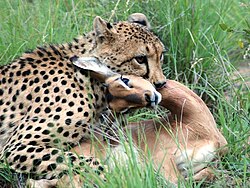
Conversely, an asymmetrical arms race involves opposing goals. In this scenario, the predator evolves to increase its efficiency in killing, while the prey evolves to avoid being killed.
The Host-Parasite Dynamic
One of the most intense forms of coevolution occurs between hosts and parasites. This relationship creates a genetic battleground where pathogens evolve virulent alleles (genetic variants that enable infection) and hosts evolve resistant alleles to survive. Because mutation rates and population sizes fluctuate, the dominant genotypes shift over time.
This constant genetic turnover is central to the Red Queen's hypothesis, proposed by Leigh Van Valen in 1973. The hypothesis suggests that organisms must constantly evolve just to keep pace with their evolving parasites and competitors, effectively "running in place" to avoid extinction.
Notable Examples of Evolutionary Arms Races
The Bintje Potato and Potato Blight
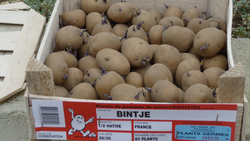
The Bintje potato, a variety developed in the Netherlands, faces a persistent threat from the oomycete Phytophthora infestans, the organism responsible for potato blight. This parasite uses zoospores (mobile spores) to infect leaves and tubers. The interaction follows a gene-for-gene relationship, where the parasite's virulent-avirulent allelic combinations are countered by the host's multiloci resistance (R) genes.
Bats and Moths: A Sonic Battle
Bats utilize echolocation to navigate and hunt. In response, moths have evolved the ability to detect these ultrasonic calls. Some moths in the Arctiinae subfamily employ three main defenses: startling the bat, jamming its sonar, or using acoustic aposematic defense (warning signals).

Bats have countered these defenses through the allotonic frequency hypothesis, evolving calls at frequencies outside the moths' hearing range. Some, like the Barbastelle bat, use "stealth echolocation," reducing their volume as they approach prey to avoid detection. Moths have further adapted by learning to distinguish between a bat that has simply detected them and one that is actively pursuing them.
The Rough-Skinned Newt and Garter Snake
The rough-skinned newt produces tetrodotoxin, a potent nerve poison. The common garter snake has evolved a mutation in its sodium channel proteins that prevents the toxin from binding, granting the snake resistance. This creates a cycle: as snakes become more resistant, newts evolve to produce higher levels of toxin, which in turn selects for even more resistant snakes.
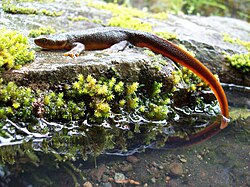
This race has a high fitness cost. Highly resistant snakes move more slowly, making them more vulnerable to their own predators, while toxin production requires significant energy from the newt.
Other Asymmetrical Examples
- Predator Whelks and Bivalves: Whelks use their shells to break open bivalve prey. This led to bivalves evolving thicker, larger shells, which then selected for whelks with a greater ability to open those larger shells.
- Death Adders and Frogs: Floodplain death adders hunt various frogs. To deal with highly toxic species, the snakes have evolved the behavior of releasing the toxic prey and waiting for the potency to decrease before consuming them.
The Impact of Introduced Species
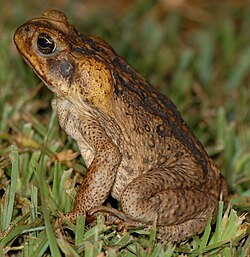
Evolutionary arms races require time. When a species is introduced to a new environment, it may lack the necessary adaptations to survive local predators or, conversely, may lack natural competitors, leading to population explosions. In Australia, cane toads have spread rapidly because local predators have not yet evolved resistance to the toad's bufotenine toxin.
| Participants | Type of Race | Primary Adaptation | Counter-Adaptation |
|---|---|---|---|
| Cheetah vs. Gazelle | Asymmetrical | Hunting efficiency | Evasion skills |
| Bat vs. Moth | Asymmetrical | Echolocation | Ultrasonic detection/jamming |
| Newt vs. Garter Snake | Asymmetrical | Tetrodotoxin production | Sodium channel mutation |
| Trees (General) | Symmetrical | Increased height | Increased height |
| Bintje Potato vs. Blight | Asymmetrical | Virulent alleles | Resistance (R) genes |
Frequently Asked Questions
What is the difference between a symmetrical and asymmetrical arms race?
In a symmetrical arms race, both species evolve in the same direction, such as two competing tree species both growing taller. In an asymmetrical race, the species evolve contrasting traits, such as a predator becoming faster while the prey becomes better at hiding.
What is the Red Queen's hypothesis?
Proposed by Leigh Van Valen, it suggests that species must constantly evolve and adapt not necessarily to get "ahead," but simply to survive against ever-evolving parasites, predators, and competitors.
Why don't all animals just evolve maximum toxicity or resistance?
Most adaptations come with a fitness cost. For example, garter snakes with extreme resistance to tetrodotoxin move more slowly, which increases their risk of being eaten by other predators.
How do introduced species affect evolutionary arms races?
Introduced species often disrupt existing balances. If a species enters an ecosystem without having co-evolved with the local predators, it may either be quickly wiped out or, if it possesses a defense the locals cannot handle (like the cane toad), it may become an invasive pest.
What is a gene-for-gene relationship?
This is a specific type of interaction common in plant diseases, where for every gene that allows a parasite to infect a host (virulence), there is a corresponding gene in the host that can recognize and resist that specific infection.