Evangelical-Lutheran Church in Württemberg
The Evangelical-Lutheran Church in Württemberg (German: Evangelische Landeskirche in Württemberg) is a prominent Lutheran member church of the Protestant Church in Germany (EKD). Based in the former German state of Württemberg—now part of the modern state of Baden-Württemberg—it serves as the primary Protestant denomination in the eastern region of the state.
Headquartered in Stuttgart, the church is a full member of the EKD and maintains international ties as a member of the Community of Protestant Churches in Europe and the Lutheran World Federation. It also holds guest membership in the United Evangelical Lutheran Church of Germany.
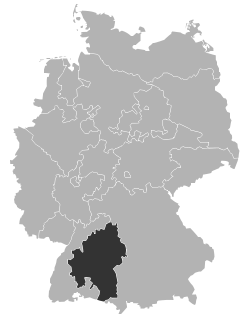
Key Facts
- Seat: Stuttgart, Germany.
- Current Presiding Bishop: Ernst-Wilhelm Gohl (since 2022).
- Membership: 1,821,266 members as of 2025.
- Structure: Led by a presiding bishop (Landesbischof) and four regional bishops located in Stuttgart, Heilbronn, Ulm, and Reutlingen.
- Training: Operates the Tübinger Stift, a minister training house in Tübingen.
- Social Progress: Allows the ordination of women and the blessing of same-sex unions (since March 2019).
Historical Evolution
The Reformation and Early Governance
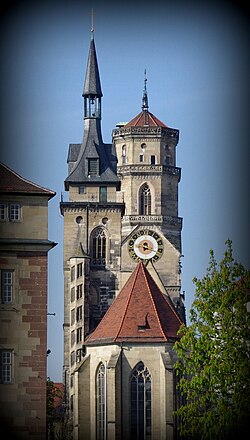
The church's foundations were laid in 1534 when Ulrich, Duke of Württemberg, enforced the Protestant Reformation within his duchy. Under the system of summus episcopus, the Duke united secular and religious authority, effectively replacing the privileges of Catholic bishops. Johannes Brenz was tasked with reforming the state church based on the teachings of Martin Luther; Brenz is now entombed in the Stuttgart Stiftskirche.
While the church remained Lutheran in doctrine, its services adopted a plain style influenced by the Reformed tradition. This simplicity is characteristic of the region, though traditional Lutheran service forms are still practiced in Hohenzollern. The duchy also became a sanctuary for Huguenot, Hussite, and Waldensian immigrants. Notably, Hans von Ungnad established a Bible Institute in Urach, where 30,000 Bibles were printed and smuggled across borders.
Expansion and Political Transition
Until 1806, Württemberg was exclusively Protestant. This changed when Napoleon's influence led to the creation of a kingdom and the addition of Catholic territories in Upper Swabia. By the late 19th century, Protestant parishes began appearing in these formerly Catholic southern regions.
The aftermath of World War I brought significant structural changes. With the abolition of nobility and the abdication of William II, the church lost its royal head. Because the successor to the royal house, Albrecht, Duke of Württemberg, was Catholic, the church enacted a new constitution in 1923/24. This established a church president, a title that evolved into Landesbischof (Presiding Bishop) by 1933.
Post-War Integration and Modern Era
During World War II, the church's connection to the YMCA provided critical support to millions of prisoners of war, facilitating communication between internees and their families. In 1945, the Protestant deanery of the Province of Hohenzollern came under provisional supervision of the Württemberg church, formally joining the body on April 1, 1950.
In recent decades, the church has continued its global engagement, notably hosting the 11th General Assembly of the Lutheran World Federation in Stuttgart in July 2010.
Church Administration and Community
Leadership and Governance
The church is governed by a synod, with elections held every six years. The leadership has transitioned through several bishops since the 1920s, moving from church presidents to the current office of the Landesbischof.
Youth and Social Work
Youth initiatives are managed through the YMCA (CVJM-Gesamtverband) and the Evangelisches Jugendwerk in Württemberg. A unique cultural staple is the Posaunenchor (trumpet choir), which welcomes members of all ages and holds a biennial regional gathering (Landesposaunentag) in Ulm.
The church has also hosted massive youth events, including a European young adults meeting in Stuttgart in 1996 with 70,000 attendees, and the Überbündische meeting (ÜT) in Böttingen, which brought together thousands of scouts and youth movement members.
Summary of Church Statistics and Landmarks
| Category | Details / Data |
|---|---|
| Membership Trend | 1,668,000 (1922) → 2,286,893 (2007) → 1,821,266 (2025) |
| Number of Parishes | Approximately 1,300 (as of 2020) |
| Key Churches | Stiftskirche (Stuttgart), Ulm Minster, St. Kilian's (Heilbronn), St. Mary's (Reutlingen), St. Dionysius (Esslingen), St. Michael's (Schwäbisch Hall) |
| Regional Bishoprics | Heilbronn, Stuttgart, Ulm, Reutlingen |
Frequently Asked Questions
Who is the current leader of the church?
The presiding bishop (Landesbischof) is Ernst-Wilhelm Gohl, who assumed the role in 2022 following Bishop Frank Otfried July.
How has the membership changed over time?
Membership peaked around 2007 with over 2.2 million members, but has since declined to 1,821,266 by 2025.
What is the Tübinger Stift?
The Tübinger Stift is a specialized minister training house located in Tübingen used to prepare clergy for service.
Does the church allow the ordination of women?
Yes, the ordination of women is permitted, consistent with the policies of all other churches within the Protestant Church in Germany (EKD).
What is the significance of the summus episcopus?
The summus episcopus was a historical role where the ruler (such as the Duke of Württemberg) held both secular and religious authority as the head of the state church.