Eukaryotes: The Complex Cells That Shape Life on Earth
From the microscopic organisms drifting in a drop of pond water to the towering redwoods and the massive blue whale, eukaryotes represent some of the most complex and diverse forms of life on our planet. Unlike simpler prokaryotic cells, eukaryotes possess a sophisticated internal architecture that allows them to grow larger, specialize their functions, and evolve into multicellular organisms.
The domain Eukaryota encompasses a vast array of life, including animals, fungi, land plants, and a diverse group of single-celled organisms known as protists. These organisms are defined not by what they look like, but by the intricate machinery housed within their cell membranes.
Key Facts
- Defining Feature: Possession of a membrane-bound nucleus that houses genetic material.
- Temporal Range: Present from the Statherian period (approximately 1650 million years ago) to the present.
- Size Diversity: Ranges from single-celled microbes to the largest animals and plants.
- Core Organelles: Includes mitochondria for energy and, in plants/algae, chloroplasts for photosynthesis.
- Reproduction: Capable of sexual reproduction involving meiosis and the fusion of haploid gametes.
The Architecture of the Eukaryotic Cell
The primary distinction of a eukaryote is its internal compartmentalization. While prokaryotes keep their DNA in a loose cluster, eukaryotes protect their genome within a nucleus, a specialized organelle enclosed by a nuclear envelope.
Internal Membranes and Organelles
Beyond the nucleus, the cell is filled with a network of internal membranes. This includes the endoplasmic reticulum and the Golgi apparatus, which work together to process and transport proteins and lipids. Lysosomes serve as the cell's waste disposal system, breaking down macromolecules.
Energy Production: Mitochondria and Plastids
Most eukaryotes rely on mitochondria, the "powerhouses" of the cell, to generate energy. These organelles are unique because they possess their own DNA and resemble prokaryotic cells in their structure.
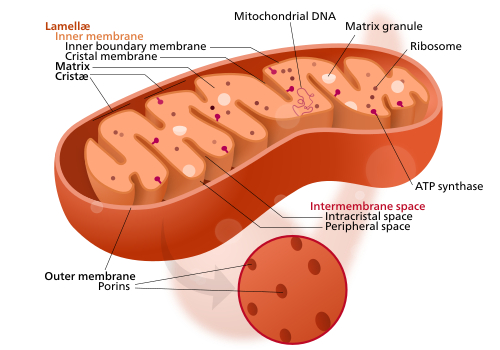
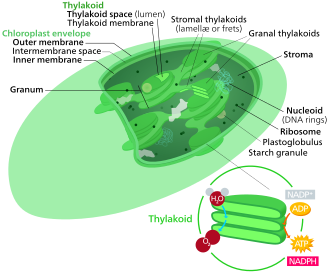
Certain eukaryotes, such as land plants and algae, contain plastids. The most common of these is the chloroplast, which uses chlorophyll to capture sunlight and produce organic compounds through photosynthesis.
The Cytoskeleton and Cell Wall
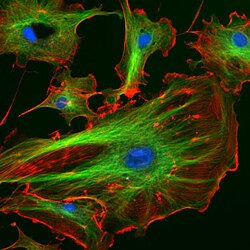
To maintain their shape and move materials internally, eukaryotes use a cytoskeleton. This dynamic framework consists of actin filaments and microtubules, which act as both structural supports and "tracks" for intracellular transport.
Depending on the species, some eukaryotes also possess a cell wall for added protection and structural rigidity, a feature common in plants and fungi but absent in animals.
Reproduction and Genetic Diversity
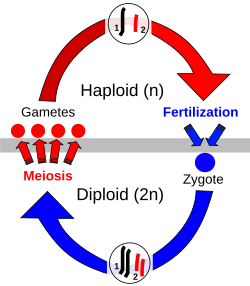
Eukaryotes utilize a complex life cycle that often alternates between two phases: a haploid phase (one set of chromosomes) and a diploid phase (two sets of chromosomes). This is achieved through meiosis, a specialized cell division that produces haploid gametes. When two gametes fuse, they form a diploid zygote, ensuring genetic variation in the offspring.
Evolution and Origins
The origin of eukaryotes is one of biology's great mysteries. The theory of symbiogenesis suggests that eukaryotes arose from a merger between an archaean and an aerobic bacterium, which became the mitochondria. A subsequent merger with a photosynthetic bacterium led to the creation of chloroplasts and the lineage of green plants.
![In the theory of symbiogenesis, a merger of an archaean and an aerobic bacterium created the eukaryotes, with aerobic mitochondria; a second merger added chloroplasts, creating the green plants.[79]](/images/e9/cb/e9cb97de8e68d89d1e7e206794ffe6c0406cbffe0cc8b1aa6226645ea032242a.webp)
Fossil evidence supports an ancient origin. Some terrestrial fossils, such as Diskagma buttonii, date back approximately 2.2 billion years, though their classification remains a subject of scientific discussion.
![Reconstruction of the problematic[90] Diskagma buttonii, a terrestrial fossil less than 1mm high, from rocks around 2.2 billion years old](/images/24/e0/24e069594597013a4d510ccb76379a82fb9cca172603ba8ca9518c40ea868bac.jpg)
Classification Summary
The classification of eukaryotes has evolved from simple kingdoms to complex supergroups based on phylogenomic data.
| Supergroup | Key Members / Examples |
|---|---|
| Amorphea | Animals, Fungi, Amoebozoa |
| Archaeplastida | Land plants, Red and Green algae |
| SAR | Stramenopiles, Alveolata, Rhizaria |
| Discoba | Various flagellated protists |
| Pancryptista | Cryptomonads and related lineages |
Frequently Asked Questions
What is the main difference between a prokaryote and a eukaryote?
The primary difference is that eukaryotes have a membrane-bound nucleus and other specialized organelles (like mitochondria), whereas prokaryotes lack a nucleus and keep their DNA in a non-enclosed region of the cell.
Do all eukaryotes have mitochondria?
While mitochondria are nearly universal, there are rare exceptions. Some specialized eukaryotes have evolved to live without traditional mitochondria or have modified versions of them.
How did eukaryotes first evolve?
According to the theory of symbiogenesis, eukaryotes evolved through endosymbiosis, where one cell engulfed another. An archaean host merged with an aerobic bacterium to create the first mitochondria-bearing cell.
What are the different types of eukaryotic organisms?
Eukaryotes are divided into several major groups, including the kingdoms Animalia (animals), Plantae (plants), Fungi, and a diverse collection of single-celled organisms formerly grouped as Protista.
What is the role of the cytoskeleton?
The cytoskeleton provides structural support, maintains the cell's shape, and enables the movement of organelles and vesicles within the cell using actin filaments and microtubules.