Articles/Estonia: A Journey Through History, Nature, and Digital Innovation
Republic of EstoniaTallinnEstonian historye-EstoniaBaltic states
Estonia: A Journey Through History, Nature, and Digital Innovation
Republic of Estonia The Republic of Estonia is a unitary parliamentary republic located in Northern Europe. Known for its seamless blend of ancient heritage and cutting-edge digital gover...
Republic of Estonia
The Republic of Estonia is a unitary parliamentary republic located in Northern Europe. Known for its seamless blend of ancient heritage and cutting-edge digital governance, Estonia has evolved from a land of independent counties into one of the world's most advanced e-states. With its capital, Tallinn, serving as a hub of commerce and culture, the nation balances a high quality of life with a deep respect for its natural environment.
Key Facts
Capital: Tallinn
Official Language: Estonian
Government: Unitary parliamentary republic
Currency: Euro (€)
Population: Approximately 1.36 million (2026 estimate)
HDI: 0.905 (Very High)
Key Industries: Digital services, oil shale, and agriculture
Historical Evolution
Prehistory and the Middle Ages
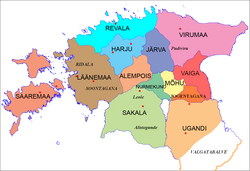
Estonia's early history is marked by ancient settlements and the influence of the Viking Age. Before the 13th century, the region consisted of independent Estonian counties known as maakond.
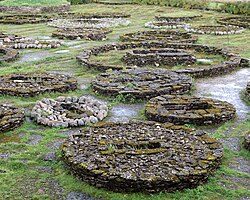
Bronze Age stone-cist graves at Jõelähtme: Bronze Age stone-cist graves at Jõelähtme
Pre-Christian independent Estonian counties (maakond), c. 1200: Pre-Christian independent Estonian counties (maakond), c. 1200
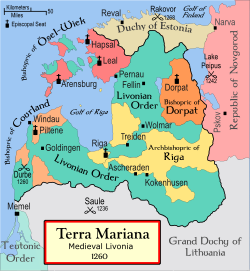
The landscape changed drastically during the Northern Crusades in the 12th and 13th centuries, which brought Christianisation and foreign rule to the region.
Estonia and Livonia after the 12th/13th century Northern crusades: Estonia and Livonia after the 12th/13th century Northern crusades
Foreign Rule and National Awakening
Over the centuries, Estonia shifted between Swedish and Russian rule. During the Swedish era, educational foundations were laid, most notably with the founding of the Academia Gustaviana (now the University of Tartu) in 1632 by King Gustavus Adolphus.
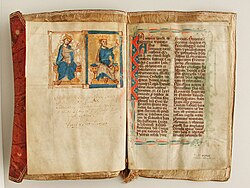
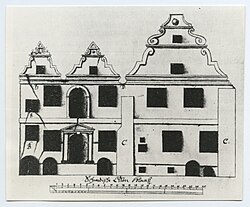
Lübeck Law Codex for Tallinn: Lübeck Law Codex for Tallinn
Academia Gustaviana, now the University of Tartu, was founded in 1632 by King Gustavus Adolphus: Academia Gustaviana, now the University of Tartu, was founded in 1632 by King Gustavus Adolphus
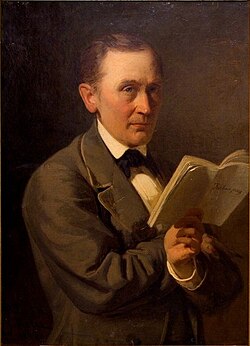
The 19th century sparked a national awakening, leading to the creation of the Estonian national epic, Kalevipoeg, authored by Friedrich Reinhold Kreutzwald.
Friedrich Reinhold Kreutzwald (1803–1882), author of the Estonian national epic Kalevipoeg (by Johann Köler, 1864): Friedrich Reinhold Kreutzwald (1803–1882), author of the Estonian national epic Kalevipoeg (by Johann Köler, 1864)
Independence and Occupation
Estonia declared its independence from the Russian and German Empires on February 24, 1918. This period of sovereignty was interrupted by Soviet and German occupations between 1940 and 1991.
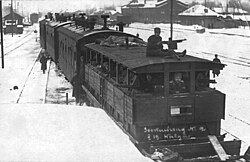
Estonian armoured train during the war of independence: Estonian armoured train during the war of independence
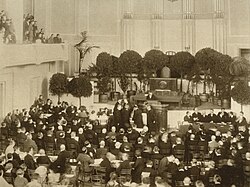
Estonian Constituent Assembly, opening session on 23 April 1919: Estonian Constituent Assembly, opening session on 23 April 1919
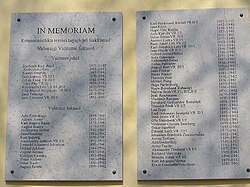
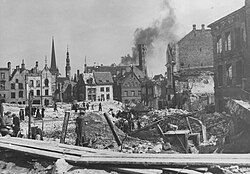
The occupation era was marked by severe repression; ten former prime ministers and 56 government members perished in Soviet captivity after 1940. The city of Tallinn also suffered significant damage from Soviet air force bombings in March 1944.
Ten former Estonian prime ministers and 56 government members were executed or perished in captivity of the Soviet occupation regime after 1940 (memorial plaque at the seat of government in Toompea, Tallinn): Ten former Estonian prime ministers and 56 government members were executed or perished in captivity of the Soviet occupation regime after 1940 (memorial plaque at the seat of government in Toompea, Tallinn)
Tallinn Old Town after bombing by the Soviet air force (March 1944): Tallinn Old Town after bombing by the Soviet air force (March 1944)
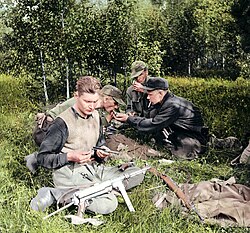
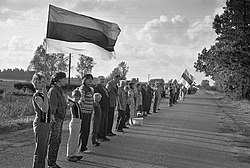
Resistance continued throughout the mid-20th century, with anti-Soviet fighters operating in the forests. The drive for freedom culminated in the Baltic Way on August 23, 1989, where two million people formed a human chain across three countries.
Estonian Anti-Soviet resistance fighters after a shooting exercise in 1953: Estonian Anti-Soviet resistance fighters after a shooting exercise in 1953
In the Baltic Way on 23 August 1989, two million people formed a human chain across three countries in a mass demonstration against the Soviet occupation.: In the Baltic Way on 23 August 1989, two million people formed a human chain across three countries in a mass demonstration against the Soviet occupation.
Independence was officially restored on August 20, 1991.
Geography and Biodiversity
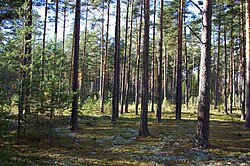
Estonia's terrain is characterized by its diverse stratigraphy and rich natural resources. The country is heavily forested, with the Scots pine (Pinus sylvestris) being the most common tree species.
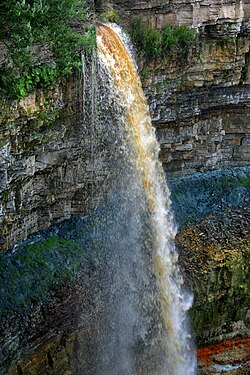
The cliff at Valaste Falls illustrates the stratigraphy of various geological eras: The cliff at Valaste Falls illustrates the stratigraphy of various geological eras
Scots pine Pinus sylvestris is the most common tree species in Estonian forests.: Scots pine Pinus sylvestris is the most common tree species in Estonian forests.
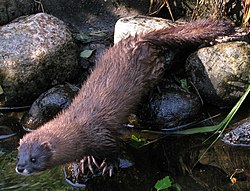
The nation is also a sanctuary for rare wildlife, including the critically endangered European mink.
Estonia is one of the few countries where critically endangered European mink is present in the wild: Estonia is one of the few countries where critically endangered European mink is present in the wild
Government and Economy
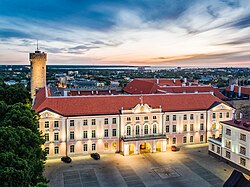
The Estonian government is led by the President and the Prime Minister, with the Riigikogu serving as the legislature. The Parliament is seated in the historic Toompea Castle.
The seat of the Parliament of Estonia in Toompea Castle: The seat of the Parliament of Estonia in Toompea Castle
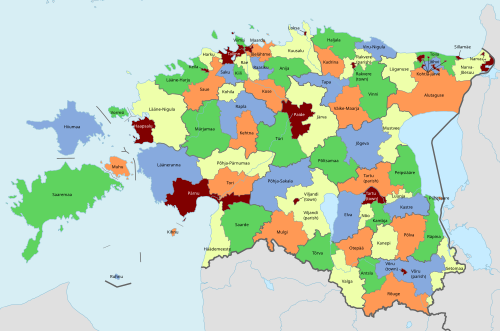
Municipalities (local governments) after the 2017 administrative reform: Municipalities (local governments) after the 2017 administrative reform
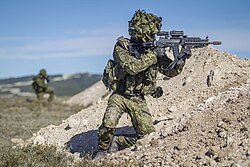
Estonia maintains strong foreign relations and is a member of NATO and the European Union. Its military includes compulsory service and participates in international exercises.
Estonian soldiers during a NATO exercise in 2015: Estonian soldiers during a NATO exercise in 2015
Economic Drivers and Infrastructure
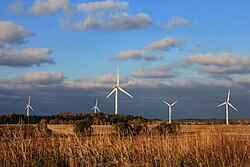
Estonia's economy is a mix of traditional resources and high-tech innovation. The northeast is known for its oil shale region, while the country has invested heavily in wind power and digital infrastructure.
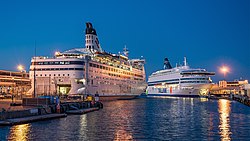
Cruiseferries connect Estonia to neighbouring Finland and Sweden (Tallinn, 2022).: Cruiseferries connect Estonia to neighbouring Finland and Sweden (Tallinn, 2022).
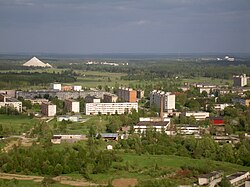
Oil shale region in the northeast of the country: Oil shale region in the northeast of the country
Wind farm in Aseriaru: Wind farm in Aseriaru
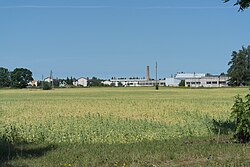
Crops near Aruküla in Northern Estonia: Crops near Aruküla in Northern Estonia
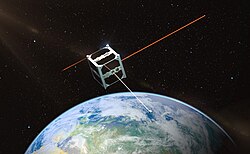
In the realm of science, Estonia has reached the stars with ESTCube-1, the nation's first satellite.
ESTCube-1 was the first Estonian satellite.: ESTCube-1 was the first Estonian satellite.
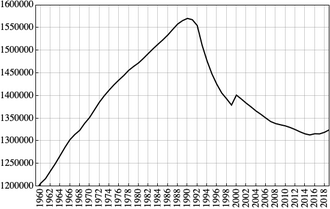
Population of Estonia 1960–2019. The changes are largely attributed to immigration from, and emigration to, Russia and other parts of the former USSR.[327]: Population of Estonia 1960–2019. The changes are largely attributed to immigration from, and emigration to, Russia and other parts of the former USSR.
Culture and Society
Estonian society is a tapestry of various religious and ethnic influences. While a majority of the population identifies as having no religion, Christianity (including Lutheranism and Eastern Orthodoxy) remains significant.
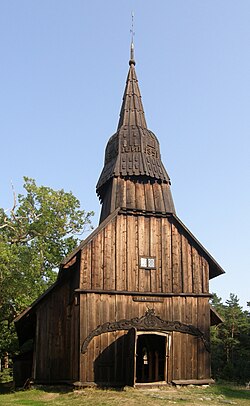
The church (built in 1644) in the Swedish village of Ruhnu, now the oldest preserved wooden shrine in Estonia: The church (built in 1644) in the Swedish village of Ruhnu, now the oldest preserved wooden shrine in Estonia
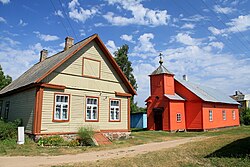
A Russian Old Believer village with an Orthodox church in Piirissaar, an island of Lake Peipus: A Russian Old Believer village with an Orthodox church in Piirissaar, an island of Lake Peipus
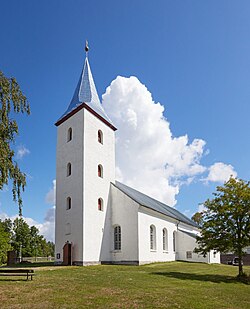
A Lutheran parish church in Rõuge: A Lutheran parish church in Rõuge
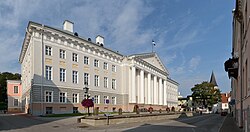
Education is highly valued, with the University of Tartu ranking as the highest-ranked institution in the country.
The University of Tartu is one of the oldest universities in Northern Europe and the highest-ranked university in Estonia: The University of Tartu is one of the oldest universities in Northern Europe and the highest-ranked university in Estonia
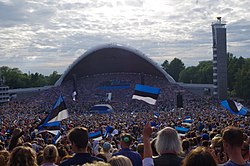
Cultural expression is most visible during the Estonian Song Festival, a UNESCO Masterpiece of the Oral and Intangible Heritage of Humanity.
The Estonian Song Festival is one of the UNESCO Masterpieces of the Oral and Intangible Heritage of Humanity (XXVII Song Festival in 2019).: The Estonian Song Festival is one of the UNESCO Masterpieces of the Oral and Intangible Heritage of Humanity (XXVII Song Festival in 2019).
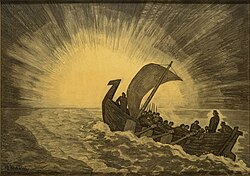
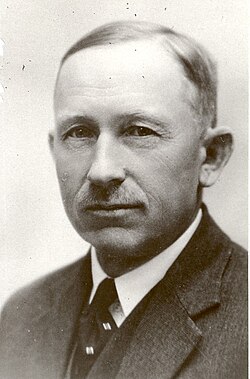
The arts are further enriched by the works of Kristjan Raud and the literature of A. H. Tammsaare, whose pentalogy Truth and Justice is often called "The Estonian Novel."
Kristjan Raud, Journey of Kalevipoeg to the North, 1935, Estonian Art Museum: Kristjan Raud, Journey of Kalevipoeg to the North, 1935, Estonian Art Museum
Writer A. H. Tammsaare (1878–1940) whose pentalogy Truth and Justice is considered "The Estonian Novel": Writer A. H. Tammsaare (1878–1940) whose pentalogy Truth and Justice is considered "The Estonian Novel"
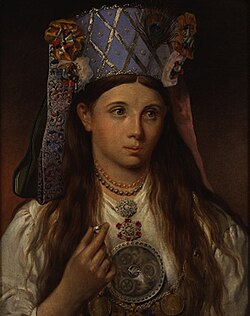
Gustav Adolf Hippius, An Estonian bride, 1852, Art Museum of Estonia, Tallinn: Gustav Adolf Hippius, An Estonian bride, 1852, Art Museum of Estonia, Tallinn
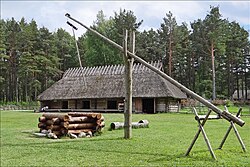
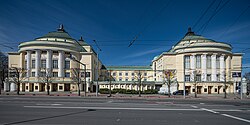
Traditional architecture is preserved in vernacular farmhouses, while the Estonia Theatre in Tallinn houses the National Opera and Symphony Orchestra.
A traditional farmhouse built in the Estonian vernacular style: A traditional farmhouse built in the Estonian vernacular style
The Estonia Theatre, constructed in 1913 in Tallinn, now houses the National Opera and Symphony Orchestra.: The Estonia Theatre, constructed in 1913 in Tallinn, now houses the National Opera and Symphony Orchestra.
Summary of National Statistics
Category
Detail
Total Area
45,335 km²
Estimated Population (2026)
1,362,954
GDP per capita (Nominal)
$37,718
GDP per capita (PPP)
$51,653
Human Development Index
0.905 (Very High)
Frequently Asked Questions
When did Estonia restore its independence?
Estonia officially restored its independence on August 20, 1991, following decades of Soviet and German occupations.
What is the significance of the Baltic Way?
The Baltic Way was a mass demonstration on August 23, 1989, where two million people formed a human chain across Estonia, Latvia, and Lithuania to protest the Soviet occupation.
What is the most common tree species in Estonia?
The Scots pine (Pinus sylvestris) is the most common tree species found in Estonian forests.
Which university is the highest-ranked in Estonia?
The University of Tartu is the highest-ranked university in the country and one of the oldest in Northern Europe.
What is the Estonian Song Festival?
The Estonian Song Festival is a major cultural event recognized as one of the UNESCO Masterpieces of the Oral and Intangible Heritage of Humanity.
References
Estonia has been de facto independent in 1918–1940, and since 1991. Throughout foreign occupations in 1940–1991 the continuity of de jure independence was preserved by Estonian diplomats and government-in-exile.
Estonian: Eesti Vabariik, lit.'Free state of Estonia'
Located in Northern Europe, Estonia has also been classified as Eastern or Central Europe in some contexts. Various sources classify Estonia differently for statistical and other purposes. For example, the UN,[13] and Eurovoc[14] classify Estonia as part of Northern Europe, the OECD[15] classifies it as a Central and Eastern European country, the CIA World Factbook[16] classifies it as Eastern Europe. Usage varies greatly in press sources.