Esplanade Avenue: A Journey Through New Orleans History and Architecture
Stretching from the banks of the Mississippi River to the lush greenery of City Park, Esplanade Avenue is more than just a thoroughfare; it is a living museum of New Orleans' cultural and social evolution. This historic street serves as a gateway to the city's rich Creole heritage, characterized by stunning architecture and a legacy of trade and prestige.
Key Facts
- Route: Runs northwest from the Mississippi River to Beauregard Circle.
- Historical Role: Originally an 18th-century portage route connecting the river to Bayou St. John and Lake Pontchartrain.
- Cultural Significance: Acted as a "millionaires row" for the city's Creole population.
- Key Landmarks: Home to the old New Orleans Mint, the Degas House, and the entrance to the New Orleans Museum of Art.
- Administrative Boundary: Serves as the dividing line between the 6th and 7th Wards.
A Legacy of Trade and Prestige
Long before it became a residential haven for the wealthy, Esplanade Avenue served a critical economic purpose. In the 18th century, it was a vital portage route—a land path used to carry boats or goods between two bodies of water—linking the Mississippi River to Bayou St. John, which in turn provided access to Lake Pontchartrain.
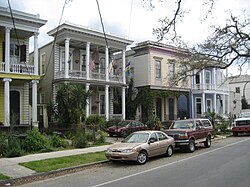
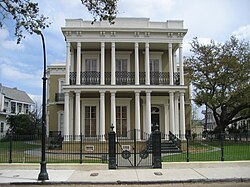
As the city grew, the avenue evolved into a symbol of status. Much like St. Charles Avenue served the Anglophone (English-speaking) community in uptown New Orleans, Esplanade Avenue became the "millionaires row" for the Creole section of the city. This legacy is still visible today in the magnificent 19th-century mansions that line the street.
Navigating the Avenue's Geography
The layout of Esplanade Avenue changes as it moves inland, reflecting the different neighborhoods it traverses. From the Mississippi River up to Claiborne Avenue, the street features one lane of traffic in each direction separated by a raised neutral ground (the local term for a median).
Between Claiborne Avenue and Carrollton Avenue, the road adapts to modern transit needs with one traffic lane in each direction, a dedicated bicycle lane, and a narrower neutral ground. The segment between the river and Rampart Street is particularly significant as it separates the historic French Quarter from the Faubourg Marigny.
Notable Landmarks and Neighborhoods
Esplanade Avenue passes through several distinct districts, each contributing to the city's unique atmosphere. Near the river on the French Quarter side, visitors can find the old New Orleans Mint building. As the avenue continues, it winds through the Faubourg Treme neighborhood and into the area known as the Esplanade Ridge or Faubourg St. John, located near the New Orleans Fairgrounds.
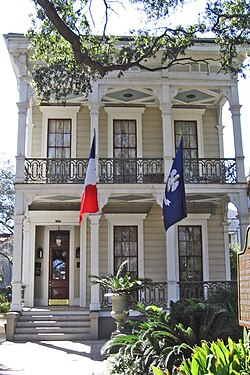
One of the most culturally significant sites in this section is the Musson House, now known as the Degas House. Completed in 1852, this residence hosted the renowned artist Edgar Degas during his stay in New Orleans from 1872 to 1873 while visiting his Musson relatives.
The journey concludes just past Carrollton Avenue, where the avenue leads to the entrance of the New Orleans Museum of Art and terminates at Beauregard Circle.
Esplanade Avenue Reference Summary
| Location/Segment | Key Feature or Landmark | Notes |
|---|---|---|
| Mississippi River / Peters St | New Orleans Mint | Southern terminus; separates French Quarter and Faubourg Marigny |
| Esplanade Ridge | Degas House | Former residence of Edgar Degas (1872–73) |
| Past Carrollton Ave | New Orleans Museum of Art | Entrance to the museum |
| Beauregard Circle | City Park Entrance | Northern terminus |
Frequently Asked Questions
What was the original purpose of Esplanade Avenue?
It began as an 18th-century portage route used for trade between the Mississippi River and Bayou St. John, which connected to Lake Pontchartrain.
How does Esplanade Avenue differ from St. Charles Avenue?
While both were prestigious residential areas, Esplanade Avenue was the "millionaires row" for the Creole community, whereas St. Charles Avenue served the Anglophone community in uptown New Orleans.
Which famous artist is associated with Esplanade Avenue?
Edgar Degas stayed at the Musson House (now the Degas House) at 2306 Esplanade Avenue between 1872 and 1873.
What is a "neutral ground" in the context of New Orleans streets?
A neutral ground is the local term for the median strip that separates opposing lanes of traffic on major avenues.
Which city wards are divided by Esplanade Avenue?
Esplanade Avenue serves as the dividing line between the 6th and 7th Wards of New Orleans.