Entomology: The Science of Insects and Their Impact
Entomology is the specialized branch of zoology dedicated to the scientific study of insects. Derived from the Ancient Greek words éntomon (insect) and lógos (study), this field encompasses everything from the basic biology of a single beetle to the complex ecological roles insects play globally. While modern entomology focuses strictly on insects, the term historically included other arthropods, such as crustaceans, myriapods, and arachnids.
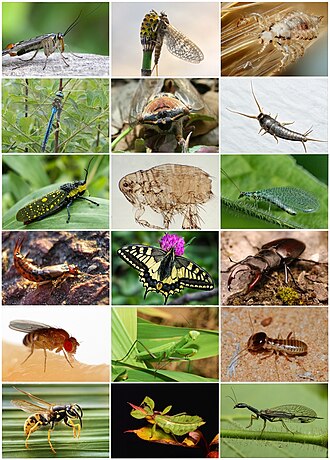
The scale of this field is immense. To date, entomologists have described over 1.3 million insect species, highlighting the staggering biodiversity of the class Insecta.
Key Facts
- Species Count: Over 1.3 million insect species have been formally described.
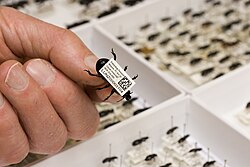
- Beetle Diversity: The order Coleoptera (beetles) alone contains more than 330,000 species.
- Scope: Includes specialized fields like forensic, medical, and veterinary entomology.
- Certification: Professional standards in pest control are managed by organizations like the Entomological Society of America (ESA).
The Evolution of Insect Study
Human interaction with insects dates back to prehistoric times, primarily driven by the needs of agriculture, beekeeping, and biological control. Early documentation appeared in the works of the Roman philosopher Pliny the Elder (23–79 CE) and the scientist Ibn al-A'rābī (760–845 CE), who wrote Kitāb al-Dabāb, a treatise on flies.
Modern scientific entomology emerged in the 16th century. Key milestones include Ulisse Aldrovandi's 1602 publication De Animalibus Insectis and Jan Swammerdam's work on metamorphosis and reproductive organs. In 1705, Maria Sibylla Merian expanded the field's geographical reach with her study of tropical insects in Dutch Surinam.
From Cabinets of Curiosity to Professional Science
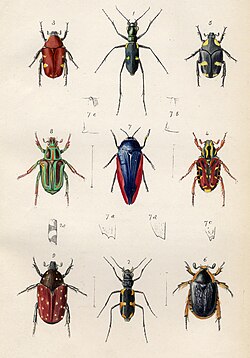
During the "era of heroic entomology," European aristocrats collected specimens in "cabinets of curiosity," leading to the birth of natural history societies and scientific journals. William Kirby, often called the father of entomology in England, co-authored the foundational Introduction to Entomology and helped establish the Royal Entomological Society in 1833.
By the late 19th century, the "era of economic entomology" began. The growth of colonial trade and industrial agriculture shifted the field toward professionalization, integrating entomology into university biology programs. This era paved the way for legendary figures such as Charles Darwin, E. O. Wilson, and Nobel laureate Karl von Frisch.
Classification and Identification
Identifying insects is a complex task. While most can be assigned to an order (such as Hymenoptera for bees and ants), identifying a specific genus or species often requires specialized monographs, identification keys, and microscopes due to subtle physical differences.
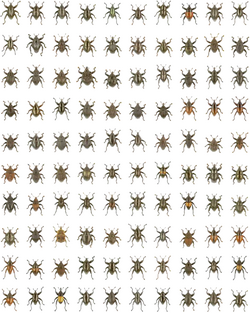
To manage this complexity, scientists have developed automated identification systems like Daisy, ABIS, SPIDA, and Draw-wing. Modern techniques, including DNA barcoding, now allow researchers to describe hundreds of species simultaneously.
Practical Applications of Entomology
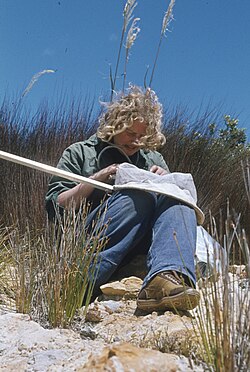
Entomology is not merely academic; it has critical applications in public health, law, and industry.
Pest Control and Professional Certification
The Entomological Society of America (ESA) provides certifications to ensure professional standards in pest management. These include:
- Associate Certified Entomologist (ACE): A professional certification for the pest control industry.
- Public Health Entomology (PHE): Focuses on arthropods that spread diseases.
- Certified IPM Technicians (CITs): Specialists in Integrated Pest Management with 1–4 years of experience.
- Board Certified Entomologists (BCEs): High-level certification requiring rigorous exams and continuing education.
Forensic and Medical Entomology
Forensic entomology applies the study of insect life cycles and assemblages on cadavers to help determine the time and circumstances of death at crime scenes.
Medical entomology examines arthropods that impact human health, including disease vectors. This field overlaps with veterinary entomology, as many animal diseases (such as bovine encephalitis) can jump species to infect humans.
Specializations and Research
Because the field is so vast, many entomologists specialize in specific groups. These subdisciplines often have their own names:
| Subdiscipline | Focus Group |
|---|---|
| Coleopterology | Beetles |
| Lepidopterology | Moths and Butterflies |
| Myrmecology | Ants |
| Dipterology | Flies |
| Melittology / Apiology | Bees |
| Odonatology | Dragonflies and Damselflies |
| Hemipterology | True bugs |
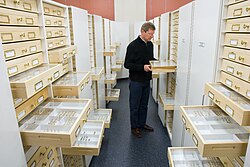
Global research is supported by massive collections housed in institutions such as the Natural History Museum in London, the Smithsonian National Museum of Natural History in Washington, D.C., and the CSIRO Australian National Insect Collection.
Frequently Asked Questions
What is the difference between entomology and etymology?
Entomology is the scientific study of insects, whereas etymology is the study of the origin and history of words.
Is an ACE the same as a PhD entomologist?
No. A "true entomologist" in the traditional academic sense typically holds an advanced degree, usually a PhD. An Associate Certified Entomologist (ACE) is a professional certification for those working in the pest control industry.
How do entomologists identify species that look identical?
When physical characteristics are too subtle for the naked eye, specialists use microscopes, detailed identification keys, monographs, and modern DNA barcoding.
What is the role of a forensic entomologist?
Forensic entomologists study the types of insects found on corpses and their stage of development to help investigators estimate the time since death and understand the environment of a crime scene.
Which insect order is the most diverse?
The order Coleoptera, which consists of beetles, is exceptionally diverse, with over 330,000 described species.