Cephalization: The Evolutionary Journey Toward the Animal Head
In the vast history of animal evolution, one of the most significant trends is cephalization. This biological process describes the evolutionary tendency for sense organs and nerve ganglia—clusters of nerve cells—to concentrate at the front of an animal's body. Over many generations, this concentration often results in the development of an enlarged, specialized head.
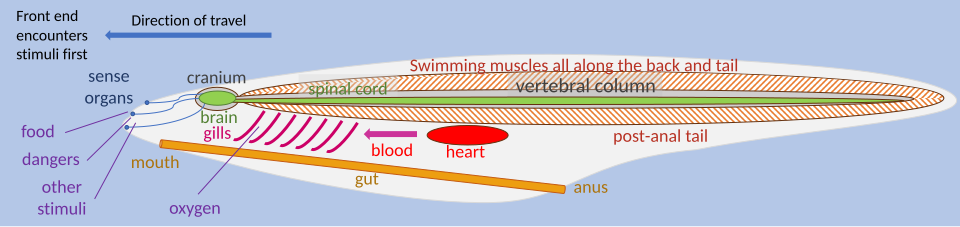
Cephalization is closely tied to bilateral symmetry (a body plan with matching left and right sides) and the direction of an animal's movement. For creatures that habitually move forward, the front end is the first to encounter environmental stimuli. Consequently, natural selection favors the placement of sensory tools and processing centers at the leading edge to better detect light, chemicals, and gravity.
![Idealised bilaterian body plan. With a cylindrical body (in the main clade, the nephrozoa) and a direction of travel, the animal has head and tail ends, favouring cephalization by natural selection. Sense organs, brain, and mouth form the basis of the head.[1]](/images/02/0e/020e4d51300419cc0dca329925367821138f95c17d5ceaa5188b18875c78e4e2.webp)
Key Facts
- Definition: The concentration of sense organs and nerve cells at the anterior (front) end of an animal.
- Primary Drivers: Bilateral symmetry and forward-directed movement.
- Highly Cephalized Groups: Arthropods, cephalopod molluscs, and vertebrates.
- Genetic Control: Hox genes organize the development of the head in bilaterians.
- Convergent Evolution: Complex heads evolved independently in different lineages rather than from a single common ancestor.
The Bilaterian Body Plan
Cephalization is a hallmark of the bilaterians, a massive group encompassing the majority of animal phyla. These animals possess muscles for movement and a body plan that defines a clear front and back. By placing sensory organs at the front, bilaterians can process information about their environment more efficiently as they move.
While some animals have a centralized brain, others possess simpler ganglia. The degree of cephalization often correlates with how "active" a body is. Predators and prey alike must be acutely aware of their surroundings to survive, which is why the most active bilaterians exhibit the highest levels of cephalization.
Highly Cephalized Phyla
Three distinct groups of animals have achieved advanced levels of cephalization. Interestingly, these groups are not closely related; their lineages split hundreds of millions of years ago, meaning they developed their complex heads through separate evolutionary paths.
Arthropods
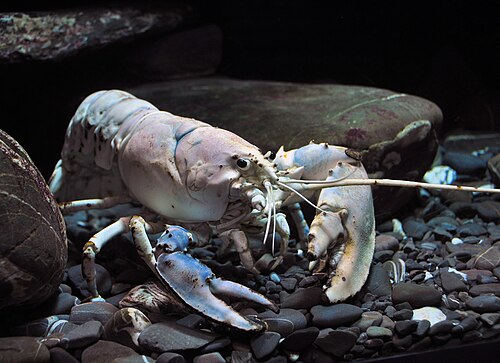
In arthropods, such as insects and crustaceans, cephalization occurred as trunk segments were gradually incorporated into the head. This allowed for the evolution of sophisticated mouthparts for capturing and processing food. Insects, for example, have a brain composed of three fused ganglia and a head equipped with compound eyes, antennae, and complex mandibles.
Cephalopods
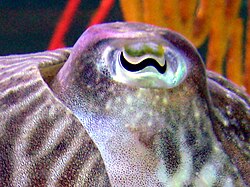
Among molluscs, the cephalopods (including octopuses, squids, cuttlefish, and nautiluses) are the most intelligent. They possess highly developed senses, including large brains and advanced "camera" eyes that allow for high-resolution vision.
Vertebrates
Vertebrates—including fish, amphibians, reptiles, birds, and mammals—possess complex heads with specialized organs for hearing, sight, and smell. Their large, multi-lobed brains are protected by a skull made of bone or cartilage. While closely related cephalochordates like the lancelet show very little cephalization, vertebrates evolved a distinct head through the emergence of cranial placodes (thickened embryonic ectoderm) and the neural crest.
The Genetic Blueprint: Hox Genes
The development of the head is governed by Hox genes. Bilaterians possess significantly more Hox genes than less cephalized animals like Cnidaria. In vertebrates, gene duplication led to four Hox clusters in mammals and birds, and eight in teleost fishes.
Research indicates that while the genes responsible for the front of the body (Hox1-5) existed in ancestors without complex heads, these genes were later "co-opted" to assist in cephalization. This is a prime example of convergent evolution, where different groups evolve similar solutions to the same biological challenge.
Varying Degrees of Cephalization
Not all animals are equally cephalized. Some phyla represent early or partial stages of this trend:
- Acoela: Basal bilaterians with a slight concentration of nerve cells at the front, but no compact brain.
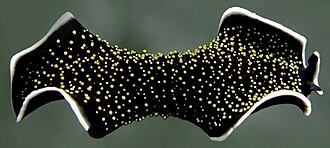
- Platyhelminthes (Flatworms): Lightly cephalized animals that possess a brain and a photoreceptive eyespot.
- Cnidaria: Though they lack bilateral symmetry, some (like Anthomedusae) show basic cephalization with a head end containing a mouth and photoreceptor cells.
| Group | Cephalization Level | Key Features |
|---|---|---|
| Cnidaria | Low/Partial | Mouth and photoreceptors at one end; radial symmetry. |
| Acoela | Low | Slight nerve cell concentration; no compact brain. |
| Flatworms | Moderate | Simple brain and eyespots. |
| Arthropods | High | Fused ganglia, compound eyes, complex mouthparts. |
| Cephalopods | High | Large brains, advanced camera eyes. |
| Vertebrates | High | Multi-lobed brain, bony/cartilaginous skull. |
Frequently Asked Questions
What is the main cause of cephalization?
Cephalization is primarily driven by an animal's direction of travel and bilateral symmetry. Because the front of the body encounters the environment first, it is evolutionarily advantageous to concentrate sensory organs and nerve processing centers there.
Do all animals with heads have a brain?
No. While highly cephalized animals like vertebrates have brains, others have simpler arrangements. Some animals possess ganglia (clusters of nerve cells) or just a higher concentration of nerve cells at the anterior end without forming a distinct, compact brain.
How do Hox genes relate to the development of the head?
Hox genes are regulatory genes that organize the body plan during embryonic development. In bilaterians, specific anterior Hox genes were co-opted to help build the complex head structures seen in arthropods and vertebrates.
Is cephalization the same in octopuses as it is in humans?
While both are highly cephalized and possess complex brains and camera-like eyes, this is a result of convergent evolution. Their lineages split hundreds of millions of years ago, meaning they evolved these similar traits independently.
What is the "new head hypothesis" in vertebrates?
The new head hypothesis suggests that the vertebrate head is an evolutionary novelty created by the emergence of the neural crest and cranial placodes, which allowed for the formation of sense organs outside the brain.