English Claims to the French Throne: A History of Royal Ambition
For nearly five centuries, the monarchs of England and later Great Britain maintained a startling diplomatic curiosity: they claimed to be the rightful rulers of France. This assertion, which began in 1340, was not merely a symbolic gesture but a catalyst for one of the most enduring conflicts in European history, the Hundred Years' War (1337–1453).
While the claim eventually lost all practical viability, it remained a formal part of the British royal style until 1801. The struggle over the French crown reveals a complex intersection of genealogy, feudal law, and the relentless pursuit of territorial power.
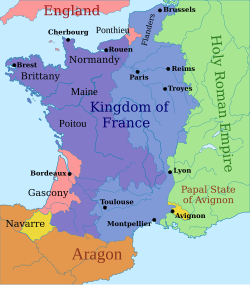
Key Facts
- Origin: The claim began with Edward III, who asserted his right to the throne through his mother, Isabella.
- Legal Conflict: France invoked Salic law (a 6th-century Frankish code) to argue that the crown could not be inherited through a female line.
- The Dual Monarchy: Henry VI was crowned king of both England and France in the early 15th century, though his control was limited to northern France.
- End of Conflict: The Hundred Years' War ended in 1453, leaving only Calais as an English possession in France.
- Final Abandonment: The title "King of France" was officially dropped in 1801 following the French Revolution.
The Roots of the Conflict: Edward III and the Valois
The dispute began in 1328 upon the death of the last direct Capetian king, Charles IV. Charles left no male heirs, only daughters. Edward III of England, the nephew of Charles IV, claimed the throne through his mother, Isabella. However, the French nobility preferred Philip VI of the House of Valois, a cousin of Charles IV and a male-line descendant.
To justify their choice, French jurists cited the Salic law, asserting that the crown could not pass through a woman. While this legal link was tenuous and not fully established until the 15th century, it served as a convenient tool to prevent a foreign king from ruling France.
Edward III formally declared his claim in the 1340 Ghent Manifesto, arguing he was "closer in blood" to the late king than Philip VI. Although Edward spent much of his reign at war, his primary practical goal was often the protection of Gascony, his French fief.
The Rise and Fall of the Dual Monarchy
The English claim reached its zenith under Henry V. Following a decisive victory at Agincourt, Henry forced the French to sign the Treaty of Troyes in 1420. This agreement stipulated that Henry and his heirs would succeed the Valois king, Charles VI.
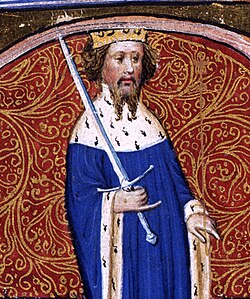
When both kings died in 1422, Henry's infant son, Henry VI, was crowned king of both nations. This created a "dual monarchy," though English authority was largely restricted to northern France. The tide turned in 1429 with the relief of Orléans and the subsequent defection of the Burgundians to the French side in 1435.
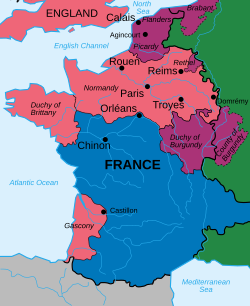
By 1453, the French had expelled the English from nearly all their territories, ending the Hundred Years' War. Only the port of Calais remained in English hands.
Later Attempts and the Tudor Era
The loss of French territories destabilized England, contributing to the civil wars known as the Wars of the Roses. Yorkist leaders, including Richard, Duke of York, used the claim to the French throne to challenge the Lancastrian hold on power.
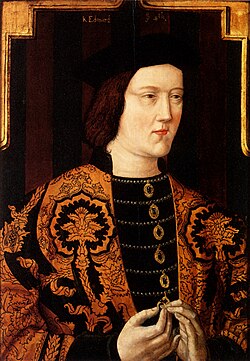
The final monarch to actively pursue the claim through military force was Henry VIII. Driven by a personal passion to make the claim a reality, Henry invaded France three times between 1513 and 1523. His only significant gain was the temporary occupation of Tournai, which he ruled as King of France. His final march on Paris in 1523 is often viewed as the final campaign of the Hundred Years' War era.
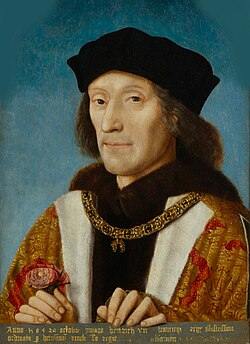
The End of a Royal Tradition
After the 16th century, the title "King of France" became a formal style without any practical significance, ignored by the French government. This changed with the French Revolution. The new republican government found the title offensive, as France was no longer a monarchy.
In 1801, King George III removed the French quartering from the royal coat of arms and dropped the title from his royal style. The claim was officially abandoned in 1802 with the Treaty of Amiens.
Summary of English Claims to France
| Monarch | Key Event/Action | Outcome |
|---|---|---|
| Edward III | Ghent Manifesto (1340) | Initiated the formal claim; fought Hundred Years' War. |
| Henry V | Treaty of Troyes (1420) | Established the Dual Monarchy. |
| Henry VI | Crowned King of France (1431) | Expelled from France by 1453 (except Calais). |
| Henry VIII | Invasions (1513–1523) | Briefly held Tournai; last active military pursuit. |
| George III | Act of Union / Treaty of Amiens | Title officially abandoned in 1801/1802. |
Frequently Asked Questions
Why did Edward III claim the French throne?
Edward III claimed the throne because he was the nephew of the last direct Capetian king, Charles IV. He argued that as the nearest male relative, he was the rightful heir through his mother, Isabella.
What was Salic law?
Salic law was a 6th-century Frankish legal code. French jurists used it to argue that the crown could not be inherited through the female line, thereby disqualifying Edward III and justifying the accession of Philip VI of Valois.
What was the "Dual Monarchy"?
The dual monarchy occurred when Henry VI was recognized as the king of both England and France following the Treaty of Troyes. However, this union was never fully realized across all of France.
When did the English finally stop calling themselves Kings of France?
The title was dropped in 1801 by George III and formally abandoned in 1802 following the recognition of the French Republic in the Treaty of Amiens.
What happened to Calais?
Calais was the last remaining English possession in France after the end of the Hundred Years' War in 1453. It was eventually lost to the French in 1558.