Empire of BrazilPedro IPedro IIBrazilian historyGolden Law

Empire of Brazil: The Rise and Fall of a South American Monarchy

Empire of Brazil: The Rise and Fall of a South American Monarchy The Empire of Brazil was a prominent 19th-century state that encompassed most of the territories of modern-day Brazil and ...

Empire of Brazil: The Rise and Fall of a South American Monarchy

The Empire of Brazil was a prominent 19th-century state that encompassed most of the territories of modern-day Brazil and Uruguay. Operating as a representative parliamentary constitutional monarchy, it stood as a unique political entity in the Americas, transitioning from a Portuguese colony to a sovereign empire under the leadership of two emperors: Pedro I and Pedro II.

The empire's origins are tied to the Napoleonic Wars. In 1808, the Portuguese Prince regent (later King Dom John VI) fled Napoleon's invasion of Portugal, establishing Rio de Janeiro as the seat of the Portuguese Empire. When John VI eventually returned to Europe, he left his eldest son, Pedro, to rule as regent. On September 7, 1822, Pedro declared Brazil's independence, and by October 12, he was acclaimed as Pedro I, the first Emperor of Brazil.
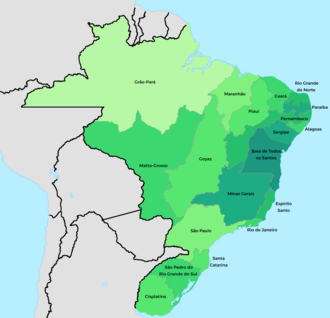
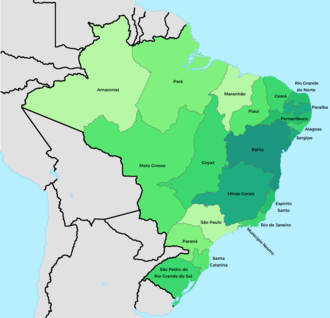
The Empire of Brazil. A map showing the Empire and its provinces

Key Facts

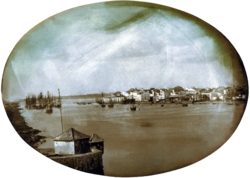
Photograph of various residential and commercial buildings along a waterfront
Recife, capital of Pernambuco (Brazilian northeast), two years after the end of the Praieira revolt
  • Duration: 1822 to 1889.
  • Government: Unitary parliamentary constitutional monarchy.
  • Capital: Rio de Janeiro.
  • Key Leaders: Emperor Pedro I (1822–1831) and Emperor Pedro II (1831–1889).
  • Major Milestone: The abolition of slavery via the Golden Law on May 13, 1888.
  • Territorial Change: The Cisplatina province became independent as Uruguay in 1828.

Government and Political Structure
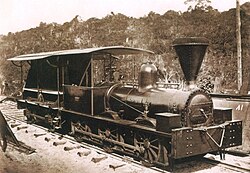
An old photograph showing a shiny black locomotive having a cab with open sides and a large, funnel-shaped smokestack
A locomotive in Bahia province (Brazilian northeast), c. 1859

The Empire was governed by a constitutional monarchy, meaning the Emperor's powers were defined and limited by a written constitution, first established on March 25, 1824. The legislative branch, known as the General Assembly, consisted of an upper house (the Senate) and a lower house (the Chamber of Deputies).
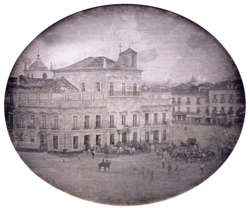
Photograph showing the Imperial Palace in Rio de Janeiro with carriages and mounted honor guard in the square fronting the palace
The Paço Imperial in Rio de Janeiro, seat of the Brazilian government (1840)

Electoral Participation

Interestingly, Brazil's 19th-century elections were relatively democratic for the era. While former slaves were barred from voting, their descendants and illiterate citizens were often permitted to participate. This resulted in a high proportion of low-income voters; for instance, in the town of Formiga in 1876, the poor made up 70% of the electorate.
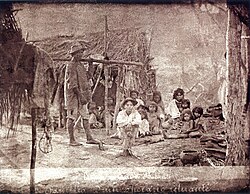
An old photograph depicting a group of poorly clad people in fronto of a small hut constructed of small tree branches
A very poor family of caboclos in Ceará province (Brazilian northeast), 1880. In practice, any employed male citizen could qualify to vote, so most electors had low incomes

The Role of the Military

The Brazilian armed forces were essential for maintaining national integrity and securing borders. Military personnel were permitted to hold political office while on active duty, though they were expected to represent their local constituencies rather than the military as an institution.
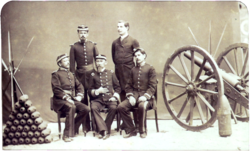
A photograph depicting a group of five uniformed men posed between a pyramid of artillery shells on the left and a wheeled field artillery piece on the right
Brazilian Army officers, 1886

Military Conflicts and Foreign Relations
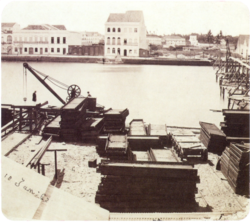
An old photograph showing piles of construction materials and equipment along the bank of a river with large white buildings lining the opposite bank
A construction site in the docks of Recife, 1862

Throughout its existence, the Empire faced several international and internal conflicts. The military was instrumental in the war of secession from Portugal (1822–1824) and the Cisplatine War (1825–1828), the latter of which led to the independence of Uruguay.

The most significant conflict was the Paraguayan War (1864–1870), a massive struggle that tested the empire's resources and military capabilities. The empire also dealt with internal uprisings, such as the Ragamuffin War and the Cabanagem, to maintain central authority.
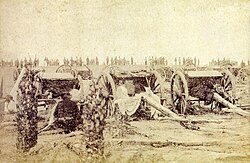
An old photograph showing a group of field artillery pieces and caissons with a line of soldiers in the background
Brazilian artillery in position during the Paraguayan War, 1866

Society, Demographics, and Economy

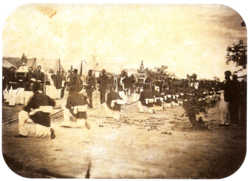
An old photograph showing a procession passing between lines of soldiers with tents in the background
Brazilian soldiers kneeling before a religious procession during the Paraguayan War, 1868

The Empire of Brazil was a multi-ethnic nation characterized by a diverse population of Whites, Browns (Pardos), Blacks, and Indigenous peoples (Caboclos). By 1872, the population had grown to nearly 10 million, with the vast majority residing along the coastline in the northeast and southeast regions.
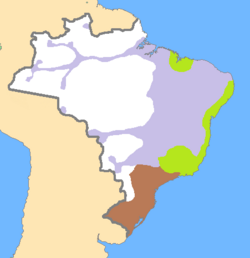
A map of Brazil with regions highlighted using various colors
This map shows where ethnic groups predominated within Brazil: purple—caboclos; brown—whites; green—mulattoes; white—sparsely populated. Note: over 80% of the population lived along the coastline[244]

Slavery and the Golden Law

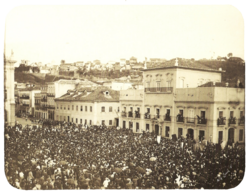
Slavery was a central and contentious part of the imperial economy, particularly on coffee farms in provinces like São Paulo. The struggle for abolition culminated on May 13, 1888, when Princess Isabel signed the Golden Law, officially ending slavery in Brazil.
An old photograph showing a crowded square in front of a large, white, multi-storied building
A few moments after signing the Golden Law, Princess Isabel is greeted from the central balcony of the City Palace by a huge crowd below in the street

Immigration and Religion

To supplement the workforce and expand the population, the empire encouraged European immigration, particularly from Germany and Luxembourg. While Roman Catholicism was the primary religion, the 19th century saw the arrival of Protestants, including English Anglicans and later Lutherans, Baptists, and Methodists from the United States.
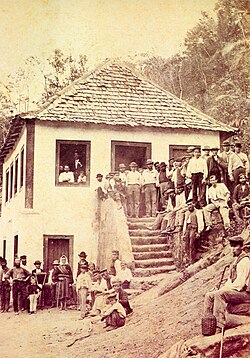
Photograph showing a crowd of people gathered around and on the steps of a white stuccoed house with a hip roof covered in wood shingles situated on a steep slope of a forested hill
German and Luxembourger immigrants in Santa Leopoldina colony in Espírito Santo province (southeast region), 1875

The Fall of the Monarchy

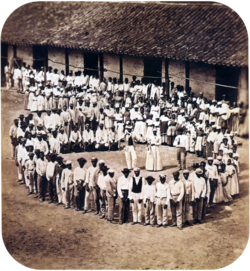
Photograph showing a group of people dressed in white, who have gathered in front of a tile-roofed farm building and observe another large group which has formed a large circle surrounding five men straddling large drums, a woman and two other men
Slaves on a farm in the province of Minas Gerais, 1876

Despite periods of stability and growth, the monarchy eventually declined. The abolition of slavery alienated powerful landowners, while the military grew dissatisfied with the imperial government. On November 15, 1889, the monarchy was abolished, and the First Brazilian Republic was established.
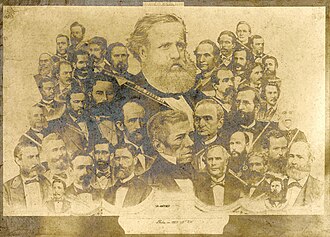
An illustration depicting the large head and shoulders of a bearded man superimposed over a large number of smaller male portrait busts
Emperor Pedro II surrounded by prominent politicians and national figures c. 1875

Imperial Brazil Summary

A map showing the Empire and its provinces
The Empire of Brazil, c. 1889. Cisplatina had been lost since 1828 and two new provinces had been created since then (Amazonas and Paraná)
Overview of the Empire of Brazil (1822–1889)
Category Details
Emperors Pedro I, Pedro II
Capital Rio de Janeiro
Official Language Portuguese
Currency Real (Réis)
Population (1890) 14,333,915
Total Area (1889) 8,337,218 km²

Frequently Asked Questions

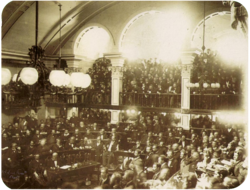
A photograph showing a large number of men seated on semi-circular tiers in a vaulted chamber as a large crowd looks on from an arcaded balcony
The Brazilian Senate voting on the Golden Law in 1888 as spectators watch from the gallery
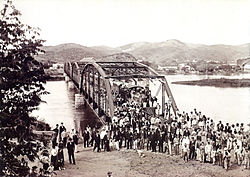
An old photograph showing a crowd of people in the foreground with a steel bridge spanning a river in the background
White Brazilians and afro-descendants gathered in the Rio de Janeiro province (Brazilian southeast), c. 1888. Brazil's 19th-century elections were very democratic for the time, but were plagued by fraud
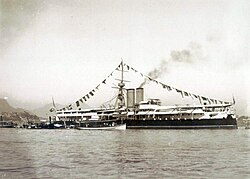
A photograph showing a steamship in port, fully dressed with flags and a single visible gun turret towards the bow
The Brazilian ironclad warship Riachuelo, 1885
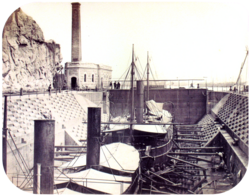
A photograph with two steamships resting in a dewatered drydock with a building housing the engine for operating the lock's gates in the background
Shipyard in Rio de Janeiro city, c. 1862
By 1889, most of Brazil's borders had been established by international treaties, with a few contested areas[A]
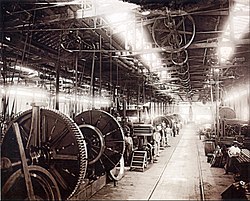
A photograph showing the interior of a large factory building with lighting provided by overhead skylights, underneath which is suspended a line shaft providing power via pulley belts to various machines on the factory floor, some of which dwarf workers standing by their stations
A Brazilian factory, 1880
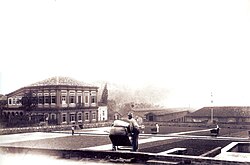
A photograph showing workers spreading or gathering coffee beans drying on a large paved plaza with an elegant, two-story neoclassical building on the left and warehouses and other plantation buildings in the background
A coffee farm in São Paulo province, 1880
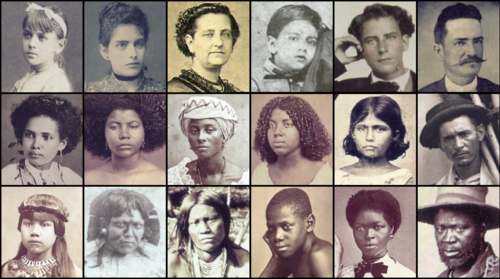
A montage of old photographic portraits of eighteen individual people arranged in three rows
19th-century Brazilians. 1st row: White Brazilians. 2nd row: Brown Brazilians (left to right: two female mulattoes, two female cafuzos and a caboclo girl and man). 3rd row: three Brazilian Indians of different tribes followed by Afro-Brazilians of distinct ethnic background
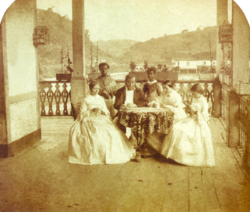
a man and three women seated around a table with two servants standing in the background
A Brazilian family and its female house slaves, c. 1860
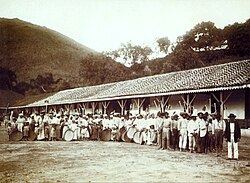
a large group of men, women and children holding agricultural implements and standing in front of a long, low building with hills rising in the background
Slaves and their free children on a coffee farm in Brazil, c. 1885
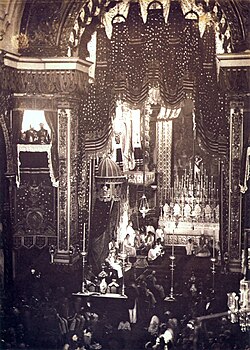
Looking down upon an assembly in a large, vaulted cathedral with a figure sitting on a large, canopied throne to the left of an altar
A state ceremony in the Old Cathedral of Rio de Janeiro; the attendees are wearing court dress
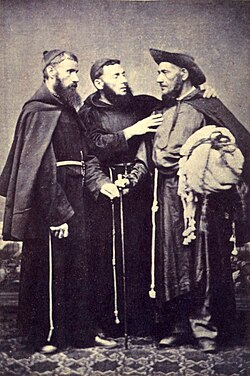
A photograph showing 3 standing men wearing religious habits
Brazilian friars c. 1875
Painting depicting an interior with a nude female model sitting at a spinet piano while an artist works at his easel on the left side of the canvas
O descanso do modelo (The model's rest), by Almeida Júnior, 1882
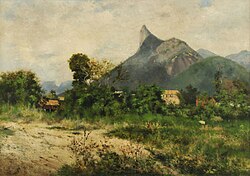
A landscape painting depicting houses nestled among trees in the middle-distance, and a large hill topped by a rock spire in the far distance
Morro da Viúva (Widow's mount), by França Júnior, c. 1888
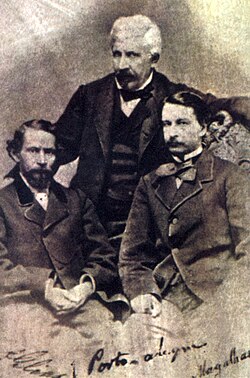
An old photograph depicting two dark-haired men seated in the foreground and a white-haired man standing behind
A photograph dating from c. 1858, showing three major Brazilian Romantic writers. From left to right: Gonçalves Dias, Manuel de Araújo Porto Alegre and Gonçalves de Magalhães

Who was the first Emperor of Brazil?

The first Emperor was Pedro I, who declared Brazil's independence from Portugal on September 7, 1822, and was acclaimed emperor on October 12 of the same year.

What was the Golden Law?

The Golden Law was a decree signed by Princess Isabel on May 13, 1888, which officially abolished slavery throughout the Empire of Brazil.

How did the Empire of Brazil end?

The monarchy was abolished on November 15, 1889, leading to the establishment of the First Brazilian Republic.

What was the ethnic composition of the Empire?

According to the 1872 census, the population consisted of 38.1% Whites, 38.3% Browns (Pardos), 19.7% Blacks, and 3.9% Indigenous/Caboclo people.

Which major war did the Empire fight in the late 1860s?

The Empire fought in the Paraguayan War, which lasted from 1864 to 1870.