Emperor of India: The History of the British Imperial Title
From 1876 to 1948, the British monarch held the prestigious title of Emperor of India. This designation served as a powerful symbol of sovereignty over the British Indian Empire, marking a transition from mercantile rule to direct imperial governance. The title, known in Hindi and Urdu as Kaisar-i-Hind, integrated the British Crown into the complex political landscape of South Asia.
The presence of the Emperor or Empress was woven into the fabric of colonial administration. Their image appeared on Indian currency, government buildings, railway stations, and courts. High-ranking officials, including governors-general, princes, and commissioners, swore oaths of allegiance to the monarch during grand events known as imperial durbars—formal assemblies used to project power and legitimacy.
![New Crowns for Old: Disraeli and Victoria in a cartoon mimicking a scene in Aladdin where lamps are exchanged. She made him Earl of Beaconsfield at this time.[4]](/images/d9/d5/d9d561fa72adfad4f8dbaf3223cf7fe8d24147308f747229ca8e14a81061e0bc.jpg)
Key Facts
- Established: May 1, 1876, via the Royal Titles Act 1876.
- Abolished: June 22, 1948, following the Indian Independence Act 1947.
- First Holder: Queen Victoria.
- Last Holder: George VI.
- Vernacular Title: Kaisar-i-Hind (meaning "Emperor of India").
- Symbolism: Represented the transition from East India Company rule to the British Raj.
The Origins of the Imperial Title
The path to the imperial title began after the Indian Rebellion of 1857. Following the deposition of the nominal Mughal emperor Bahadur Shah Zafar, the United Kingdom transferred control of British India and the princely states from the East India Company (EIC) to the Crown. This shift marked the official start of the British Raj.
By 1874, the EIC was dissolved, and Prime Minister Benjamin Disraeli proposed that Queen Victoria be named "Empress of India." While the idea had been suggested as early as 1843 by Lord Ellenborough, Victoria herself pushed for the change in the 1870s. Her motivations were partly personal; as Empress, she would outrank her daughter, Victoria, who was married to the heir of the German Empire. To avoid domestic political controversy in Britain, Disraeli persuaded the Queen to limit the title to India rather than claiming to be Empress of Great Britain and Ireland.
The term Kaisar-i-Hind was coined by orientalist G.W. Leitner. The word kaisar is derived from the Roman title caesar, traveling through Persian and Ottoman Turkish, and is a cognate of the German Kaiser.
Imperial Regalia and Ceremonies
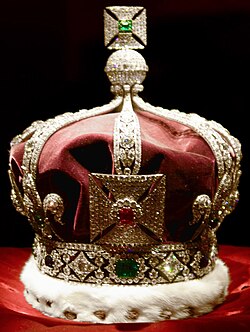
To solidify the status of the monarchy, the British held the Delhi Durbar, an imperial coronation ceremony. The first was held for Queen Victoria on January 1, 1877. Later, King George V became the first emperor to actually visit India, for which a specific crown was commissioned.
The Imperial Crown of India was a masterpiece of jewelry, weighing 920 grams and featuring 6,170 diamonds, nine emeralds, four rubies, and four sapphires. Its centerpiece was a 32-carat emerald. Despite its splendor, George V noted in his diary that the crown was heavy and uncomfortable to wear during his coronation.
The Transition to Independence
The title of Emperor of India persisted through the reigns of Edward VII, George V, Edward VIII, and George VI. Even after the partition of India and Pakistan on August 15, 1947, George VI remained the titular head of the two new independent dominions.
The title was not officially removed until June 22, 1948. Under the Indian Independence Act 1947, George VI issued a royal proclamation omitting the words "Emperor of India" (and the Latin Indiae Imperator) from his official style and titles.

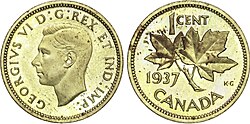
This imperial legacy was also visible on coinage. British and Commonwealth coins frequently featured the abbreviation Ind. Imp. (Indiae Imperator). This remained on UK coins until late 1948, when a further proclamation under the Coinage Act 1870 removed it.
Summary of Imperial Monarchs
| Monarch | Imperial Reign | Royal House | Imperial Durbar |
|---|---|---|---|
| Victoria | 1876–1901 | Hanover | 1877 (represented by Lord Lytton) |
| Edward VII | 1901–1910 | Saxe-Coburg and Gotha | 1903 (represented by Lord Curzon) |
| George V | 1910–1936 | Saxe-Coburg and Gotha / Windsor | 1911 |
| Edward VIII | 1936 | Windsor | None |
| George VI | 1936–1948 | Windsor | None |
Frequently Asked Questions
Why was the title "Emperor of India" created?
The title was created to signify the British monarch's direct sovereignty over the Indian Empire after control was transferred from the East India Company to the Crown, and to provide a ceremonial status that matched the scale of the "Indian Empire."
What does Kaisar-i-Hind mean?
Kaisar-i-Hind is the vernacular title in Hindi and Urdu meaning "Emperor of India." The word kaisar is derived from the Latin caesar.
When was the title officially abolished?
The title was officially abolished on June 22, 1948, via a royal proclamation by George VI in accordance with the Indian Independence Act 1947.
Did the title end immediately upon India's independence in 1947?
No. George VI continued to hold the title for nearly a year after independence, remaining the titular head of the dominions of India and Pakistan until the official proclamation in June 1948.
What was the significance of "Ind. Imp." on coins?
"Ind. Imp." is an abbreviation for Indiae Imperator, the Latin translation of "Emperor of India," which appeared on British and Commonwealth coinage to denote the monarch's imperial status.