Emmy Noether: The Architect of Modern Abstract Algebra
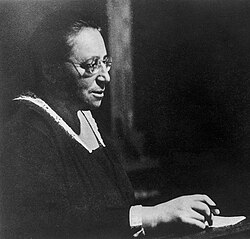
Amalie Emmy Noether was a German mathematician whose visionary work fundamentally reshaped the landscape of 20th-century mathematics and physics. Described by luminaries such as Albert Einstein and Norbert Wiener as the most important woman in the history of mathematics, Noether transitioned the field from specific calculations to a more conceptual, structural approach. Her legacy persists today in every modern textbook on abstract algebra—the study of algebraic structures such as groups, rings, and fields.
Beyond pure mathematics, Noether provided a critical bridge to theoretical physics. Her work on symmetry and conservation laws remains a cornerstone of the physical sciences, ensuring that the laws of nature are understood through the lens of mathematical invariance.
Key Facts
- Primary Contributions: Developed the theories of rings, fields, and algebras; proved Noether's first and second theorems.
- Physics Impact: Established the connection between symmetry and conservation laws.
- Academic Legacy: Pioneered the structural approach to algebra, leading to the concept of Noetherian rings.
- Major Institutions: University of Erlangen-Nuremberg, University of Göttingen, and Bryn Mawr College.
- Recognition: Recipient of the Ackermann–Teubner Memorial Award (1932).
Early Life and Academic Struggles

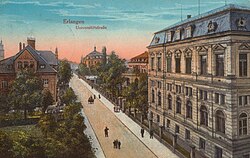
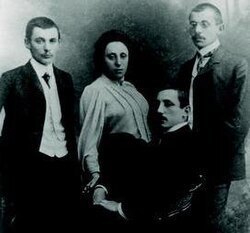
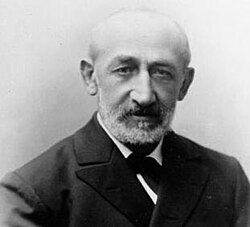
Born in Erlangen, Kingdom of Bavaria, in 1882, Noether pursued her education at the University of Erlangen-Nuremberg. Her early career was marked by significant institutional barriers due to her gender. From 1908 to 1915, she taught at Erlangen's Mathematical Institute without pay, often substituting for her father, Max Noether.
During this period, she focused on algebraic invariant theory—the study of polynomials that remain unchanged under certain transformations. Her doctoral dissertation, supervised by Paul Gordan, focused on the invariants of biquadratic forms.
![Table 2 from Noether's dissertation[30] on invariant theory. This table collects 202 of the 331 invariants of ternary biquadratic forms. These forms are graded in two variables x and u. The horizontal direction of the table lists the invariants with increasing grades in x, while the vertical direction lists them with increasing grades in u.](/images/7e/1b/7e1ba859dd1ed199c69a149f613e7a38a454cbdbead022e167f5f2a3551e311e.jpg)
The Göttingen Years and Breakthroughs
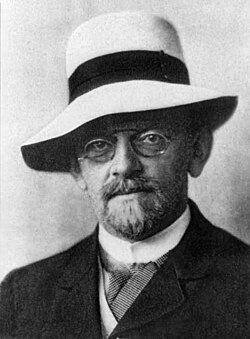
In 1915, David Hilbert invited Noether to join the mathematics department at the University of Göttingen. Despite opposition from colleagues who believed women should not teach at a university, Hilbert's support was pivotal.
Following the social shifts of the German Revolution (1918–1919), Noether finally achieved her habilitation (the qualification required to teach independently) in 1919. Although she began lecturing four years prior, she remained unpaid for a significant portion of her tenure as a privatdozent.

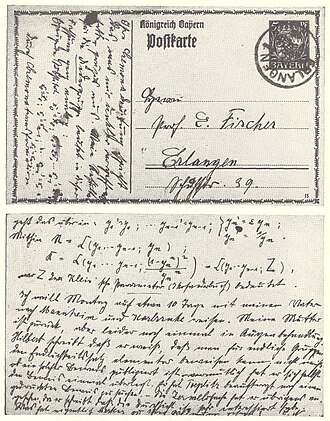
At Göttingen, Noether became a central figure in a global hub of research. She maintained a prolific correspondence with colleagues, often using postcards to discuss complex abstract algebra concepts.
Noether's Theorem in Physics
One of her most enduring contributions is Noether's theorem, which proves that every differentiable symmetry of the action of a physical system has a corresponding conservation law. For example, time symmetry leads to the conservation of energy, and rotational symmetry leads to the conservation of angular momentum.
Evolution of Mathematical Thought
Noether's scientific career is generally divided into three distinct epochs:
- First Epoch (1908–1919): Focused on algebraic invariant theory and Galois theory.
- Second Epoch (1920–1926): Devoted to the general theory of ideals and the development of commutative rings. She introduced the ascending and descending chain conditions, which define Noetherian rings.
- Third Epoch (1927–1935): Focused on noncommutative algebra, linear transformations, and commutative number fields.

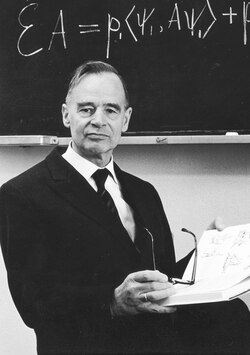
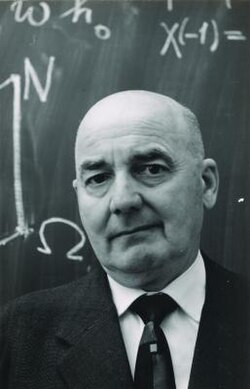
Her influence extended to a generation of students and colleagues, including B. L. van der Waerden and Helmut Hasse, the latter of whom collaborated with her to found the theory of central simple algebras.
Final Years and Global Legacy
The rise of Nazi Germany led to Noether's expulsion from the University of Göttingen in 1933. She sought refuge in the United States, finding a welcoming academic home at Bryn Mawr College and maintaining ties with Princeton University.

Noether passed away on April 14, 1935, at the age of 53. Her ashes were placed under the cloistered walkway of Bryn Mawr's Old Library.

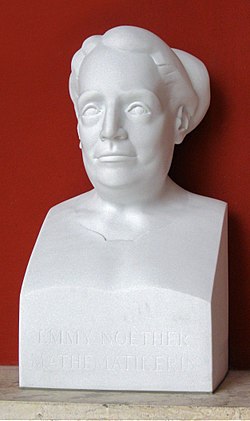
Today, her impact is recognized globally. The Emmy–Noether–Campus at the University of Siegen honors her name, and she is commemorated with a stone bust in Munich's Ruhmeshalle.
![The Emmy–Noether–Campus at the University of Siegen is home to its mathematics and physics departments.[242]](/images/43/36/43363f3dadcd7311178c2bc4368d0e8f12e6c86f8ac17c24958479fa1fe163ab.jpg)
| Category | Details |
|---|---|
| Born/Died | 1882 (Erlangen) – 1935 (Bryn Mawr) |
| Key Fields | Abstract Algebra, Mathematical Physics |
| Major Theorem | Symmetry $\leftrightarrow$ Conservation Laws |
| Core Concepts | Noetherian Rings, Noncommutative Algebra |
| Key Institutions | Göttingen, Bryn Mawr, Moscow State University (Visiting) |
Frequently Asked Questions
What is Noether's theorem?
Noether's theorem is a fundamental principle in physics stating that every continuous symmetry of a physical system corresponds to a specific conservation law. This provides the mathematical foundation for why certain quantities, like energy and momentum, remain constant over time.
What does it mean for a ring to be "Noetherian"?
A ring is called Noetherian if it satisfies the ascending chain condition on its ideals. This means that any increasing sequence of ideals must eventually stabilize, a property that is crucial for the study of algebraic geometry and commutative algebra.
Why was Emmy Noether's work so revolutionary?
She shifted mathematics away from the manipulation of specific equations toward the study of abstract structures. By focusing on the properties of rings and fields rather than individual polynomials, she created the framework for modern abstract algebra.
How did Noether contribute to noncommutative algebra?
In her third epoch of research, Noether expanded her work to noncommutative algebra, exploring structures where the order of multiplication matters (i.e., $ab \neq ba$). This work was essential for the later development of quantum mechanics and representation theory.
What challenges did she face during her career?
Noether faced systemic sexism throughout her academic life. She taught without pay for years at Erlangen and was initially blocked from obtaining a formal teaching position at Göttingen despite her brilliance and the support of David Hilbert.