Emigration: Drivers, History, and Global Patterns of Human Movement
Human movement is a fundamental aspect of global history and sociology. While often used interchangeably with immigration, emigration specifically refers to the act of leaving one's resident country with the intent to settle permanently elsewhere. In contrast, immigration is the act of moving into a new country. Essentially, a migrant emigrates from their origin and immigrates to their destination; the two terms simply describe the same journey from different national perspectives.
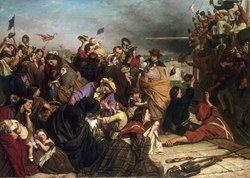
For many, the decision to leave is a choice driven by opportunity. For others, it is a matter of survival. When groups are forced to abandon their native lands due to enforced population transfers or the threat of ethnic cleansing, it is termed forced displacement. Those fleeing oppressive conditions as refugees or asylum seekers often face the most significant hurdles in integrating into new societies, necessitating support from businesses, NGOs, and educational institutions.
Key Facts
- Emigration is the act of leaving a country permanently; immigration is the act of entering one.
- Demographers use push factors (negative conditions at home) and pull factors (positive attractions abroad) to analyze movement.
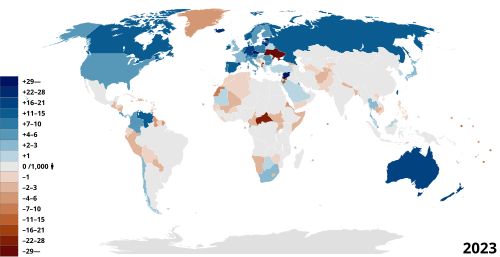
- Global emigration rates grew to reach 280 million people by 2017.
- Brain drain occurs when a high percentage of educated professionals emigrate, as seen in East Germany prior to 1961.
- Some nations maintain strict emigration bans, with North Korea currently having one of the world's most restrictive policies.
The Dynamics of Migration: Push and Pull Factors
To understand why people move, demographers examine the interplay between incentives and pressures. These are categorized as push and pull factors.
Push Factors
Push factors are negative circumstances that encourage or force a person to leave their home. These include:
- Economic Hardship: Recessions, economic collapse, famine, drought, or a lack of employment and entrepreneurial opportunities.
- Political and Social Unrest: Warfare, terrorism, political corruption, lack of freedom of speech, or the threat of arrest.
- Persecution: Intolerance based on race, religion, gender, or sexual orientation.
- Environmental and Social Stress: Overcrowding, resource depletion, or cultural conflicts.
Pull Factors
Pull factors are the positive attributes of a destination that attract migrants. These include:
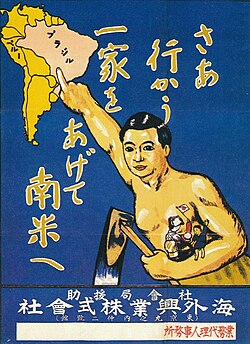
- Economic Opportunity: Higher quality of life, economic growth, higher pay, or the promise of quick wealth (such as during a gold rush).
- Social Connections: The desire to join relatives or fellow countrymen, often leading to chain migration.
- Personal Growth: Better educational opportunities for adults and children, or a more favorable climate.
- Political Freedom: The ability to practice a religion of choice or enjoy greater political liberties.

| Factor Type | Primary Goal | Examples |
|---|---|---|
| Push Factors | Escape negative conditions | War, famine, persecution, unemployment |
| Pull Factors | Seek positive opportunities | Higher wages, political freedom, family reunification |
Historical Patterns and Global Statistics
Throughout the 18th, 19th, and 20th centuries, millions of Europeans fled poverty and violence to settle in Oceania and the Americas. Similarly, the 19th and early 20th centuries saw a massive Chinese diaspora from South China. However, tracking these movements is difficult; many countries do not maintain records of those leaving, forcing researchers to rely on the immigration records of receiving nations.
A modern example of high emigration is found in Armenia, where approximately 1.5% of the population leaves annually. Between 1990 and 2005, between 700,000 and 1,300,000 Armenians emigrated, primarily to Russia, France, and the US, driven by socio-political and economic conditions. In Armenia, migration is split between internal movement (28.7%), often from villages to the capital city of Yerevan, and international migration (71.3%).
Emigration Restrictions and State Control
Not all movement is free. Various governments have historically restricted their citizens' ability to leave. In 1681, the Qing Emperor used the Willow Palisade to prevent Han Chinese migration into Manchu and Mongol lands.
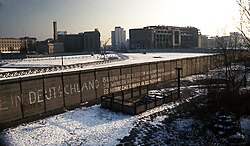
The Soviet Union implemented rigorous controls starting in 1918, utilizing internal passport controls and Propiska (residence permits) to restrict movement. Following World War II, over 15 million people fled Soviet-occupied Eastern Europe for the West. To stop this, the Eastern Bloc emulated Soviet restrictions. In East Germany, a loophole in Berlin allowed younger professionals to flee to West Germany, causing a significant brain drain. This led to the construction of the Berlin Wall in 1961 to effectively seal the border.
Similar restrictions were adopted by China, Mongolia, and North Korea. More recently, following the 2022 invasion of Ukraine, the Ukrainian government introduced martial law restricting men aged 23 to 60 from leaving the country to prevent the evasion of frontline conscription.
Frequently Asked Questions
What is the difference between emigration and immigration?
Emigration is the act of leaving one's own country to settle elsewhere, while immigration is the act of arriving in a new country to settle there.
What are push and pull factors in migration?
Push factors are negative conditions (like war or poverty) that drive people away from their home, while pull factors are positive attractions (like job opportunities or political freedom) that draw them to a new location.
What is "brain drain"?
Brain drain refers to the emigration of highly educated or professional individuals from a particular country, which can result in a loss of human capital for the origin nation.
How is emigration measured if countries don't keep records of people leaving?
Demographers often use secondary sources, such as the immigration records of the receiving countries or data from other administrative agencies, to estimate emigration numbers.
What is forced displacement?
Forced displacement occurs when people are compelled to leave their home country due to threats like ethnic cleansing or enforced population transfers, often resulting in refugee or asylum seeker status.