Embryo Development: From Cellular Origins to Complex Organisms
The journey from a single cell to a complex, multicellular organism is one of the most intricate processes in biology. An embryo represents the early stage of development following fertilization, serving as the blueprint for all future growth. Whether in humans, animals, or plants, this stage is characterized by rapid cell division and the precise organization of tissues that will eventually sustain life.
Key Facts
- Zygote: The initial single cell formed by the fusion of gametes (egg and sperm).
- Germ Layers: Triploblastic animals develop three layers: ectoderm, mesoderm, and endoderm.
- Embryophytes: A collective term for all land plants because they produce embryos.
- ART: Assisted Reproductive Technology, such as IVF, is used for human fertility, agricultural yield, and species conservation.
- Cryoconservation: The storage of embryos and seeds at ultra-low temperatures to prevent extinction.
The Biological Process of Animal Development
In animals, embryonic development begins with the creation of a zygote. This single cell undergoes a series of recognizable stages: cleavage, blastula, gastrulation, and organogenesis.
Gastrulation and Germ Layers
Gastrulation is a pivotal phase where the embryo develops germinal layers. Animals are categorized by the number of layers they form: diploblastic animals (such as Cnidaria) form two layers, while triploblastic animals (including flatworms and humans) form three. In triploblastic organisms, these layers are:
- Ectoderm: Gives rise to the nervous system and the epidermis of the skin.
- Mesoderm: Develops into muscles, bones, connective tissues, and the vascular system.
- Endoderm: Forms the epithelium and organs of the respiratory and digestive systems.
During this stage, the embryo often transforms from a round shape into a cup-like structure through a process called invagination.
Neurulation and Organogenesis
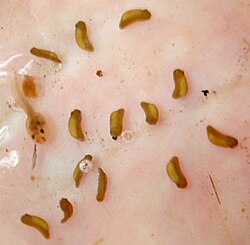
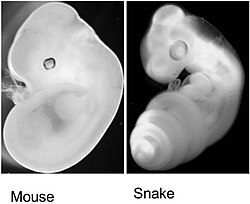
Following gastrulation, the embryo enters neurulation, which specifically forms the nervous system. This leads into organogenesis, the stage where various tissues and organs are developed. Through molecular and cellular interactions, cells differentiate into specific types. For example, neurogenesis occurs when ectoderm cells specialize to become the brain, spinal cord, or peripheral nerves.
Embryonic Development in Plants
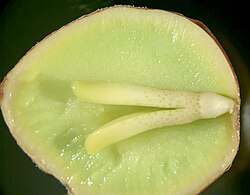
Land plants, known scientifically as Embryophyta (or embryophytes), are distinguished from algae by their ability to produce embryos. In plants that produce spores rather than seeds, such as ferns and bryophytes, the embryo begins inside the archegonium of a parental gametophyte.
The developing embryo features a "foot," a bulbous mass of cells that maintains close contact with the archegonium wall to receive essential nutrition from the parent plant.
Research, Technology, and Conservation
Assisted Reproductive Technology (ART)
ART is used to address fertility issues and enhance selective breeding. In the United States, techniques like in vitro fertilization (IVF) contributed to approximately one million births between 1987 and 2015. Other technologies include preimplantation genetic diagnosis (PGD), used to identify genetic abnormalities like aneuploidy.
In agriculture, ART significantly increases offspring yield; for instance, IVF can increase a cow's annual production from one calf to between 9 and 12. These technologies, including interspecies somatic cell nuclear transfer (iSCNT), are also employed to save endangered species such as cheetahs, sturgeons, and Northern white rhinos.
Cryoconservation and Biodiversity
To protect genetic diversity against mass extinction, scientists use cryoconservation to store embryos, seeds, and gametes at extremely low temperatures. This is seen in "frozen zoos," such as the San Diego Zoo Institute for Conservation, the UK's Frozen Ark, and the BCEAW in the UAE.
Plant biodiversity is similarly protected in seed banks. The Svalbard Global Seed Vault in Norway is the largest of its kind, storing over a million samples at −18 °C (0 °F).
Summary of Embryonic Development
| Stage/Term | Primary Function/Characteristic | Key Outcome |
|---|---|---|
| Zygote | Fusion of gametes | Single-cell origin |
| Gastrulation | Formation of germ layers | Ectoderm, Mesoderm, Endoderm |
| Neurulation | Specialization of ectoderm | Nervous system |
| Organogenesis | Cell differentiation | Formation of organs and tissues |
| Embryophytes | Land plant development | Embryo production |
Frequently Asked Questions
What is the difference between diploblastic and triploblastic animals?
Diploblastic animals develop only two germ layers during gastrulation, whereas triploblastic animals develop three: the ectoderm, mesoderm, and endoderm.
How does IVF benefit agricultural livestock?
IVF allows for selective breeding of desired traits and significantly increases the number of offspring, such as increasing a cow's annual calf yield from one to as many as 12.
What are embryophytes?
Embryophytes are land plants that produce embryos, a characteristic that distinguishes them from other plant-like organisms such as algae.
What is the purpose of the Svalbard Global Seed Vault?
It serves as a massive repository for plant reproductive tissue, storing over a million samples at −18 °C to protect global plant biodiversity from emergencies or mass extinction.
What is the role of the ectoderm in animal development?
The ectoderm is the outermost germ layer and is responsible for forming the skin's epidermis and the entire nervous system.