Land Plants: Evolution, Diversity, and Global Impact
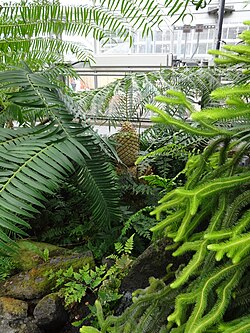
The emergence of land plants, known scientifically as embryophytes, represents one of the most transformative events in Earth's history. Appearing in the fossil record as early as the mid-Ordovician period, these organisms transitioned from aquatic environments to terrestrial landscapes, fundamentally altering the planet's chemistry and geography.
This transition was not merely a biological milestone but a planetary one. The proliferation of land plants during the mid-Paleozoic era drove profound changes in the Earth's oxygen, carbon, and water cycles. By eroding the lithosphere (the rocky outer shell of Earth), plants created an organic pedosphere (soil layer), which in turn modified surface hydrology and hydrochemistry.
One of the most striking impacts was the stepwise oxygenation of the atmosphere. Oxygen levels rose from approximately 2-11% during the Cambrian to mid-Ordovician, reaching around 13% in the early Silurian. By the Devonian, levels approached modern standards (about 21%), eventually peaking at over 35% during the late Carboniferous and Permian periods. This surge is attributed to the radiation and dispersal of embryophytes, particularly the development of vascular plants.
Key Facts
- Temporal Range: Land plants have existed from the mid-Ordovician period to the present.
- Ancestry: They belong to the clade Viridiplantae, sharing a common ancestor with green algae.
- Atmospheric Impact: Plant radiation contributed to a peak atmospheric oxygen level of roughly 35% during the late Carboniferous.
- Classification: They are divided into non-vascular plants (bryophytes) and vascular plants (tracheophytes).
- Soil Creation: The development of land plants created the organic pedosphere through the erosion of the lithosphere.
The Evolutionary Journey of Viridiplantae
Land plants are part of a larger group called Viridiplantae (green plants). Molecular clock estimates suggest that Viridiplantae split into two distinct clades—chlorophytes and streptophytes—between 1,200 and 725 million years ago.
Chlorophytes, comprising around 700 genera, remained primarily marine, though some moved into fresh water. In contrast, streptophyte algae adapted to fresh water early in their history and never returned to marine environments. It is from these streptophytes that the embryophytes (land plants) eventually evolved.
Classification and Diversity of Land Plants
The diversity of land plants is categorized based on their structural complexity, specifically the presence of vascular tissue for transporting water and nutrients.
Non-Vascular Land Plants (Bryophytes)
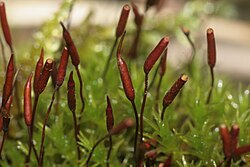
Bryophytes are the most primitive land plants. They lack a specialized vascular system and typically remain small and low to the ground. This group includes:
- Marchantiophyta: Liverworts
- Bryophyta: Mosses
- Anthocerotophyta: Hornworts
Vascular Plants (Tracheophytes)
Tracheophytes evolved specialized tissues (xylem and phloem) to transport water and nutrients, allowing them to grow taller and inhabit drier environments. This group is further divided into several lineages:
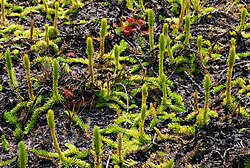
- Lycophytes: Including clubmosses and the extinct zosterophylls.
- Euphyllophytes: A broad group including ferns, horsetails (Polypodiophyta), and seed plants.
- Seed Plants (Spermatophytes): These include Gymnosperms (conifers, cycads, and ginkgo) and Angiosperms (flowering plants).

The Rise of Seed Plants
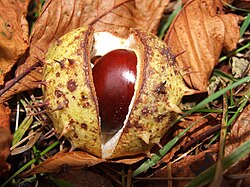
The evolution of the seed was a pivotal adaptation, allowing plants to reproduce without requiring a film of water for sperm to swim to the egg. This led to the dominance of Gymnosperms (naked seeds) and eventually Angiosperms, which protect their seeds within fruits.
Summary of Plant Groups
| Group | Vascular Tissue | Seed Production | Examples |
|---|---|---|---|
| Bryophytes | No | No (Spores) | Mosses, Liverworts, Hornworts |
| Lycophytes | Yes | No (Spores) | Clubmosses |
| Pteridophytes | Yes | No (Spores) | Ferns, Horsetails |
| Gymnosperms | Yes | Yes (Naked) | Conifers, Cycads, Ginkgo |
| Angiosperms | Yes | Yes (Enclosed) | Flowering Plants |
Frequently Asked Questions
When did land plants first appear?
Evidence suggests land plants appeared during the mid-Ordovician period, though their ancestors, the streptophyte algae, existed much earlier.
What is the difference between a bryophyte and a tracheophyte?
Bryophytes are non-vascular plants that lack specialized tissues for transporting water, whereas tracheophytes are vascular plants that possess these tissues, allowing for greater height and structural support.
How did land plants affect the Earth's atmosphere?
Land plants significantly increased atmospheric oxygen levels through photosynthesis, rising from low levels in the Cambrian to a peak of approximately 35% during the late Carboniferous and Permian periods.
What are Viridiplantae?
Viridiplantae is the clade that encompasses both green algae (chlorophytes and streptophytes) and all land plants (embryophytes).
What is the pedosphere?
The pedosphere is the organic soil layer of the Earth's crust, which was created as early land plants eroded the lithosphere (rock) through biological and chemical processes.