Elizabeth II: The Life and Legacy of Britain's Longest-Reigning Monarch
Queen Elizabeth II served as the Queen of the United Kingdom and several other Commonwealth realms for seven decades, becoming a global symbol of stability and continuity. From her early years as a princess to her record-breaking tenure on the throne, her life spanned a period of immense geopolitical shift and social transformation.
Key Facts
- Reign: 6 February 1952 – 8 September 2022.
- Coronation: 2 June 1953.
- Predecessor: King George VI.
- Successor: King Charles III.
- Spouse: Prince Philip, Duke of Edinburgh.
- House: Windsor.
- Milestone: Longest-reigning British monarch in history.
Early Life and the Second World War
Born Princess Elizabeth of York on 21 April 1926, in Mayfair, London, she was the daughter of King George VI and Elizabeth Bowes-Lyon. Her path to the throne was not immediate; she became the heir presumptive (the person most likely to inherit the throne but who could be displaced by a more direct heir) following the abdication of her uncle, Edward VIII.
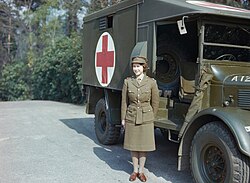
During the Second World War, Princess Elizabeth demonstrated her commitment to national service. She joined the Auxiliary Territorial Service (ATS), where she trained in mechanical engineering and driving.
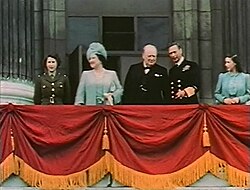
By the end of the war, she appeared alongside her family and Winston Churchill to celebrate the victory in Europe, marking her emergence as a public figure of hope for the British people.
Marriage and Family
In 1947, Elizabeth married Prince Philip, Duke of Edinburgh. Their partnership became a cornerstone of her personal and professional life, providing a steady support system throughout her reign.
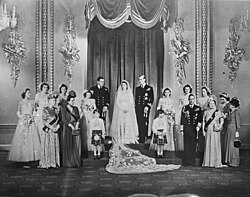
The couple had four children: Charles (the current King Charles III), Anne, Andrew, and Edward. This family structure ensured the continuity of the House of Windsor into the 21st century.
Accession and the Early Reign
Elizabeth ascended to the throne on 6 February 1952, following the death of her father, George VI. Her coronation took place on 2 June 1953, an event that signaled a new era for the British Empire and the evolving Commonwealth.
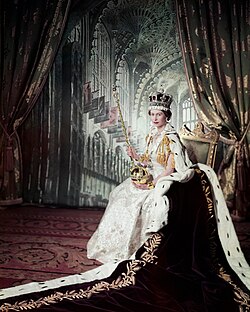
At the start of her reign, her influence extended across a vast array of territories, including colonies, protectorates, and mandates. She worked to transition the British Empire into the Commonwealth of Nations, a voluntary association of independent states.
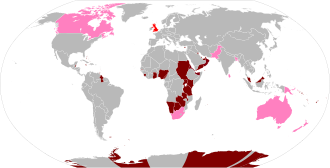
Navigating a Changing World
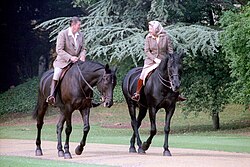
Throughout the mid-to-late 20th century, the Queen navigated significant political reforms and crises. She maintained a neutral political stance while serving as a diplomatic bridge between the UK and its allies and former colonies.
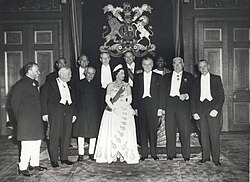
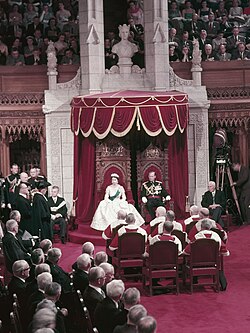
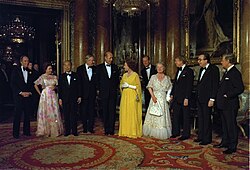
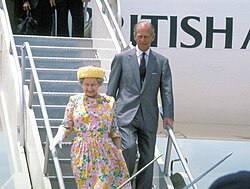
Her duties took her across the globe, from the Canadian parliament to the United States, reinforcing ties with G7 leaders and other heads of state.
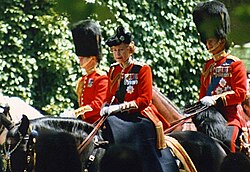
Despite the turbulence of the era, she remained a constant presence, often seen engaging in traditional royal duties such as the Trooping the Colour ceremony or hosting foreign dignitaries.
Milestones and the Modern Era
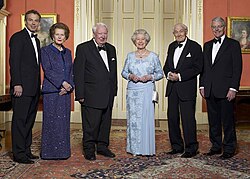
As the decades passed, Elizabeth II reached unprecedented milestones. She hosted living British prime ministers during her Golden Jubilee in 2002 and continued to embrace modern technology and science, greeting NASA employees in 2007.
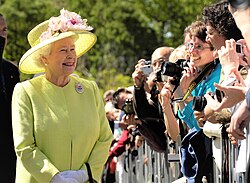
In 2015, she officially became the longest-reigning British monarch. During the opening of the Borders Railway that same year, she noted that she had never aspired to achieve such a milestone.
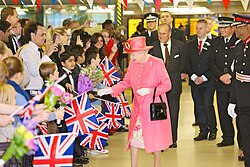
![Opening the Borders Railway on the day she became the longest-reigning British monarch, 2015. In her speech, she said she had never aspired to achieve that milestone.[201]](/images/79/c8/79c8cbfae66ad86755b0b48784cc6d0a6f03bc42d28b4ff97804ddad883e46fd.jpg)
Final Years and Passing
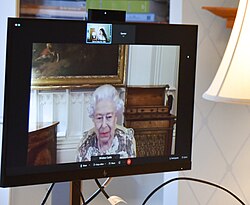
The latter years of her reign were marked by the challenges of the COVID-19 pandemic and the loss of Prince Philip. She adapted to the times, conducting virtual meetings with Commonwealth leaders to maintain diplomatic ties.
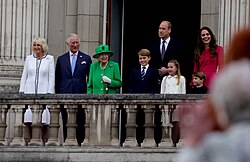
In June 2022, she celebrated her Platinum Jubilee, marking 70 years on the throne, surrounded by her family on the balcony of Buckingham Palace.
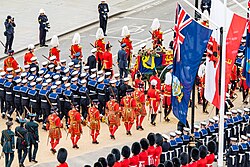
Queen Elizabeth II passed away on 8 September 2022, at the age of 96, at Balmoral Castle in Scotland. Her state funeral took place on 19 September 2022, and she was buried in the King George VI Memorial Chapel at St George's Chapel, Windsor Castle.
Summary of Reign
| Category | Details |
|---|---|
| Full Name | Elizabeth Alexandra Mary |
| Dates of Reign | 1952 – 2022 |
| Key Titles | Queen of the United Kingdom, Head of the Commonwealth |
| Notable Spouse | Prince Philip, Duke of Edinburgh |
| Successor | King Charles III |
| Place of Death | Balmoral Castle, Scotland |
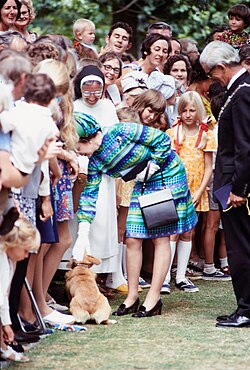
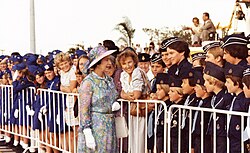
Beyond her formal duties, the Queen was known for her love of animals, particularly her corgis, and her travels to nations like New Zealand and Australia.
Frequently Asked Questions
When did Elizabeth II become the longest-reigning British monarch?
She achieved this milestone in 2015, surpassing the previous record held by her great-great-grandmother, Queen Victoria.
What was her role during World War II?
She served in the Auxiliary Territorial Service (ATS), where she learned mechanical skills and served as a driver.
Who succeeded her as the British monarch?
She was succeeded by her eldest son, Charles III, upon her death on 8 September 2022.
What is the Commonwealth of Nations?
It is a voluntary association of independent states, many of which were formerly part of the British Empire, of which the Queen served as the Head.
Where is Queen Elizabeth II buried?
She is buried in the King George VI Memorial Chapel within St George's Chapel at Windsor Castle.