Electron: The Fundamental Particle of Electricity and Matter
The electron is a subatomic particle that serves as the primary carrier of negative electric charge in the universe. As a fundamental building block of matter, it plays a critical role in the structure of atoms, the conduction of electricity, and the chemical bonding that allows molecules to form. Classified as a lepton within the Standard Model of particle physics, the electron is an elementary particle, meaning it is not composed of smaller constituents.
From the lightning that strikes during a storm to the microscopic circuits in a smartphone, the behavior of electrons governs much of the physical world we experience. By studying the electron, scientists have unlocked the secrets of quantum mechanics and developed technologies that define the modern era.
Key Facts
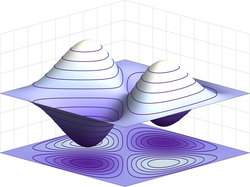
- Discovery: Identified by J. J. Thomson in 1897.
- Charge: Negative electric charge of approximately −1.602 × 10⁻¹⁹ Coulombs.
- Classification: First-generation lepton and a fermion.
- Mass: Extremely small, approximately 9.109 × 10⁻³¹ kg.
- Stability: Theoretically stable with a mean lifetime exceeding 6.6 × 10⁶ years.
- Antiparticle: The positron.
The Discovery and History of the Electron
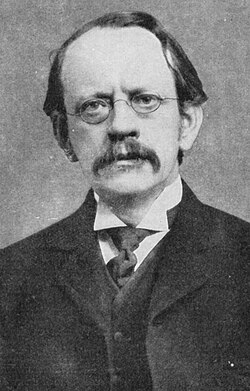
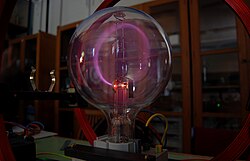
The journey to understanding the electron began with the study of electric forces and the observation of two distinct types of charges. In 1897, J. J. Thomson provided the definitive evidence for the existence of the electron by experimenting with cathode rays. He demonstrated that these rays were composed of particles with a negative charge, far smaller than the smallest known atom.
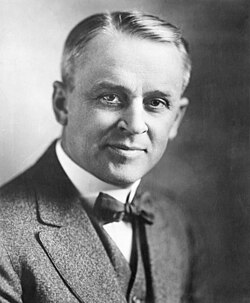
Following Thomson's discovery, other scientists refined our understanding of the particle's properties. Robert Millikan performed the famous oil-drop experiment to precisely measure the charge of a single electron, establishing the fundamental unit of electric charge.
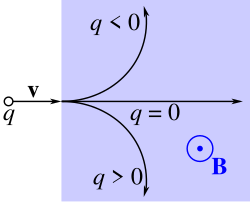
Early experiments also showed how electrons interact with magnetic fields. When a beam of electrons passes through a magnetic field, the particles are deflected into a curved path, a property used today in various scientific instruments.
Fundamental Properties and Classification
In the Standard Model of particle physics, the electron is categorized as a lepton. Unlike protons or neutrons, which are made of quarks, the electron is an elementary particle. It is also a fermion, meaning it follows Fermi-Dirac statistics and obeys the Pauli Exclusion Principle, which prevents two electrons from occupying the same quantum state simultaneously.
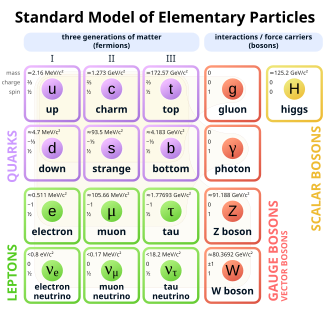
The electron possesses a specific spin of 1/2 ħ and a magnetic moment that allows it to interact with external magnetic fields. Its mass is significantly lower than that of the proton, making it highly mobile and responsive to electric fields.
| Property | Value / Classification |
|---|---|
| Symbol | e, β |
| Mass | 9.109 383 7139 × 10−31 kg |
| Electric Charge | −1 e (−1.602 176 634 × 10−19 C) |
| Family | Lepton (First Generation) |
| Spin | 1/2 ħ |
| Antiparticle | Positron |
The Electron in Atomic Theory
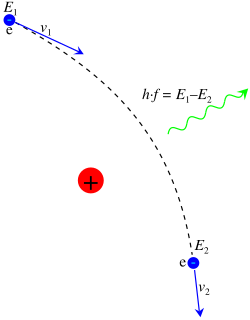
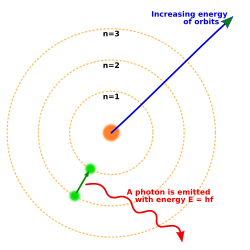
The role of the electron in the atom has evolved through several theoretical models. The Bohr model initially proposed that electrons move in fixed, quantized orbits around the nucleus. In this model, electrons emit photons when they drop from a higher energy orbit to a lower one.
Modern quantum mechanics has replaced the idea of fixed orbits with orbitals. An orbital is a mathematical wavefunction that describes the probability of finding an electron in a particular region of space. Rather than a path, the electron exists in a "cloud" of probability densities.
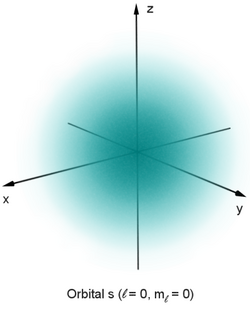
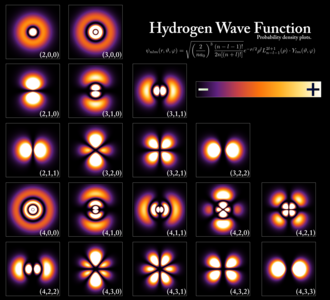
These orbitals are defined by quantum numbers that determine the energy level and shape of the electron's distribution. In a hydrogen atom, for example, the energy level of a bound electron determines which orbital it occupies.
Advanced Quantum and Relativistic Effects
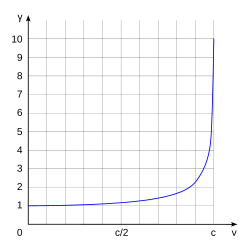
At high velocities, electrons exhibit relativistic effects. As an electron's speed approaches the speed of light (c), its behavior is modified by the Lorentz factor, which affects its mass and energy.
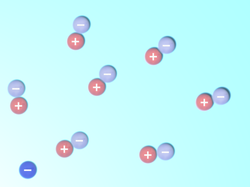
Quantum field theory also describes the existence of virtual particles. For instance, virtual electron-positron pairs can spontaneously appear and disappear in the vacuum near a real electron, influencing its effective charge and magnetic moment.
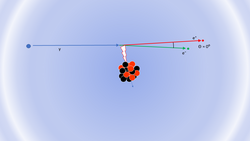
Furthermore, electrons can be created or destroyed through specific processes. Pair production occurs when a high-energy photon interacts with an atomic nucleus to create an electron and its antiparticle, the positron. Conversely, when an electron and positron meet, they annihilate, releasing energy as photons.
Practical Applications and Observations
The movement of electrons is the basis for all electrical conductivity. A large-scale example of this is lightning, which consists primarily of a massive flow of electrons generated by the triboelectric effect (friction-induced charging).

In technology, electron beams are used for high-precision tasks. Electron-beam welding and Scanning Electron Microscopy (SEM) utilize focused beams of electrons to join metals or image materials at the atomic scale. NASA has even used electron beams in wind tunnels to simulate the ionizing gases encountered by spacecraft during atmospheric re-entry.

In nature, energetic electrons precipitating into the Earth's atmosphere are responsible for the creation of aurorae (the Northern and Southern Lights).

Frequently Asked Questions
What is the difference between an orbit and an orbital?
An orbit is a fixed circular path, as suggested by the Bohr model. An orbital is a quantum mechanical wavefunction that represents the probability density of finding an electron in a specific region of space.
What is a positron?
A positron is the antiparticle of the electron. It has the same mass as an electron but carries a positive electric charge (+1 e) instead of a negative one.
Why is the electron considered a fermion?
The electron is a fermion because it has a half-integer spin (1/2 ħ). This means it obeys the Pauli Exclusion Principle, which dictates that no two fermions can occupy the exact same quantum state simultaneously.
How are electrons used in imaging?
Because electrons have much shorter wavelengths than visible light, they can be used in electron microscopes to achieve much higher resolution, allowing scientists to see structures at the atomic or molecular level.
What happens during pair production?
Pair production occurs when a high-energy photon (gamma ray) interacts with the electric field of an atomic nucleus, converting its energy into mass to create an electron and a positron.