Elchingen: A Bavarian Municipality of History and Heritage
Located approximately 7 kilometers east of Ulm – Neu-Ulm in the district of Neu-Ulm, Elchingen is a charming municipality in the state of Bavaria, Germany. Situated within the administrative region of Schwaben, this community blends a rich medieval past with modern connectivity, serving as a point of interest for historians and travelers alike.
The modern municipality is a union of three distinct districts: Thalfingen, Oberelchingen, and Unterelchingen. Together, they form a cohesive community that maintains a strong sense of local identity while contributing to the broader cultural landscape of the region.
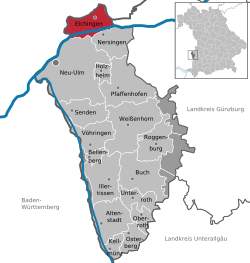
Key Facts
- Location: Neu-Ulm district, Bavaria, Germany.
- Total Population: 9,869 (as of December 31, 2024).
- Total Area: 24.89 km².
- Key Historical Event: The Battle of Elchingen (1805).
- Notable Figure: Ambrosius Ehinger, a German conquistador and first governor of Venezuela.
- Transport: Strategically located on the A8 autobahn and the Brenzbahn railway line.
Historical Evolution
The history of Elchingen is marked by religious influence and geopolitical shifts. The Benedictine monastery of Elchingen was established in the early 12th century, with a probable consecration date of August 15, 1128, though a fire in 1395 destroyed the original documentation.
The area's ownership shifted over centuries. In 1294, Unterelchingen was sold to the Cistercian monastery of Salem, remaining under its control until the secularization (the process of transferring ecclesiastical property to state ownership) in 1802. By 1803, following the Principal Decree of the Imperial Deputation, Oberelchingen, Unterelchingen, and Thalfingen became part of Bavaria.
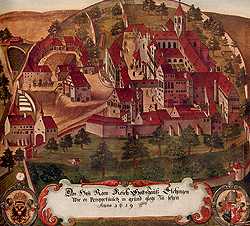
The Battle of Elchingen and Napoleon
Elchingen gained international fame on October 14, 1805, during the Napoleonic Wars. In the Battle of Elchingen, French troops led by Marshal Michel Ney defeated the Austrian forces. This victory was a precursor to the Battle of Ulm and the eventual capitulation of Karl Mack von Leiberich.
In recognition of this victory, Napoleon granted Marshal Ney the title of Duc d'Elchingen in 1806. The name of the municipality is even engraved on the Arc de Triomphe in Paris. This event signaled the end of Austrian supremacy in the region, leading to a significant reorganization of Bavaria and Württemberg.
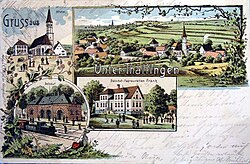
Notable Figures
Beyond military history, Elchingen is the birthplace of Ambrosius Ehinger (born around 1500). A German conquistador, Ehinger became a pivotal figure in the colony of Klein-Venedig in modern-day Venezuela. His life ended in 1533 when he was killed by native tribes while searching for the mythical city of El Dorado.
Geography and Administration
The municipality is managed by a mayor, a position held by Joachim Eisenkolb since 2008. The community is divided into three primary subdivisions, each contributing to the total population and land area.
| District | Population | Area (km²) |
|---|---|---|
| Thalfingen | 4,211 | 8.83 |
| Oberelchingen | 3,024 | 7.31 |
| Unterelchingen | 2,863 | 8.76 |
Local Attractions and Culture
Visitors to Elchingen can explore several architectural and cultural landmarks. In Thalfingen, the Catholic Church of St. Laurentius stands as a central point of interest. Oberelchingen is home to the monastery and the former abbey church of St. Peter and Paul.
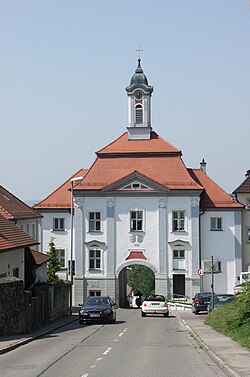
The community is also known for its vibrant traditions. The "Narrabaumstella," a traditional Swabian-Alemannic carnival custom, takes place annually in Oberelchingen, drawing hundreds of participants to the streets. Additionally, the Protestant church in Thalfingen hosts an annual community festival.
Infrastructure and Connectivity
Elchingen is highly accessible due to its location on the A8 autobahn, which connects the major cities of Stuttgart and Munich. It is situated near the intersection of the A8 and A7, providing efficient road access. For rail travelers, the municipality is served by the Brenzbahn, the train line connecting Ulm and Aalen.
Frequently Asked Questions
What is the historical significance of the Battle of Elchingen?
The battle took place on October 14, 1805, where Marshal Michel Ney's Napoleonic troops defeated the Austrians. This led to the reorganization of Bavaria and Württemberg and earned Elchingen a place on the Arc de Triomphe in Paris.
Who was Ambrosius Ehinger?
Ambrosius Ehinger was a German conquistador born in Elchingen around 1500. He served as the first governor of Venezuela and died in 1533 while searching for El Dorado.
Which districts make up the municipality of Elchingen?
The municipality consists of three parts: Thalfingen, Oberelchingen, and Unterelchingen, which were integrated on May 1, 1978.
What are the main tourist attractions in Elchingen?
Key attractions include the monastery in Oberelchingen with the abbey church of St. Peter and Paul, and the Catholic Church of St. Laurentius in Thalfingen.
How can one travel to Elchingen?
Elchingen is accessible via the A8 autobahn (connecting Stuttgart and Munich) and the Brenzbahn railway line between Ulm and Aalen.