Einstein vs. Bergson: The Great Debate on the Nature of Time
On April 6, 1922, two of the most influential minds of the twentieth century collided in a clash of intellects that would resonate through science and philosophy for decades. Albert Einstein, the physicist who had rewritten the laws of the universe, and Henri Bergson, the world's most famous philosopher of his era, met at the Société française de philosophie to debate a fundamental question: What is the nature of time?
This encounter was more than a mere academic disagreement; it was a confrontation between the quantifiable precision of physics and the lived experience of human consciousness. Paul Valéry later described this meeting as the "grande affaire" of the century, marking a pivotal moment in the tension between the humanities and the hard sciences.
Key Facts
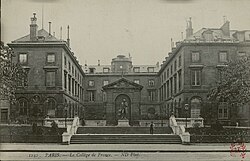
- The Event: A debate held on April 6, 1922, at the Collège de France in Paris.
- The Core Conflict: Whether the theory of relativity accounts for the actual experience of time.
- Bergson's Position: Distinguished between physical time and duration (la durée), the time we actually live.
- Einstein's Position: Argued that there is no "philosopher's time," only physical and psychological time.
- Outcome: The debate contributed to a shift in public perception, favoring scientific realism over vitalist philosophy.
The Combatants: A Study in Contrast
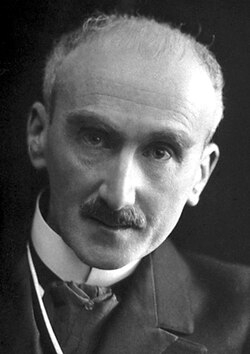
Henri Bergson: The Philosopher of Duration
By the early 1900s, Henri Bergson was a global celebrity. His work, particularly Creative Evolution (1907), drew "mystical pilgrimages" to his home and fascinated Modernist icons like Virginia Woolf and T.S. Eliot. Bergson's central contribution was the concept of duration—the idea that time is a continuous flow of experience that cannot be captured by the discrete ticks of a clock.
While Bergson initially respected Einstein's work, he eventually concluded that relativity only applied to the abstract domain of physics. He believed that by treating time as a spatial dimension, Einstein was grafting metaphysics onto science and ignoring the biological and psychological reality of existence.
Albert Einstein: The Architect of Relativity
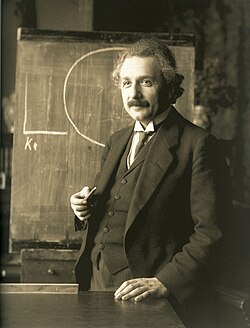
Albert Einstein entered the debate as a scientific superstar. Following the 1919 solar eclipse, which provided empirical evidence for general relativity, the New York Times proclaimed a "Revolution in Science." Einstein's theory proposed that the speed of light is constant, meaning time must pass at different rates depending on the observer's velocity—a concept known as time dilation.
Einstein had little patience for Bergson's intuition-based approach, once describing Bergson's philosophy as "flaccid." For Einstein, time was objective, quantifiable, and predictable, regardless of how an individual might "feel" its passage. He viewed the distinction between the physically real and the psychologically real as a dichotomy that philosophers merely "danced around."
The Core of the Conflict: Physics vs. Experience
The debate centered on whether the mathematical formulas of relativity could describe the totality of time. Bergson argued that science deals with "spatialized time"—time measured by instruments—which is merely a representation of time, not time itself. Einstein countered that the "time of the philosophers does not exist," asserting that physical laws govern the universe regardless of human perception.
| Feature | Henri Bergson | Albert Einstein |
|---|---|---|
| Primary Concept | Duration (la durée) | Relativity / Spacetime |
| Nature of Time | Lived, continuous experience | Quantifiable, objective dimension |
| View on Relativity | Valid for physics, not for life | A universal law of the physical world |
| Methodology | Intuition and Vitalism | Empiricism and Mathematics |
Aftermath and Intellectual Legacy
The debate continued long after the meeting in Paris. In 1922, Bergson published Duration and Simultaneity, a direct challenge to Einstein. In this work, Bergson attempted to refute the twin paradox—a thought experiment where a space traveler ages slower than their sibling on Earth—by claiming that the internal "flow" of consciousness remains the same for both. This argument was scientifically erroneous and failed to convince the public, contributing to the decline of Bergson's celebrity.
The tension extended to the League of Nations' International Committee on Intellectual Cooperation (CIC), where both men served. Their inability to collaborate eventually led to Einstein's resignation in 1922 and Bergson's final resignation in 1925, effectively ending Bergson's public career.
Despite the perceived "victory" of Einstein, Bergson's influence persisted. Later philosophers, such as Maurice Merleau-Ponty and Gilles Deleuze, defended Bergson, arguing that he wasn't trying to correct Einstein's physics, but rather to provide the metaphysics that the theory of relativity lacked.
Frequently Asked Questions
Did Bergson's arguments prevent Einstein from winning the Nobel Prize for relativity?
While some suggest that Bergson's critique of relativity as "epistemology" rather than physics influenced the committee, most historians believe the real reason was political and racial opposition from German ultranationalist physicists. Einstein was ultimately awarded the 1921 Nobel Prize for his discovery of the law of the photoelectric effect.
What is the "twin paradox" mentioned in the debate?
The twin paradox is a consequence of special relativity where one twin travels at high speeds through space and returns to Earth to find their sibling has aged significantly more. Bergson rejected this, arguing that biological aging and the internal experience of duration should be distinguished from measurable clock-time.
What does Bergson mean by "duration" (la durée)?
Duration refers to time as it is lived and experienced by a conscious being—a seamless, indivisible flow that cannot be broken down into discrete, measurable units without losing its essence.
How did the debate affect the relationship between science and the humanities?
The debate highlighted a growing divide between scientism (the belief that science is the only way to find truth) and the humanities. It sparked a long-term discussion on whether human experience can be fully explained by mathematical laws.