Einstein-Podolsky-Rosen Paradox: Challenging the Completeness of Quantum Mechanics
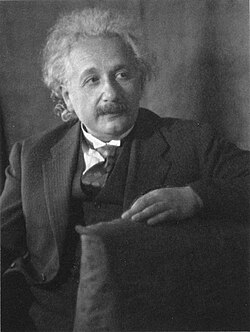
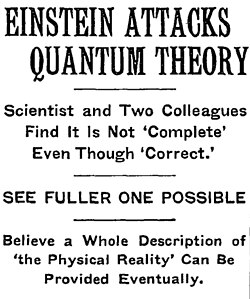
In 1935, physicists Albert Einstein, Boris Podolsky, and Nathan Rosen published a seminal paper that would forever change the discourse on the nature of reality. Their thought experiment, now known as the Einstein-Podolsky-Rosen (EPR) paradox, was designed to argue that the description of physical reality provided by quantum mechanics was incomplete.
At its heart, the EPR paradox questions whether particles possess definite properties before they are measured, or if the act of measurement itself creates those properties. Einstein and his colleagues speculated that there must be "hidden variables"—underlying factors not captured by quantum theory—that determine the outcome of measurements.
The Core of the EPR Thought Experiment
The paradox centers on a pair of particles prepared in an entangled state—a condition where the particles remain connected such that the state of one cannot be described independently of the other, regardless of the distance between them.
Einstein, Podolsky, and Rosen observed that if the position of the first particle were measured, the position of the second could be predicted with certainty. Similarly, if the momentum of the first were measured, the momentum of the second could also be predicted. They relied on the EPR criterion of reality: if a physical quantity can be predicted with certainty without disturbing the system, then that quantity corresponds to an "element of reality."
Because they believed that no action taken on one particle could instantaneously affect another (as this would require information to travel faster than the speed of light, violating the theory of relativity), they concluded that both position and momentum must have definite values prior to measurement. Since quantum mechanics forbids simultaneous definite values for these two observables, the authors argued the theory was incomplete.
Key Facts
- Proposed by: Albert Einstein, Boris Podolsky, and Nathan Rosen in 1935.
- Primary Goal: To demonstrate that quantum mechanics is an incomplete description of physical reality.
- Central Concept: Quantum entanglement, where particles share a unified state.
- The Conflict: The tension between the principle of locality (no faster-than-light influence) and quantum correlations.
- Resolution: Later developments, specifically Bell's theorem, showed that local hidden-variable theories cannot explain all quantum correlations.
Evolution of the Paradox: From Bohm to Bell
The Bohm Variant
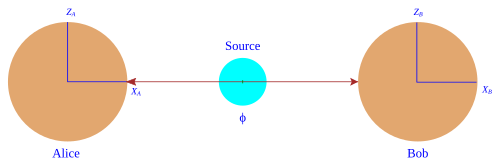
In 1951, David Bohm refined the EPR experiment by replacing position and momentum with discrete outcomes: spin. In the EPR-Bohm version, a source emits electron-positron pairs in a spin singlet state. This is a quantum superposition where if the electron has a spin pointing upward (+z), the positron must have a spin pointing downward (-z), and vice versa.
Bell's Theorem
By 1964, physicist John Stewart Bell addressed the conflict between the EPR paradox and the nonlocal nature of quantum mechanics. He investigated whether local hidden variables could explain the correlations seen in these experiments. Bell discovered that while some correlations could be explained locally, others could not. This result, known as Bell's theorem, provided a way to experimentally test whether the universe is truly local or if quantum nonlocality is a fundamental feature of nature.
Quantum Steering and the Principle of Locality
In 2007, Howard M. Wiseman and colleagues formalized a phenomenon called quantum steering. This occurs when measurements performed by one observer (Alice) effectively "steer" the state of a distant particle held by another observer (Bob), such that Bob's observations cannot be explained by a local hidden state model.
Understanding Locality and Causality
Locality is the principle that physical processes at one location should not have an immediate effect on elements of reality at another location. While quantum mechanics appears to violate this, it does not violate causality or special relativity. This is because Alice cannot use her measurements to send a message to Bob; her results are fundamentally random (50% probability for either spin direction). Furthermore, the no-cloning theorem prevents Bob from copying his particle to determine the statistical distribution of results, ensuring that no information is transmitted faster than light.
Summary of EPR Concepts
| Concept | EPR Perspective (Local Realism) | Quantum Mechanical Perspective |
|---|---|---|
| Physical Reality | Properties exist independently of measurement. | Properties are determined upon measurement. |
| Locality | No instantaneous action at a distance. | Nonlocal correlations exist between entangled particles. |
| Completeness | Theory is incomplete; hidden variables exist. | The wave function provides a complete description. |
| Information | Limited by the speed of light. | Causality preserved; no FTL communication possible. |
Frequently Asked Questions
What exactly is the EPR paradox?
It is a thought experiment suggesting that quantum mechanics is incomplete because it cannot account for "elements of reality" (like definite position and momentum) that seem to exist for entangled particles regardless of measurement.
Does the EPR paradox prove that information travels faster than light?
No. While entangled particles show instantaneous correlations, the no-cloning theorem and the randomness of quantum outcomes prevent any actual information or messages from being transmitted faster than the speed of light.
What are hidden variables?
Hidden variables are hypothetical properties that Einstein and his colleagues proposed to explain quantum correlations without needing nonlocal "spooky action," suggesting the particles carry pre-determined instructions.
How did Bell's theorem resolve the paradox?
Bell's theorem mathematically proved that no theory based on local hidden variables could reproduce all the predictions of quantum mechanics, shifting the debate from philosophy to experimental physics.
What is a spin singlet?
A spin singlet is a specific entangled state of two particles where their total spin is zero. If one particle is measured to have spin-up, the other must be spin-down, regardless of the distance between them.