Arab Republic of EgyptAncient EgyptCairoNile ValleySuez Canal

Egypt: A Journey Through the Cradle of Civilization and Modernity

Egypt: A Journey Through the Cradle of Civilization and Modernity The Arab Republic of Egypt is a land where antiquity and modernity coexist in a striking balance. From the timeless pyram...

Egypt: A Journey Through the Cradle of Civilization and Modernity

The Arab Republic of Egypt is a land where antiquity and modernity coexist in a striking balance. From the timeless pyramids of Giza to the bustling metropolitan energy of Cairo, Egypt serves as a vital bridge between Africa and Asia. Defined by the life-giving waters of the Nile, the nation has evolved from one of the world's earliest organized civilizations into a pivotal modern state in the Arab world.

Today, Egypt is a unitary semi-presidential republic, navigating the complexities of the 21st century while preserving a heritage that spans millennia. With a population exceeding 107 million people, it remains a center of political, cultural, and economic influence in the region.

Key Facts

  • Capital: Cairo, the largest city in the country.
  • Official Language: Arabic (National language: Egyptian Arabic).
  • Geography: Dominated by the Nile Valley and vast deserts.
  • Economy: A diverse mix of tourism, agriculture, hydrocarbons, and manufacturing.
  • Key Landmark: The Giza Necropolis, the only remaining ancient Wonder of the World.
  • National Animal: The Eastern Imperial Eagle.

A Timeline of Egyptian History

Prehistoric and Ancient Egypt (3150 BCE – 305 BCE)

Egypt's early history is marked by the rise of powerful pharaohs and the construction of monumental architecture. This era saw the development of a complex society centered around the Nile, producing the iconic pyramids and a sophisticated system of writing and governance.
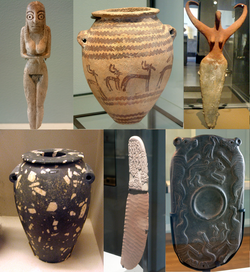
Clockwise: a Badarian mortuary figurine, a Naqada jar, a Naqada statuette of the goddess Bat, the Four dogs palette, the Gebel el-Arak Knife, and a Naqada diorite vase.

Ptolemaic, Roman, and Medieval Eras (305 BCE – 1517 CE)

Following the era of the pharaohs, Egypt came under the rule of the Ptolemies, including the famous Queen Cleopatra VII, and later became a province of the Roman Empire. The arrival of Islam in 641 CE ushered in a medieval period characterized by the construction of great mosques and the rise of Cairo as a center of Islamic learning.
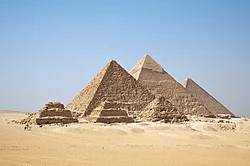
The Giza Necropolis is the oldest of the ancient Wonders and the only one still in existence.

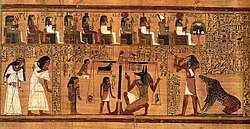
The Weighing of the Heart from the Book of the Dead of Ani

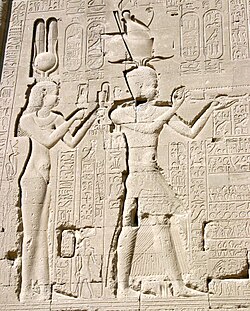
The Ptolemaic Queen Cleopatra VII and her son by Julius Caesar, Caesarion, at the Temple of Dendera

From Monarchy to Republic (1517 – Present)

After centuries of Ottoman rule, Egypt transitioned through a monarchical period before the Revolution of 1952 established the Republic. The nation saw transformative leadership under Gamal Abdel Nasser, Anwar Sadat, and Hosni Mubarak, eventually leading to the contemporary era following the events of 2011.
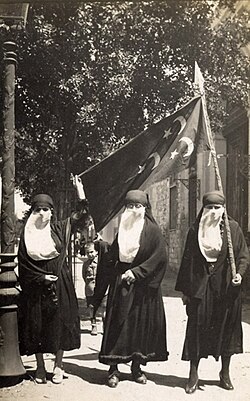
Female nationalists demonstrating in Cairo during the 1919 revolution, 1919

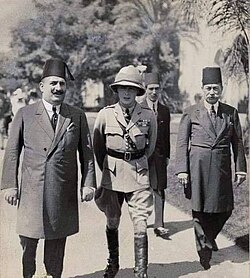
Fuad I of Egypt with Edward, Prince of Wales, 1932

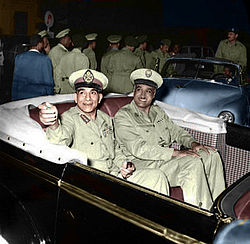
Two smiling men in military uniform seated in an open-top automobile. The first man on the left is pointing his hand in a gesture. Behind the automobile are men in uniform walking away from the vehicle
Gamal Abdel Nasser (right) and Mohamed Naguib (left) during celebrations marking the second anniversary of the 1952 Egyptian revolution, July 1954

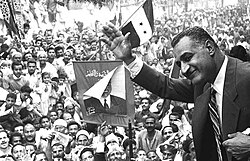
Egyptian President Gamal Abdel Nasser in Mansoura, 1960

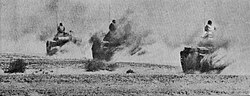
Egyptian vehicles advancing in the Sinai Peninsula during the Yom Kippur War, 1973

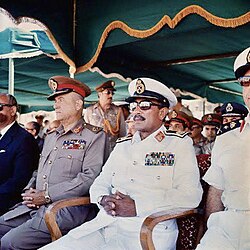
Egyptian President Anwar Sadat and Minister of War Ahmad Ismail Ali attending the re-opening ceremony of Suez Canal after the Yom Kippur war, 1975

Geography and Environment

Egypt's landscape is defined by a sharp contrast between the hyper-arid desert and the lush, irrigated Nile Valley. The vast majority of the population and agricultural activity are concentrated along the river and in the Nile Delta.
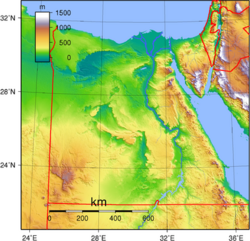
Egypt's topography
Egypt's topography

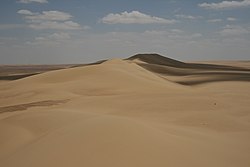
The Qattara Depression in Egypt's north west

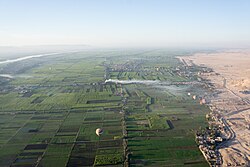
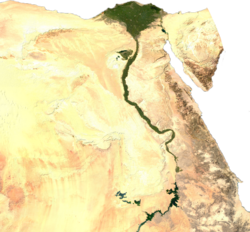
The sharp boundary between the hyper-arid desert and the irrigated Nile Valley, where most of Egypt's population and agriculture are concentrated.

Despite its abundance of land, Egypt faces significant environmental challenges. In 2022, it was ranked as the eighth most water-stressed country globally, highlighting the critical importance of the Nile for its survival.
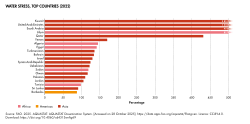
Egypt was the eighth most water-stressed country in the world in 2022.

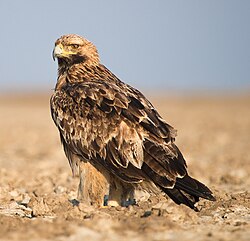
The Eastern Imperial Eagle is the national animal of Egypt.

Government and Administration

Egypt is governed as a unitary semi-presidential republic. The current administration is led by President Abdel Fattah el-Sisi and Prime Minister Mostafa Madbouly. The legislative branch consists of a bicameral Parliament, comprising the Senate (Upper House) and the House of Representatives (Lower House).
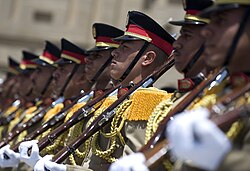
Egyptian honour guard soldiers in 2009

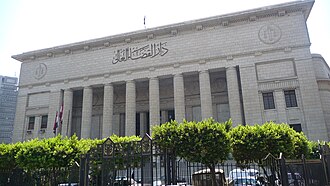
The High Court of Justice in Downtown Cairo

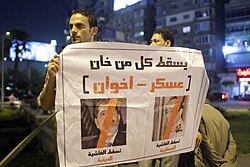
Protesters from the Third Square movement, which supported neither the former Morsi government nor the Armed Forces, 31 July 2013

The country is divided into various governorates, ranging from the urban hubs of Cairo and Alexandria to the remote stretches of the New Valley and Red Sea regions.
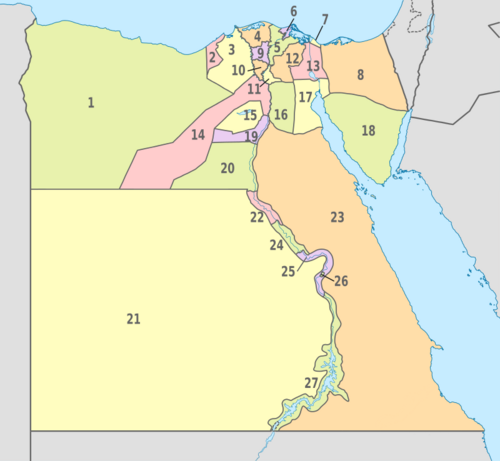
Governorates of Egypt: Matrouh Alexandria Beheira Kafr El Sheikh Dakahlia Damietta Port Said North Sinai Gharbia Monufia Qalyubia Sharqia Ismailia Giza Faiyum Cairo Suez South Sinai Beni Suef Minya New Valley Asyut Red Sea Sohag Qena Luxor Aswan

Economic Landscape

Egypt possesses a diverse economy with a significant GDP (PPP) estimated at $2.567 trillion for 2026. The economic structure is supported by several key pillars:

  • Manufacturing: Including a growing chemical industry and the production of electric vehicles for international markets.
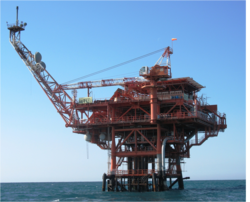
  • Hydrocarbons: Significant gas fields, such as the Darfeel Gas Field, provide essential energy and export revenue.
  • Agriculture: Centered in the Nile Delta, focusing on food security and land reclamation.
  • Tourism: A cornerstone of the economy, drawing millions of visitors to the Giza Necropolis and other historic sites.
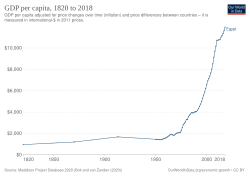
Change in per capita GDP of Egypt, 1820–2018. Figures are inflation-adjusted to 2011 International dollars.

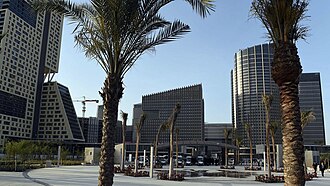
The central business district in Egypt's new capital

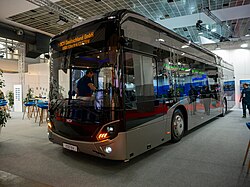
The fully electric MCV C127 EV, made in Egypt for the German market

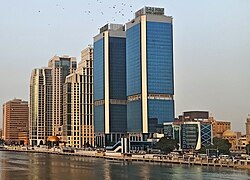
The National Bank of Egypt towers in Cairo

An offshore platform in the Darfeel Gas Field

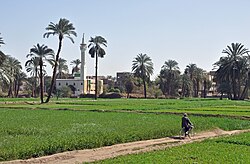
Farmland in the Egyptian countryside

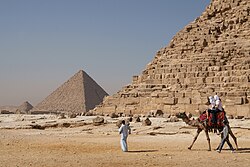
Tourists riding a camel in front of Pyramid of Khafre. The Giza Necropolis is one of Egypt's main tourist attractions.

Infrastructure and Energy

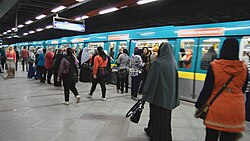
Major projects like the Aswan High Dam and the expansion of the Suez Canal are vital to Egypt's energy and trade capabilities. The nation is also investing heavily in urban transport, such as the Cairo Metro Line 3, and the development of a new administrative capital.
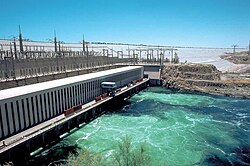
Power plant of the Aswan High Dam, with the dam itself in the background

The Cairo Metro Line 3

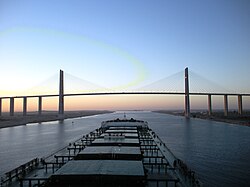
The Suez Canal Bridge

Green irrigated land along the Nile amidst the desert and in the Nile Delta

Demographics and Society

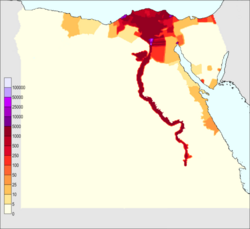
With a population density of 106.8 people per km², Egypt's population is heavily concentrated. Cairo has grown into a massive metropolitan area with over 22 million residents.

Cairo grew into a metropolitan area with a population of over 22 million.[90]

Egypt's population density (people per km2)

Education and Health

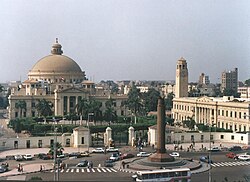
Egypt continues to improve its literacy rates and healthcare infrastructure, exemplified by specialized institutions like the 57357 children's cancer hospital and the prestigious Cairo University.
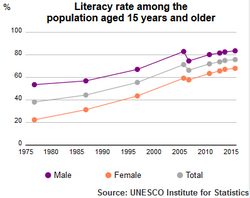
Egyptian literacy rate among the population aged 15 years and older by UNESCO Institute of Statistics

Cairo University
Cairo University

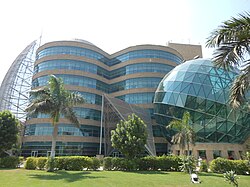
Egypt's children cancer hospital known as 57357 hospital

Culture and Heritage

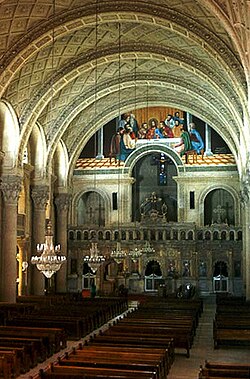
Egyptian culture is a rich tapestry of ancient, Islamic, and Coptic influences. This is evident in its architecture, from the Madrasa-Mosque of Sultan Hassan to the St. Mark Coptic Cathedral.
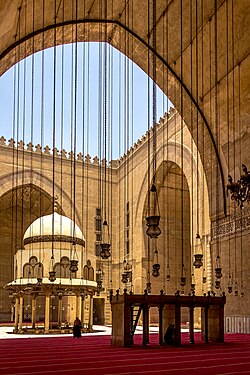
Madrasa-Mosque of Sultan Hassan

St. Mark Coptic Cathedral in Alexandria

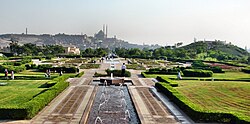
Al-Azhar Park is listed as one of the world's sixty great public spaces by the Project for Public Spaces.

Arts and Literature

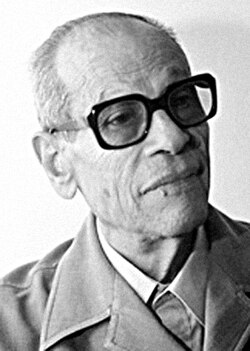
Egypt has produced world-renowned intellectuals and artists, including Nobel laureate Naguib Mahfouz. In music, the legendary Umm Kulthum remains an icon, often called "Egypt's Fourth Pyramid."
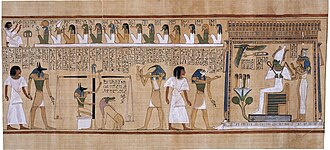
The "weighing of the heart" scene from the Book of the Dead

Naguib Mahfouz, the first Arabic-language writer to win the Nobel Prize in Literature

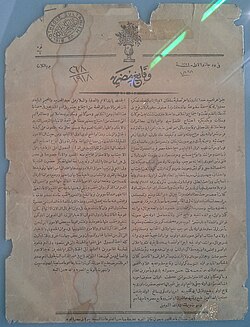
The first issue of Al-Waqa'i' al-Misriyya, printed in 1828 by the Amiriya Press. It and its predecessor Jurnal al-Khidiw are the oldest Arabic-language newspapers.

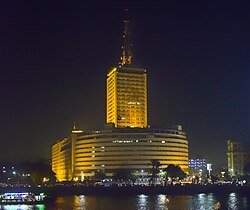
The Maspero building in Cairo, headquarters of the Egyptian Radio and Television Union

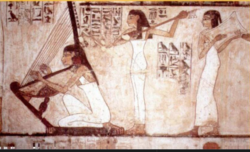
Ancient Egyptians playing music
An ancient Egyptian mural of people playing music.

Umm Kulthum, an icon of Egyptian music, often referred to as "Egypt's Fourth Pyramid".[375] In 2023, Rolling Stone ranked Umm Kulthum at number 61 on its list of the 200 Greatest Singers of All Time.[376][377]

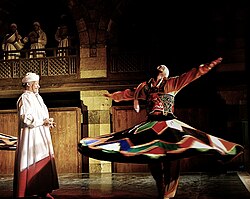
A tanoura dancer performing

Museums and Traditions

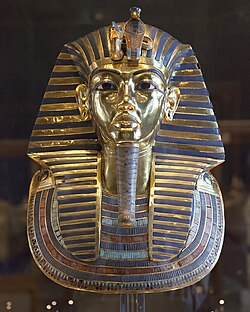
The Egyptian Museum in Cairo houses some of the world's most precious artifacts, including the burial mask of Tutankhamun. Traditional celebrations, such as Moulid, and national dishes like Koshary, continue to define the daily life of Egyptians.
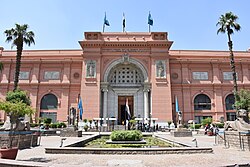
The Egyptian Museum in Cairo

Tutankhamun's burial mask is one of the major attractions of the Egyptian Museum.

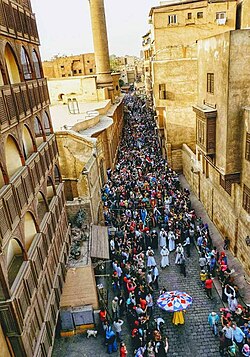
Moulid celebrations in Muizz Street, Cairo

Koshary, one of Egypt's national dishes

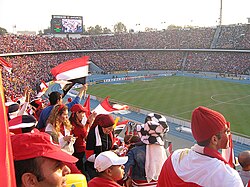
A crowd at Cairo Stadium watching the Egypt national football team

Egypt: National Overview
Category Detail
Total Area 1,010,408 km²
Estimated Population (2025) 107,868,296
GDP (PPP) 2026 Est. $2.567 Trillion
Currency Egyptian Pound (EGP)
HDI (2023) 0.754 (High)

Frequently Asked Questions

What is the official language of Egypt?

The official language is Arabic, while Egyptian Arabic is the national language spoken by the majority of the population.

Which is the largest city in Egypt?

Cairo is the largest city and serves as the nation's capital, with a metropolitan population exceeding 22 million.

What are the main drivers of the Egyptian economy?

The economy is driven by tourism, agriculture (centered in the Nile Valley), hydrocarbons (natural gas), and a growing manufacturing sector.

How does Egypt manage its water resources?

Egypt relies heavily on the Nile River for its water supply and agriculture, though it remains one of the most water-stressed countries in the world.

What is the significance of the Giza Necropolis?

The Giza Necropolis is the oldest of the ancient Wonders of the World and the only one that still exists today, making it a primary global tourist attraction.