Egg Predation: The Science of Ovivory Across the Animal Kingdom
In the natural world, survival often depends on finding the most efficient energy source. For many animals, this source is the egg. Egg predation, also known as ovivory (from the Latin ovum for egg and vorare to devour), is a carnivorous feeding strategy where animals consume the eggs of other species. Because a fertilized egg contains a developing organism, eating one is considered a form of predation—the act of killing another organism for food.
This behavior is widespread, appearing in fish, birds, mammals, arthropods, and reptiles. While some animals are generalists that eat eggs opportunistically, others have evolved into obligate ovivores, meaning they rely exclusively on eggs for survival.
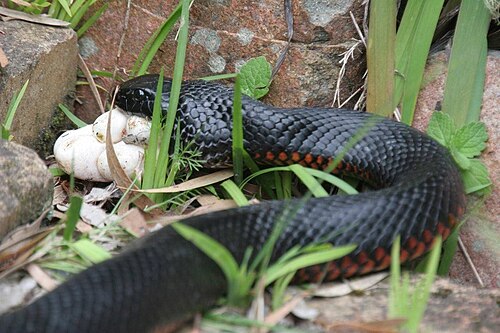
Key Facts
- Ovivory is found across diverse taxa, including mammals, birds, fish, and invertebrates.
- Obligate ovivores feed exclusively on eggs, while generalists include eggs as part of a broader diet.
- Specialized adaptations in some snakes include the loss of venom glands and the development of vertebral protrusions to break shells.
- r/K selection theory explains why some species lay massive quantities of eggs to offset predation losses.
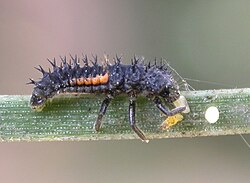
- Invasive species, such as rats and certain ladybirds, often devastate native populations by preying on eggs.
Generalist vs. Specialist Egg Predators
Generalist Predators
Generalist predators are opportunistic hunters that eat eggs when available. These animals can have a devastating impact on ground-nesting birds. For example, in Norway, 78.2% of European golden plover nests were preyed upon. Research showed that removing red foxes and carrion crows increased the percentage of pairs that successfully fledged young from approximately 18% to 75%.
![Generalist and omnivorous[5] predators like this fish crow, Corvus ossifragus, eat eggs among many other prey when they have the opportunity.](/images/b0/57/b057359c2c78ae84d2aca8c2b03660f6e1fbd58d47c42359b38388cf758e2ffe.jpg)
Specialist Egg Predators
Some species have evolved specifically to target eggs. Certain snakes, such as the African egg-eating snakes (Dasypeltis spp.) and the Indian egg-eating snake (Elachistodon westermanni), have atrophied teeth and venom glands because they are no longer necessary for capturing prey. Instead, they possess hypapophyses—bony protrusions on their vertebrae—used to break eggs internally.
The marbled sea snake (Aipysurus eydouxii) also shows extreme specialization, possessing a mutation that reduces its venom toxicity by 50 to 100 times. In the invertebrate world, the aquatic piscicolid leech (Cystobranchus virginicus) and the Brazilian thrips (Mirothrips arbiter) act as obligate egg predators.
Learned Behaviors and Tool Use
Intelligence plays a significant role in ovivory. Corvids, such as ravens, are known for developing novel foraging techniques. On Phillip Island, Australia, ravens learned to raid little penguin burrows, either by entering through the hole or digging through the roof, successfully depredating 61% of monitored burrows.
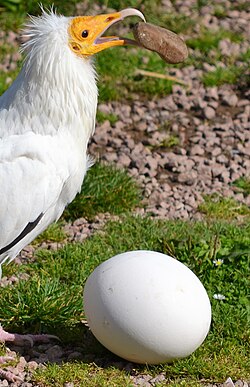
Some animals even use tools to access their food. Egyptian vultures have been observed dropping small eggs from heights to break them or throwing stones at ostrich eggs that are too large to carry. Similarly, various mongoose species throw eggs against rocks to crack the shells.
Defensive Strategies Against Predation
Prey species have evolved various methods to protect their offspring, often categorized by r/K selection theory. r-strategists produce a vast number of eggs, ensuring that even with high predation, some survive. K-strategists produce fewer offspring but invest more energy into protecting them.
Behavioral and Physical Defenses
- Active Defense: While rare in birds, the Asian long-tailed skink (Eutropis longicaudata) aggressively defends its nest against the Formosa kukri snake.
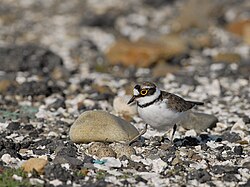
- Camouflage: Many birds lay eggs that blend into their environment. The little ringed plover lays pale, speckled eggs that mimic the pebbles of a beach.
- Strategic Nesting: Some tropical birds migrate to higher altitudes to breed, as predation rates often peak at intermediate altitudes.
![The long-tailed skink, Eutropis longicaudata, actively defends its nest against snakes.[15]](/images/91/44/9144abfe94188e39e8d4ae7e9c3a6afb3e9639ab56ce8f25986e45515ff46b74.jpg)
The Fossil Record of Ovivory
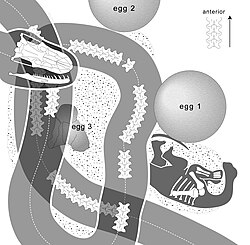
Egg predation is an ancient strategy. A Late Cretaceous fossil of the snake Sanajeh from India was found coiled around a sauropod dinosaur egg and hatchling, suggesting it was a nest predator. Interestingly, the dinosaur Oviraptor (meaning "egg thief") was originally thought to be an egg predator, but later evidence revealed it was actually brooding its own eggs.
Human Interaction and Ecological Impact
Human activity has often exacerbated the effects of egg predation. The introduction of invasive species, such as rats to offshore islands, has devastated ground-nesting seabirds. Similarly, the invasive harlequin ladybird (Harmonia axyridis) preys on the eggs of native ladybirds, prompting the prey to evolve higher levels of defensive alkaloids in their eggs.
In commercial fisheries, egg predation by haddock can lead to declines in Atlantic herring populations, complicating efforts to restore overfished stocks. To combat these threats, conservationists sometimes use poisoned bait eggs containing the avicide DRC-1339 to control raven and gull populations.
| Predator Type | Example Species | Key Adaptation/Behavior |
|---|---|---|
| Generalist | Red Fox, Raven | Opportunistic hunting of ground nests |
| Specialist | African Egg-eating Snake | Vertebral protrusions to break shells |
| Tool-User | Egyptian Vulture | Using stones to break large eggs |
| Invertebrate | Mirothrips arbiter | Obligate feeding on wasp eggs |
Frequently Asked Questions
What is the difference between an ovivore and an egg parasite?
An ovivore is a predator that consumes the egg as a food source. An egg parasite, such as a parasitic wasp, lays its own eggs inside the host's egg, and the larva grows inside the egg rather than simply eating it from the outside.
How do egg-eating snakes break eggs without teeth?
Specialized egg-eating snakes have evolved hypapophyses, which are bony protrusions on their vertebrae. These structures are used to crack the eggshell once the egg has been swallowed.
Why do some animals lay hundreds of eggs if they know predators will eat them?
This is known as an r-selected reproductive strategy. By producing a massive quantity of offspring, the species ensures that statistically, a few individuals will survive to adulthood despite high predation rates.
How do humans control invasive egg predators?
Conservationists may use targeted methods such as bait eggs treated with slow-acting avicides (like DRC-1339) to reduce the population of predatory birds that threaten endangered ground-nesting species.
Do all birds use camouflage for their eggs?
Many do, but the patterns vary by environment. For example, Eurasian curlews have green, spotted eggs to blend into tall grasses, while plovers have pale eggs to match pebbly beaches.