Édouard Chatton and the Foundation of Cellular Classification
In the vast history of biological sciences, few distinctions are as fundamental as the divide between different types of cells. This cornerstone of modern biology owes much of its nomenclature to Édouard Chatton, a French biologist whose work in the early 20th century helped reshape our understanding of cellular organization.
Born on October 11, 1883, in Romont, Switzerland, Chatton dedicated his career to the study of microscopic life. His journey began with an investigation into human pathogenic protozoa—single-celled organisms that can cause disease—specifically focusing on members of the Apicomplexa and Trypanosomatids groups.
Expanding the Scope of Microbiology
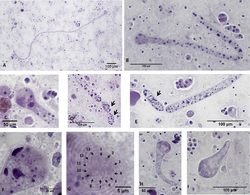
As his career progressed, Chatton shifted his focus toward the ocean. He expanded his research to include marine protists, providing significant contributions to the description of dinoflagellate protists, a diverse group of planktonic organisms known for their two flagella and often complex cell walls.
Beyond his research on marine life, Chatton played a pivotal role in the academic development of other scientists. While working at the Pasteur Institute, he served as a mentor to André Michel Lwoff, who would later become a Nobel Laureate in Physiology or Medicine. The two remained close professional associates until Chatton's passing on April 23, 1947, in Banyuls-sur-Mer, France.
The Origin of Prokaryotes and Eukaryotes
Chatton's most enduring legacy is the introduction of the terms prokaryote and eukaryote. In a 1925 paper, he first characterized the distinction between these two cellular types. A prokaryote refers to a cell lacking a distinct nucleus, while a eukaryote is a cell that contains a membrane-bound nucleus and organelles.
Although Chatton coined these terms, he did not extensively elaborate on the conceptual framework at the time. It was not until 1962 that scientists Roger Stanier and C. B. van Niel adopted his nomenclature and popularized the formal classification of all cellular organisms into these two primary categories.
Key Facts
- Full Name: Édouard Chatton
- Lifespan: 1883–1947
- Primary Contribution: Coined the terms "prokaryote" and "eukaryote" in 1925.
- Research Areas: Pathogenic protozoa, marine protists, and dinoflagellates.
- Mentorship: Mentored future Nobel Laureate André Michel Lwoff at the Pasteur Institute.
Summary of Édouard Chatton's Profile
| Category | Details |
|---|---|
| Birth Date & Place | October 11, 1883; Romont, Switzerland |
| Death Date & Place | April 23, 1947; Banyuls-sur-Mer, France |
| Scientific Field | Biology |
| Botany Author Abbreviation | Chatton |
| Key Publication Year | 1925 (Introduction of cellular nomenclature) |
Frequently Asked Questions
What are prokaryotes and eukaryotes?
Prokaryotes are simple cells that lack a defined nucleus, whereas eukaryotes are more complex cells that possess a membrane-bound nucleus and other specialized organelles.
When did Édouard Chatton first use these terms?
Chatton first coined the terms "prokaryote" and "eukaryote" in a scientific paper published in 1925.
Who popularized Chatton's cellular classification?
The classification was popularized and further developed by Roger Stanier and C. B. van Niel in a 1962 article.
What other organisms did Chatton study?
In addition to his work on cellular types, Chatton studied human pathogenic protozoa (Apicomplexa and Trypanosomatids) and marine dinoflagellate protists.
Where did Chatton work during his mentorship of André Michel Lwoff?
Chatton and Lwoff worked together at the Pasteur Institute.