Physiology: The Science of Life's Mechanisms and Functions
Derived from the Ancient Greek words phýsis (nature) and -logía (study of), physiology is the scientific study of the functions and mechanisms that operate within living systems. As a core subdiscipline of biology, it examines how biomolecules, cells, individual organs, organ systems, and entire organisms execute the chemical and physical functions necessary for life.
At its heart, physiology is concerned with the biophysical and biochemical processes that sustain life, the communication networks between cells, and the complex control mechanisms that maintain stability. When these systems function normally, the organism is in a physiological state; when they deviate into abnormal conditions, such as human diseases, it is referred to as a pathological state.
Key Facts
- Core Focus: The study of how living systems function across various levels of organization, from molecules to whole organisms.
- Homeostasis: The critical process of maintaining steady internal states despite external changes.
- Diverse Branches: Includes medical, animal, plant, cell, and comparative physiology.
- Recognition: The Royal Swedish Academy of Sciences awards the Nobel Prize in Physiology or Medicine for exceptional achievements in the field.
The Branches of Physiology
Physiology is a broad field that can be categorized by the level of biological organization, the type of organism studied, or the specific research objective.
Organization by Level and Taxa
- Cell Physiology: Focuses on the functions of individual cells.
- Plant Physiology: Studies the mechanisms specific to plant life.
- Animal Physiology: Examines the functions of animal organisms, including human physiology.
Research-Driven Subdisciplines
Comparative physiology looks across different species to understand how various organisms have evolved different solutions to similar biological challenges.
| Category | Subdiscipline | Primary Focus |
|---|---|---|
| Level of Organization | Cell Physiology | Cellular mechanisms and functions |
| Taxonomic Group | Plant Physiology | Plant-specific biological functions |
| Taxonomic Group | Animal Physiology | Animal and human biological functions |
| Research Objective | Comparative Physiology | Comparing functions across different species |
The Evolution of Physiological Thought
The Classical Era
The roots of human physiology as a medical field trace back to classical Greece with Hippocrates in the late 5th century BC. Early Greek medicine relied on humorism, the theory that the body was governed by four substances: black bile, phlegm, blood, and yellow bile (corresponding to earth, water, air, and fire). Aristotle later advanced the field by emphasizing the critical relationship between an organ's structure and its function.
Galen (c. 130–200 AD) became the founder of experimental physiology. He expanded on humoral theory by linking humors to specific temperaments (such as sanguine or melancholic) and proposed that the body consisted of three connected systems: the brain and nerves (sensation), the heart and arteries (life), and the liver and veins (nutrition).
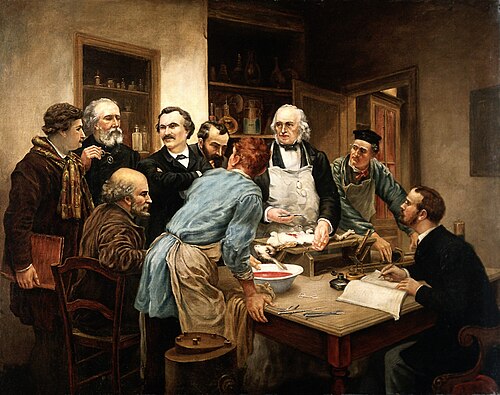
Early Modern Breakthroughs
The term "physiology" was introduced by French physician Jean Fernel (1497–1558). The following centuries saw a surge in discoveries regarding the circulatory system by figures such as William Harvey and Ibn al-Nafis. By the 1610s, Santorio Santorio began using tools like the pulsilogium to measure pulse rates and thermoscopes for temperature.
The 19th century brought rapid acceleration. In 1838, Matthias Schleiden and Theodor Schwann introduced cell theory, establishing that all organisms are composed of cells. Later, Claude Bernard developed the concept of the milieu intérieur (internal environment), which American physiologist Walter B. Cannon refined in 1929 as homeostasis—the body's ability to regulate its internal environment to maintain a steady state.
Women in Physiology
For much of its history, women were excluded from professional physiological societies. The American Physiological Society (APS), founded in 1887, did not elect its first female member, Ida Hyde, until 1902. Similarly, The Physiological Society in London only admitted its first six women in 1915, following a proposal by J.S. Haldane.
Despite these barriers, women have made monumental contributions to the field. Notable achievements include:
- Bodil Schmidt-Nielsen: The first female president of the APS in 1975.
- Barbara McClintock: Awarded the 1983 Nobel Prize for discovering genetic transposition.
- Linda B. Buck: Co-recipient of the 2004 Nobel Prize for discovering odorant receptors.
- Françoise Barré-Sinoussi: Co-recipient of the 2008 Nobel Prize for identifying HIV.
- Elizabeth Blackburn: Co-recipient of the 2009 Nobel Prize for discovering telomeres and telomerase.
Frequently Asked Questions
What is the difference between a physiological and pathological state?
A physiological state refers to the condition of normal, healthy functioning within a living system, whereas a pathological state refers to abnormal conditions, typically associated with diseases.
What is homeostasis?
Homeostasis is the process by which a living organism maintains a stable internal environment (steady state) despite changes in the external environment.
Who is considered the founder of experimental physiology?
Galen, practicing between 130 and 200 AD, is credited as the founder of experimental physiology for his use of experiments to probe body functions.
How is comparative physiology different from animal physiology?
While animal physiology focuses on the functions of animals generally, comparative physiology specifically compares these functions across different species to understand evolutionary adaptations.
Which women have won the Nobel Prize in Physiology or Medicine?
Prominent female winners include Barbara McClintock (genetic transposition), Linda B. Buck (olfactory system), Françoise Barré-Sinoussi (HIV identification), and Elizabeth Blackburn (telomeres).