Edmond Hall: The Virtuoso Clarinetist of Swing and Dixieland
Edmond Hall was a towering figure in American jazz, renowned for his mastery of the clarinet and his influential contributions to both Swing and Dixieland. From his roots in the Mississippi River valley to the prestigious stages of Carnegie Hall and international tours, Hall's career spanned decades of musical evolution. He is perhaps most remembered for his distinctive tone and the 1941 chamber jazz masterpiece "Profoundly Blue."
Key Facts
- Born: May 15, 1901, in Reserve, Louisiana.
- Instruments: Primarily the clarinet, but also proficient in alto and baritone saxophones.
- Signature Style: A devotee of the Albert System clarinet.
- Major Collaborations: Worked extensively with Louis Armstrong, Billie Holiday, and Teddy Wilson.
- Notable Achievement: Voted the second-best clarinet player in an Esquire magazine poll, trailing only Benny Goodman.
Early Life and Musical Roots
Born into a deeply musical family in Reserve, Louisiana, Hall was surrounded by talent from birth. His father, Edward Blainey Hall, played clarinet in the Onward Brass Band, and several of his maternal uncles were also musicians. While Edmond was first taught the guitar by his uncle, his transition to the clarinet was remarkably swift; his brother Herb recalled that Edmond could play the instrument within a single week of starting.
Seeking a professional life in music, Hall left his work as a farmhand in 1919 to move to New Orleans. He quickly integrated into the local scene, performing with Bud Rousell, Jack Carey, and Chris Kelley.
Rise to Prominence in New York
After stints in Florida with Lee Collins and the Alonzo Ross DeLuxe Syncopators, Hall moved to New York City in 1928. He spent several years with the Claude Hopkins orchestra and later joined Billy Hicks's Sizzling Six as a full-time clarinetist. A pivotal moment in his early career occurred on June 15, 1937, when he recorded for the first time with the legendary Billie Holiday.
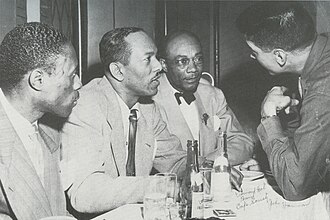
Hall's career reached a new peak during his nine-year tenure at the Café Society, starting in 1940. This venue allowed him to collaborate with a vast array of jazz giants, including Art Tatum, Coleman Hawkins, and Roy Eldridge. During this time, he also began recording as a leader in February 1941.
Technical Evolution
Influenced by the precision of Benny Goodman and Artie Shaw, Hall spent time refining his technique. He briefly experimented with the Boehm system clarinet—a more modern mechanical design—but ultimately returned to the Albert System clarinet, which provided the specific sound and feel he preferred for the rest of his life.
Collaborations with Louis Armstrong
In 1947, Hall's career took a significant turn when he was selected to accompany Louis Armstrong at Carnegie Hall. This performance was a catalyst for Armstrong, who subsequently shifted his focus from big bands to small combos, forming the All Stars. Hall eventually joined Armstrong's band, replacing Barney Bigard.
With Armstrong, Hall toured Europe, Sweden, and Australia. One of the most memorable highlights of this period was a visit to Ghana, where they performed for a massive audience of 11,000 people.
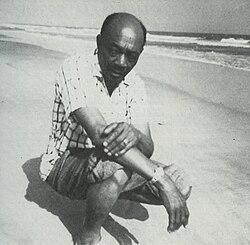
Hall also participated in a historic performance with the New York Philharmonic under the direction of Leonard Bernstein at Lewisohn Stadium, performing "Saint Louis Blues" for a crowd of 21,000. This event was later featured in the documentary Satchmo the Great.
Later Career and Final Years
After leaving the All Stars to avoid the rigors of constant touring, Hall continued to perform with close friends like Eddie Condon and Teddy Wilson. He toured Japan in 1964 with the Dukes of Dixieland and spent his final years residing in Cambridge, Massachusetts.
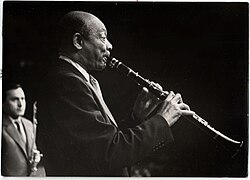
Even as jazz's popularity waned, Hall's passion remained. He often played for the sheer pleasure of the music, sometimes performing for free with local bands in pubs. His final professional engagements included a European tour in 1966 and a performance at the Governor Dummer Academy on February 3, 1967, which served as his last recording.
Overcoming Adversity
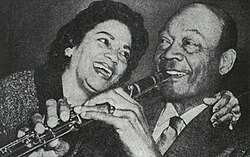
Throughout much of his career, Hall faced systemic racial discrimination. In 1951, Columbia Pictures attempted to have a white musician, Peanuts Hucko, appear on screen while Hall provided the actual clarinet recording for a soundtrack. Hall courageously refused, involving the American Federation of Musicians (Local 802). Supported by Eddie Condon and his bandmates, Hall successfully insisted on appearing on screen.
He also recounted frequent police harassment and the indignity of being refused hotel rooms with his wife, Winnie, forcing them to sleep in their car.
Summary of Career Highlights
| Period | Key Association/Group | Notable Achievement/Event |
|---|---|---|
| 1928–1935 | Claude Hopkins Orchestra | Established presence in New York City |
| 1940–1949 | Café Society | Recorded "Profoundly Blue"; collaborated with jazz elite |
| 1947 | Carnegie Hall | Accompanied Louis Armstrong, influencing the All Stars era |
| 1955–1957 | Louis Armstrong All Stars | International tours (Europe, Ghana, Australia) |
| 1952 | "Hot Versus Cool" Concert | Represented New Orleans style against Bop |
Frequently Asked Questions
What was the "Albert System" clarinet that Edmond Hall used?
The Albert System is an older style of clarinet fingering and mechanism, distinct from the more common Boehm system. Hall preferred it for its specific tonal qualities and traditional feel.
Which famous jazz musician did Edmond Hall most admire?
Hall deeply admired Benny Goodman, and it was this admiration that drove him to work extensively on his technical proficiency.
How did Edmond Hall handle racial discrimination during his career?
Hall fought discrimination through direct action and union support, most notably when he refused to be a "ghost musician" for a film, insisting that his image be seen on screen alongside his music.
What was the significance of the "Hot Versus Cool" concert?
This 1952 concert was a stylistic showdown that pitted traditional New Orleans-style jazz (represented by Hall and others) against the emerging Bop style (represented by Dizzy Gillespie and Max Roach).
Who was Edmond Hall's most significant collaborator?
While he worked with many, his association with Louis Armstrong was among the most significant, leading to global tours and high-profile performances with the All Stars.