Ecological Restoration: Healing Damaged Ecosystems for a Sustainable Future
The natural world is currently facing an unprecedented crisis. Scientists estimate that the Holocene extinction—the current species extinction rate—is 1,000 to 10,000 times higher than the normal background rate. Habitat loss stands as a primary driver of this decline, threatening not only wildlife but the essential ecosystem services that humans rely upon for survival.
While conservation focuses on preventative measures to protect existing nature, ecological restoration (or ecosystem restoration) is the proactive process of assisting the recovery of ecosystems that have been degraded, damaged, destroyed, or transformed. By retroactively repairing the environment, restoration efforts aim to reverse biodiversity loss, combat climate change, and bolster local economies.
Recognizing the urgency of this mission, the United Nations has designated 2021–2030 as the Decade on Ecosystem Restoration.
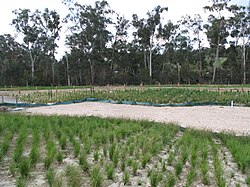
Key Facts
- Purpose: To repair damaged ecosystems rather than simply preventing further damage.
- Extinction Rates: Current rates are 1,000 to 10,000 times higher than historical norms.
- Global Scale: Hundreds of thousands of restoration projects are currently active worldwide.
- UN Initiative: 2021–2030 is the official Decade on Ecosystem Restoration.
- Core Goal: To reestablish functional ecosystems, which may or may not match historical baselines.
The Rationale for Restoration
Restoring the earth's natural systems provides a wide array of environmental, social, and economic benefits. The primary motivations include:
- Natural Capital: Recovering vital resources such as drinkable water and healthy wildlife populations.
- Climate Mitigation: Utilizing carbon sequestration (the process by which carbon dioxide is removed from the atmosphere and held in solid or liquid form) to slow global warming.
- Species Protection: Providing critical habitats for threatened or endangered species.
- Human Well-being: Improving the environmental health of nearby human populations and preserving sites of cultural importance to indigenous peoples.
- Economic and Aesthetic Value: Enhancing the beauty of landscapes and allowing for regulated subsistence harvesting.
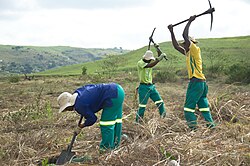
Habitat Restoration and Theoretical Foundations
Habitat restoration is the deliberate rehabilitation of a specific area to reestablish a functional ecosystem. Unlike strict preservation, restoration does not always aim for a perfect replica of the ecosystem's original condition at a specific point in time, known as the historical baseline.
To succeed, practitioners must apply several core ecological concepts:
Disturbance and Succession
Understanding how ecosystems respond to disturbances and the process of succession—the gradual process by which ecosystems change and develop over time—is vital for guiding a site toward a healthy state.
Fragmentation and Genetics
Restoration often addresses fragmentation, where large habitats are broken into smaller, isolated patches. Addressing this requires a focus on population genetics to ensure species have enough genetic diversity to survive and thrive.
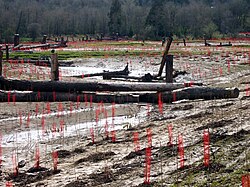
Practical Applications and Challenges
Ecological restoration manifests in various forms depending on the environment. Common applications include forest restoration to reinstate tree health, riparian zone restoration to heal river banks, and bioremediation to treat contaminated soil and water.
However, the field faces significant hurdles:
- The Science–Practice Gap: A disconnect often exists between theoretical ecological research and the actual implementation of restoration projects on the ground.
- Invasive Species: Managing invasive plants that outcompete native species is a constant challenge.
- The Emission Trade-off: There is a risk that restoration could be viewed as a substitute for necessary, steep reductions in carbon emissions rather than a complementary strategy.
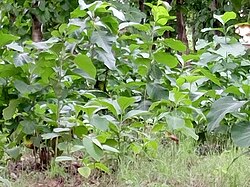
Global Implementation and Standards
Different regions have adopted various legal and strategic frameworks to guide their efforts. The European Union, for example, has introduced the Nature Restoration Law to regulate recovery efforts. In the United Kingdom, the Natural Capital Committee has recommended a comprehensive 25-year plan. Australia utilizes specific methods like bush regeneration to restore native vegetation.
To ensure quality and consistency, the International Principles and Standards for the Practice of Ecological Restoration provide a global benchmark for practitioners.
Many modern projects also integrate Traditional Ecological Knowledge, recognizing that indigenous perspectives on land management are essential for long-term sustainability.
Summary of Restoration Approaches
| Approach | Primary Goal | Key Focus |
|---|---|---|
| Conservation | Prevention | Protecting existing high-quality habitats. |
| Ecological Restoration | Recovery | Repairing degraded or destroyed ecosystems. |
| Habitat Restoration | Functionality | Reestablishing specific functional ecosystems. |
| Bioremediation | Decontamination | Treating polluted water and soil. |
Frequently Asked Questions
How does ecological restoration differ from conservation?
Conservation is a preventative approach aimed at protecting ecosystems that are still healthy to prevent them from being damaged. Ecological restoration is a retroactive approach that focuses on repairing ecosystems that have already been degraded, damaged, or destroyed.
What is a historical baseline in restoration?
A historical baseline is the original condition of an ecosystem at a particular point in time. While some restoration projects aim to return a site to this exact state, others focus on restoring general ecosystem function, which may differ from the original baseline.
Why is carbon sequestration important for restoration?
Carbon sequestration is the process of capturing and storing atmospheric carbon dioxide. Restoring forests, wetlands, and grasslands increases the earth's capacity to store carbon, which helps mitigate the effects of climate change.
What is the 'science-practice gap'?
The science-practice gap refers to the lack of integration between academic ecological research and the practical, on-the-ground application of restoration techniques. Bridging this gap is essential for increasing the success rates of restoration projects.
What is the UN Decade on Ecosystem Restoration?
The UN Decade on Ecosystem Restoration (2021–2030) is a global initiative designed to scale up the restoration of forests, farms, and wetlands to reverse biodiversity loss and improve human well-being.