Eber-Nari: The Ancient Satrapy Beyond the River
In the annals of the ancient Near East, few regions shifted hands as frequently as Eber-Nari. Known to modern scholars as Transeuphratea, this strategic territory served as a vital bridge between the great empires of Mesopotamia and the Mediterranean coast. Its very name reflects its geography, acting as a marker for those living east of the Euphrates looking westward.
The term Eber-Nari (Akkadian) or Abar-Nahara (Aramaic) literally translates to "Beyond the River" or "Across the River." This designation referred to the lands situated on the opposite side of the Euphrates from the perspective of Persia and Mesopotamia. This region was not merely a geographic marker but a powerful administrative unit—a satrapy (a provincial governorate)—that evolved through the rise and fall of the world's first superpowers.
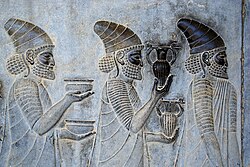
Key Facts
- Meaning: The name translates to "Beyond the River" in Akkadian, Aramaic, and Hebrew.
- Geography: Encompassed the Levant, including Phoenicia, Aramea, and Cyprus.
- Timeline: Existed as a distinct entity from the Neo-Assyrian period until the Greek conquests (c. 539 BC – 332 BC).
- Administration: Originally part of a "mega-satrapy" with Babylonia before becoming an independent province.
- Succession: Transitioned from Assyrian to Babylonian, then Achaemenid Persian, and finally Macedonian rule.
Etymology and Linguistic Roots
The naming of Eber-Nari is consistent across the primary languages of the ancient Near East. In Akkadian, it is Eber-Nāri; in Imperial Aramaic, ʿAvar Naharā; and in Hebrew, ʿĒḇer haNāhār. All three share the same literal meaning: the region west of the Euphrates.
This terminology is deeply embedded in historical and religious texts. The Biblical books of Ezra and Nehemiah refer to the region extensively. Interestingly, the root meaning is shared with the biblical character Eber, from whom the term "Hebrew" is widely believed to be derived, suggesting the Hebrews were the people who crossed the river into Canaan.
The Evolution of Political Control
The Assyrian and Babylonian Eras
The term was first established during the Neo-Assyrian Empire (911–605 BC) to describe its colonies in the Levant. Inscriptions from the 7th century BC under King Esarhaddon confirm the use of the toponym. Following the fall of Nineveh in 612 BC, the region became a battleground between the Neo-Babylonian Empire and Egypt. The Babylonians eventually secured control, maintaining the name Eber-Nari for the territory.
The Achaemenid Persian Period
When the Achaemenid Empire overthrew the Babylonians in 539 BC, they adopted the existing Aramaic and organizational structures of their predecessors. In 535 BC, Cyrus the Great initially grouped the region into a single massive satrapy known as "Babylonia and Eber-Nari," which covered southern Mesopotamia and most of the Levant.
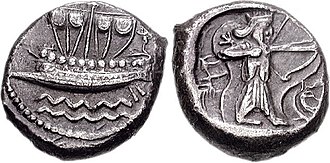
For a time, the satrap (governor) resided in Babylon, overseeing subgovernors like Tattenai. However, by approximately 450 BC, this "mega-satrapy" was split into two distinct provinces: Babylonia and Eber-Nari. According to the historian Herodotus, the tax district for this region included Aramea, Phoenicia, and Cyprus. Notably, the Qedarite Arabian tribes provided frankincense as a gift rather than paying standard taxes.
The Greek Conquest and Dissolution
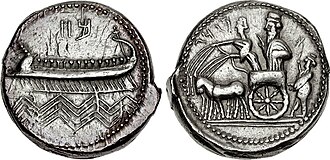
The administrative structure of Eber-Nari ended with the arrival of Alexander the Great and the subsequent Macedonian Empire around 332 BC. Later, the Seleucid Empire dissolved the satrapy entirely, incorporating the land into a broader region called Seleucid Syria. This transition shifted the meaning of "Syria" from a specific reference to Assyria (northern Iraq/Turkey) to a generic term encompassing both the former Assyrian heartland and the lands of Eber-Nari.
Summary of Regional Transitions
| Empire | Approximate Period | Administrative Status | Key Characteristics |
|---|---|---|---|
| Neo-Assyrian | 911–605 BC | Colonial Territories | Established the term "Beyond the River." |
| Neo-Babylonian | 612–539 BC | Provincial Control | Contested with Egypt before Babylonian victory. |
| Achaemenid Persian | 539–332 BC | Satrapy | Initially merged with Babylonia; later independent. |
| Macedonian/Seleucid | c. 332 BC onwards | Incorporated into Syria | Dissolved as a separate satrapy. |
Frequently Asked Questions
What does the name Eber-Nari actually mean?
Eber-Nari means "Beyond the River" or "Across the River." It specifically referred to the lands west of the Euphrates River from the perspective of the Mesopotamian and Persian empires.
Which modern-day areas were part of Eber-Nari?
The region primarily encompassed the Levant, including modern-day Syria, Lebanon, Israel, Palestine, and Jordan, as well as the island of Cyprus.
Who was the most famous ruler to organize the region?
Cyrus the Great of the Achaemenid Empire is credited with organizing the territory into a satrapy in 535 BC, initially combining it with Babylonia.
How did the region's status change under the Greeks?
Under the Seleucid Empire, Eber-Nari ceased to exist as a separate administrative unit and was absorbed into the larger province of Syria, which then began to be used as a general term for the entire region.
Was Eber-Nari mentioned in the Bible?
Yes, the region is mentioned extensively in the books of Ezra and Nehemiah using the Hebrew term ʿĒḇer haNāhār.