Duchies and Dukedoms: The History and Structure of Ducal Rule
A duchy, also known as a dukedom, is a territory, country, fief, or domain governed by a duke or duchess. In the tradition of Western Europe, the title of duke represents one of the highest tiers of nobility, typically positioned directly below the monarch and above earls or counts.
Historically, the nature of a duchy depended on its relationship with a central authority. Some were sovereign states, meaning they functioned as independent entities. This was common in regions that only later unified into nation-states, such as Italy and Germany (the latter once being the Holy Roman Empire, a federal empire). Other duchies were subordinate territories within already consolidated kingdoms, such as those found in Spain, France, the Papal States, Naples, and Sicily.
Key Facts
- Rank: Dukes generally rank just below the monarch in Western European nobility.
- Sovereignty: Duchies could be either independent sovereign states or subordinate territories within a larger kingdom.
- Terminology: In German, a duke is called a Herzog, meaning "the one who is leading [the troops]."
- Modern Status: All independent sovereign duchies have now disappeared.
- British Exception: The Duchies of Cornwall and Lancaster still generate private income for the sovereign and the heir apparent.
The Evolution of Duchies Across Europe
The German Stem Duchies
In the early era of the Holy Roman Empire (961–1806), the stem duchies (Stammesherzogtum) were central to the political landscape. These "tribal duchies" were associated with the Frankish Kingdom and corresponded to the settlement areas of major Germanic tribes. Pre-Carolingian examples include Saxony (Sachsen), Bavaria (Bayern), and Swabia (Schwaben), while Franconia (Franken) and Lorraine (Lothringen) were added in post-Carolingian times.
Duchies in France and England
Medieval France featured several prominent duchies, including Burgundy, Normandy, Brittany, and Aquitaine. In England, the system evolved differently. The Duchy of Cornwall (est. 1337) is held by the heir apparent to the throne, while the Duchy of Lancaster (est. 1351) merged with the Crown in 1399 when Henry Bolingbroke became Henry IV. Today, the revenue from Lancaster serves as the Privy Purse.
While most British royal dukedoms are now titular and lack landholdings, non-royal dukedoms may be associated with private property, though these carry no feudal privileges.
The Swedish Tradition
In Sweden, the king grants ducal titles to princes and princesses. All Swedish provinces maintain the right to include a ducal coronet in their heraldic arms.
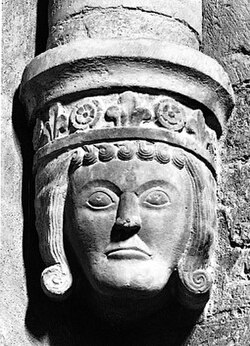
Comparative Overview of Historical Duchies
| Region | Notable Duchies | Status/Context |
|---|---|---|
| England | Cornwall, Lancaster | Private income for Royals |
| Holy Roman Empire | Bavaria, Saxony, Austria | Often sovereign or semi-sovereign |
| France | Normandy, Burgundy, Brittany | Medieval subordinate territories |
| Sweden | Västergötland, Dalarna, Uppland | Titular royal provinces |
| Baltic | Courland and Semigallia, Livonia | Regional governorates |
Global and Fictional Examples
Beyond Western Europe, ducal structures appeared in various forms, such as the Duchy of Sumenep and Surabaya in Indonesia, and several duchies in Georgia (e.g., Racha, Ksani). The concept has also been widely adopted in fiction, appearing in series such as Dune (Duchy of Atreides), The Witcher (Duchy of Toussaint), and Discworld (Duchy of Sto Helit).
Frequently Asked Questions
What is the difference between a sovereign duke and a noble duke?
A sovereign duke ruled an independent state with full authority, whereas a noble duke held a title and land as a subordinate to a monarch within a larger kingdom.
Do any independent duchies still exist today?
No, all independent sovereign duchies have disappeared over time.
Who currently holds the Duchy of Cornwall?
The Duchy of Cornwall is held by the sovereign's heir apparent. If there is no heir apparent, it reverts to the Crown until one is born.
What does the German term "Herzog" mean?
The term Herzog literally translates to "the one who is leading [the troops]."
Are all British dukedoms associated with land?
No. Aside from Cornwall and Lancaster, British royal dukedoms are titular. Non-royal dukedoms may have associated property, but it is treated as private property without feudal privileges.