Dolley Madison: Early Life, Quaker Roots, and First Marriage
Long before she became the celebrated First Lady of the United States, Dolley Madison—born Dolley Payne—navigated a life defined by strict religious discipline, family upheaval, and profound personal loss. Her journey from a log cabin in North Carolina to the bustling streets of Philadelphia shaped the resilience and social grace for which she would later become famous.
Early Life and Quaker Upbringing
Dolley Payne was born on May 20, 1768, to Mary Coles and John Payne Jr. Her parents, members of prominent Virginian families, initially settled in a log cabin in New Garden, Guilford County (modern-day Greensboro), North Carolina. The family was deeply embedded in the Quaker faith—a Christian movement known for its emphasis on peace, simplicity, and equality.
The Paynes' commitment to the faith was rigorous. After marrying in 1761, Mary and John applied for membership in the Cedar Creek meeting, though they were not admitted until 1765. Dolley, the family's third child and first daughter, grew up in this environment, though historians note she often felt constrained by the strictness of her Quaker education and upbringing.
In 1769, the family returned to Virginia. While the exact reasons for this move remain unclear, historians suggest it may have been due to a desire to be near extended family, discomfort with local religious dynamics, or failures in farming and business. Dolley later tended to downplay her North Carolina origins, often claiming she was a Virginian born while visiting an uncle.
The family eventually settled on a 176-acre farm near Scotchtown, where Dolley worked the land alongside her parents and seven siblings: sisters Lucy, Anna, and Mary, and brothers Walter, William Temple, Isaac, and John.
Faith, Freedom, and the Move to Philadelphia
The Payne household reflected the complex social dynamics of the era. While the family employed an enslaved nursemaid, Dolley's father adhered to the Quaker principle of pacifism and did not participate in the American Revolutionary War. Furthermore, John Payne advocated for manumission—the act of a slave owner freeing their enslaved people. Once it became legal in Virginia in 1782, Payne emancipated his enslaved people by 1783.
When Dolley was 15, the family relocated to Philadelphia, then the second-largest city in America. They resided at 57 North Third Street and joined the local Northern District Meeting. During this time, Dolley expanded her social circle, forming lifelong friendships with Dorothea Abrahams and Eliza Collins, and frequently visiting the Quaker community in Haddonfield, New Jersey.
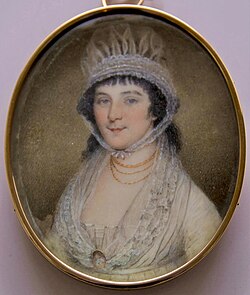
First Marriage and Family Tragedy
The transition to city life brought financial instability. John Payne attempted to establish himself as a starch manufacturer, but the business failed in 1789. This failure led to his expulsion from the Quaker meeting, which viewed the business collapse as a "weakness." Devastated, John Payne passed away on October 24, 1792.
Before his death, John had arranged for Dolley to marry John Todd, a Philadelphia lawyer. While some historians believe this was a manipulated arrangement, others suggest the marriage was based on love. The couple wed on January 7, 1790, and settled in a prestigious neighborhood. They had two sons: John Payne (born February 29, 1792) and William Temple (born July 4, 1793).
Tragedy struck in August 1793 when a devastating yellow fever epidemic swept through Philadelphia, claiming 5,019 lives in just four months. Dolley suffered catastrophic losses, losing her husband, her son William, and both her father-in-law and mother-in-law. The emotional toll was compounded two years later when two of her older brothers also died.
Legal Struggles and Recovery
Left as a widow with a surviving son and no immediate financial support, Dolley faced a legal battle for her inheritance. Although John Todd had left her money in his will, the executor—Dolley's brother-in-law—withheld the funds. Dolley sued to recover the money, receiving legal guidance from Aaron Burr, who had previously stayed at her mother's boardinghouse. Burr's support was so significant that he was named the guardian of Dolley's surviving child in her will during this period.
Key Facts
- Birth: May 20, 1768, in New Garden, North Carolina.
- Faith: Raised in a strict Quaker household; her father was a fervent member of the Cedar Creek meeting.
- First Husband: John Todd, a Philadelphia lawyer; married January 7, 1790.
- Children: Two sons, John Payne and William Temple.
- Major Tragedy: Lost her husband, one son, and parents-in-law during the 1793 Philadelphia yellow fever epidemic.
- Legal Ally: Aaron Burr provided legal advice during her dispute over her husband's estate.
| Period/Event | Details |
|---|---|
| Birth & Early Childhood | Born 1768 in North Carolina to Mary Coles and John Payne Jr. |
| Upbringing | Strict Quaker education; lived on a 176-acre farm in Virginia. |
| Move to Philadelphia | Relocated at age 15; father's starch business failed in 1789. |
| First Marriage | Married John Todd in 1790. |
| 1793 Epidemic | Yellow fever killed her husband, son William, and in-laws. |
Frequently Asked Questions
Where was Dolley Madison born?
Dolley Madison was born in New Garden, Guilford County, North Carolina, though she later claimed to be a Virginian born while visiting an uncle.
What role did the Quaker faith play in her early life?
Dolley was raised in a strict Quaker environment that emphasized pacifism and manumission. While she later felt constrained by its rigidity, the faith defined her family's social and moral structure.
Who was Dolley's first husband?
Her first husband was John Todd, a lawyer in Philadelphia, whom she married on January 7, 1790.
How did the yellow fever epidemic affect her?
The 1793 epidemic was devastating for Dolley; she lost her husband, her second son, and both of her parents-in-law within a four-month period.
How did Aaron Burr assist her?
Aaron Burr provided legal advice to Dolley when she sued her brother-in-law to recover funds withheld from her husband's will.