Dinar Currencies: Global Usage and Historical Evolution
The dinar is a currency name used by various nations across different eras and regions. While most commonly associated with the Middle East and North Africa, the term has appeared in diverse economic contexts, serving as a primary legal tender, a subunit of other currencies, and even as a non-circulating accounting tool.
From its roots in historical trade to its modern role in global finance, the dinar represents a significant part of the monetary landscape in several sovereign states.
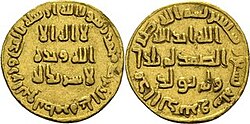
Key Facts
- The dinar is currently used as the official currency in ten different countries and regions.
- The ISO 4217 code (the international standard for currency codes) distinguishes between different dinars, such as KWD for Kuwait and DZD for Algeria.
- Some countries, like Serbia and North Macedonia, use variations of the name, such as the denar.
- The Arab Monetary Fund utilizes a non-circulating version known as the Arab Accounting Dinar.
- Historically, the dinar has been replaced by other currencies in regions including Croatia, Sudan, and South Yemen.
Current Usage of the Dinar
Today, the dinar remains a vital legal tender in several nations. These currencies vary significantly in value and economic function, though they share a common name.
Active National Currencies
The following table provides a comprehensive overview of countries currently employing a currency called the dinar or its close variants.
| Country | Currency Name | ISO 4217 Code |
|---|---|---|
| Algeria | Algerian dinar | DZD |
| Bahrain | Bahraini dinar | BHD |
| Iraq | Iraqi dinar | IQD |
| Jordan | Jordanian dinar | JOD |
| Kuwait | Kuwaiti dinar | KWD |
| Libya | Libyan dinar | LYD |
| North Macedonia | Macedonian denar | MKD |
| Serbia | Serbian dinar | RSD |
| Tunisia | Tunisian dinar | TND |
Alternative Roles of the Dinar
Beyond its use as a primary national currency, the dinar has served other specialized monetary functions.
As a Subunit
In some economic systems, the dinar does not act as the main unit of account but as a subunit. For example, the Iranian rial was historically divided into dinars, first by a factor of 1,250 and later by 100.
Non-Circulating Usage
Not all dinars are used for daily transactions. The Arab Monetary Fund employs the Arab Accounting Dinar, which serves as a unit for accounting purposes rather than as a physical currency used by the general public.
Historical Usage and Transitions
Many regions transitioned away from the dinar during the 20th century, replacing it with new currencies to reflect political changes or economic restructuring.
Former Users in the 20th Century
- Abu Dhabi: Used the Bahraini dinar (BHD) from 1966 to 1973 before adopting the United Arab Emirates Dirham.
- Bosnia and Herzegovina: The Bosnia and Herzegovina dinar (BAD) was used from 1992 to 1998, later replaced by the convertible mark.
- Croatia: The Croatian dinar (HRD) circulated from 1991 to 1994 before being replaced by the kuna.
- Yemen: South Yemen used the Yemeni dinar (YDD) from 1965 to 1990, and Yemen continued its use until 1996, eventually switching to the Yemeni rial.
- Sudan: The Sudanese dinar (SDD) was in use from 1992 to 2007, replaced by the Sudanese pound.
- Yugoslavia: The Yugoslav dinar saw extensive use from 1918 to 2003 across various iterations (YUF, YUD, YUN, YUR, YUO, YUG, YUM) before the transition to the Serbian dinar.
Ancient Precedents
The use of the name extends even further back than the 20th century; for instance, Cornwall utilized the Cornish Dynar between the years 900 and 960, which was eventually replaced by the British Pound (GBP).
Frequently Asked Questions
Which countries currently use the dinar?
The dinar (or denar) is currently the official currency of Algeria, Bahrain, Iraq, Jordan, Kuwait, Libya, North Macedonia, Serbia, and Tunisia.
What is the Arab Accounting Dinar?
The Arab Accounting Dinar is a non-circulating currency used specifically by the Arab Monetary Fund for accounting purposes.
Has the dinar ever been used as a subunit?
Yes, the Iranian rial was previously divided into dinars, utilizing divisions of both 1,250 and 100.
Which currency replaced the Yugoslav dinar?
The Yugoslav dinar, which was used in various forms from 1918 to 2003, was replaced by the Serbian dinar.
Did any non-Middle Eastern regions use a dinar?
Yes, regions such as Cornwall (Cornish Dynar), Croatia, and the former Yugoslavia have all used currencies named dinar or dynar.