ISO 4217 Currency Codes: The Global Standard for Monetary Identification
In the world of international finance, clarity is paramount. To prevent confusion between different currencies that may share the same name—such as the various types of "dollars" or "pesos"—the international community relies on ISO 4217. This standard provides a universal system of codes that ensures financial transactions, banking, and trade are processed accurately across borders.
Whether you are booking a flight, trading stocks, or exchanging money for a vacation, these codes act as the definitive language of global money. By using a standardized three-letter alphabetic code or a three-digit numeric code, the ISO (International Organization for Standardization) eliminates ambiguity in monetary reporting.
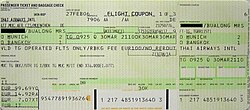
Key Facts
- Standardization: ISO 4217 defines three-letter alphabetic codes (e.g., USD, EUR) and three-digit numeric codes for currencies.
- Scope: It covers national currencies, funds, precious metals, and supranational currencies.
- Minor Units: The standard specifies the number of decimal places (minor units) used for each currency.
- X-Codes: Codes starting with "X" are reserved for non-national entities, such as gold (XAU) or Special Drawing Rights (XDR).
- Historical Tracking: The system maintains records of historic denominations that have been replaced due to inflation or political change.
Types of Currency Codes
The ISO 4217 system is divided into several categories to accommodate different types of financial assets and instruments.
National Currencies
These are the most common codes, representing the official legal tender of a country or territory. For example, JPY represents the Japanese yen and GBP represents the Pound sterling. Some currencies are used across multiple locations; the Euro (EUR), for instance, is used throughout the Eurozone and in states like Andorra and San Marino.
X Currencies (Funds and Precious Metals)
Not all codes represent a national banknote. "X" codes are used for assets that are not tied to a single country:
- Precious Metals: XAU (Gold), XAG (Silver), XPT (Platinum), and XPD (Palladium), measured in troy ounces.
- Supranationals: XDR (Special Drawing Rights) used by the International Monetary Fund.
- Funds: Specific codes for accounting units or bond market units, such as the European Composite Unit.
Numeric Codes
While alphabetic codes are more common in consumer settings, numeric codes are essential for computer systems and software that may not support Latin characters or require a purely mathematical identifier.
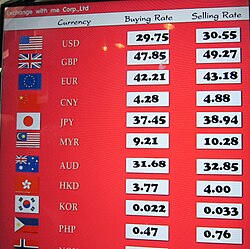
Currency Details and Formatting
Beyond the three-letter code, ISO 4217 provides critical data on how a currency is structured. One of the most important aspects is the minor unit—the number of digits after the decimal point.
| Alphabetic Code | Numeric Code | Currency Name | Minor Units | Primary Location |
|---|---|---|---|---|
| USD | 840 | United States dollar | 2 | United States |
| EUR | 978 | Euro | 2 | Eurozone |
| JPY | 392 | Japanese yen | 0 | Japan |
| BHD | 048 | Bahraini dinar | 3 | Bahrain |
| CLF | 990 | Unidad de Fomento | 4 | Chile |
Non-ISO and Unofficial Codes
Not every circulating currency has an official ISO 4217 code. This typically happens in three scenarios:
- Pegged Currencies: Some currencies are pegged 1:1 to a larger currency. For example, the Alderney pound is pegged to the Pound sterling.
- Commemorative Issues: Currencies used only for special coins or banknotes.
- De Jure Status: Currencies issued by regions whose statehood is not universally recognized, such as the Transnistrian ruble.
In these cases, unofficial codes often emerge. For example, while the official code for the Renminbi is CNY, the code CNH is frequently used for offshore Renminbi in Hong Kong.
Historical Currency Transitions
The ISO system also tracks the evolution of money. When a country experiences hyperinflation or joins a monetary union, old codes are retired and replaced. A prominent example is the transition of the French franc (FRF) and German mark (DEM) to the Euro (EUR) in 1999. Other examples include the various iterations of the Zimbabwean dollar and the Brazilian cruzeiro, which were replaced multiple times to stabilize the economy.
Frequently Asked Questions
What is the difference between a currency symbol and an ISO code?
A currency symbol (like $ or €) is a graphic representation used primarily in local pricing and consumer contexts. An ISO code (like USD or EUR) is a standardized three-letter identifier used in banking and international trade to avoid ambiguity.
Why do some currencies have 0 minor units?
Some currencies, such as the Japanese yen (JPY) or the Icelandic króna (ISK), do not use subunits (like cents) in daily transactions. Therefore, their minor unit value is 0.
What does a code starting with "X" mean?
Codes starting with "X" are reserved for assets that are not the official currency of a single country. This includes precious metals like gold (XAU) and supranational assets like Special Drawing Rights (XDR).
Can a currency be pegged to another but not have its own ISO code?
Yes. Many minor currencies are pegged 1:1 to a larger currency (such as the Jersey pound to the Pound sterling) and may not be assigned a unique ISO 4217 code because they are treated as equivalent to the base currency.
What happens to a code when a currency is replaced?
The old code is moved to the historical list. ISO 4217 maintains records of these historic denominations, including the date they were replaced and the new code that took their place.