Dillard University: A Legacy of Excellence in New Orleans
Located in the heart of New Orleans, Louisiana, Dillard University is a prestigious private historically black university (HBCU) dedicated to academic excellence and community engagement. With a rich history rooted in the post-Civil War era, the institution serves as a beacon of higher learning, blending a traditional liberal arts curriculum with a deep commitment to the African American community.
Affiliated with the United Church of Christ and the United Methodist Church, Dillard is recognized for its urban campus, distinguished faculty, and a student body of approximately 1,301 individuals. Its motto, Ex Fide, Fortis ("Strong Through Faith"), reflects the resilience and spiritual foundation that have guided the university through over a century of growth.
Key Facts
- Founded: 1930 (incorporating institutions dating back to 1868).
- Location: Gentilly neighborhood, New Orleans, Louisiana.
- Endowment: $100 million.
- Mascot: Bleu Devil.
- Athletic Affiliation: NAIA – HBCUAC.
- Notable Philanthropy: Significant donations from MacKenzie Scott and a unique culinary professorship endowed by Ray Charles.
The Foundations: From Straight University to Dillard
The origins of Dillard University trace back to the immediate aftermath of the American Civil War. On June 12, 1868, the American Missionary Association of the Congregational Church established Straight University to provide essential education to newly freed African Americans in the New Orleans region. Straight University was a pioneer in professional training, hosting a law department from 1874 to 1886, and producing graduates who were instrumental in the civil rights struggles of the Reconstruction era.
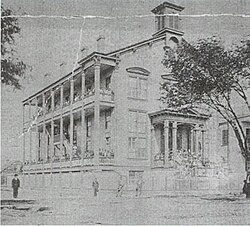
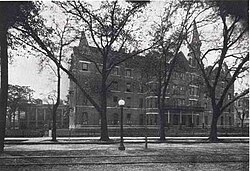
Parallel to this, the Union Normal School and New Orleans University provided critical educational services, including the Gilbert Academy secondary school. By the 1890s, New Orleans University expanded into medical training with the Flint Medical College and the Sarah Goodridge Hospital and Nurse Training School. Although the medical college closed in 1911, the legacy continued through the Flint Goodridge Hospital.
The Birth of Dillard University
By 1930, local leaders recognized the need for a larger, more prominent African American institution of higher learning in the South. Following negotiations and economic challenges, Straight College and New Orleans University merged to charter Dillard University on June 6, 1930. Named after James H. Dillard, the university shifted its focus toward a traditional liberal arts curriculum rather than vocational training.
The university's early years were marked by the tensions of the Jim Crow era. To navigate racial sensitivities regarding leadership, the board appointed Will W. Alexander, a white Southern preacher and director of the Commission on Interracial Cooperation, as the first acting president from 1935 to 1936. This strategic move allowed the university to open its doors in the fall of 1935 and attract world-class scholars in sociology, history, music, and psychology.
Campus Life and Facilities
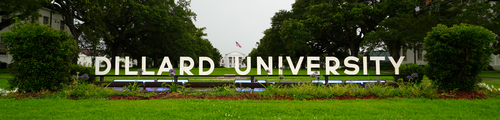
Designed by architect Moïse H. Goldstein, the 55-acre campus in the Gentilly neighborhood is renowned for its Neoclassical architecture and iconic live oak trees. The focal point of the gated campus is the "Avenue of the Oaks," a double tree-lined path that symbolizes the university's enduring strength.
Academic and Administrative Buildings
- Rosenwald Hall: The first permanent building (1934), named for philanthropist Julius Rosenwald; it currently houses administrative offices.
- Stern Hall: The science hub (1952), housing the Division of Nursing, Natural Sciences, and various specialized labs.
- Howard House: Built in 1936 and named for businessman Alvin Pike Howard, it now hosts the business program.
- Will W. Alexander Library: Dedicated in 1961, this facility houses the papers of the American Missionary Association.
Student Life and Housing
The campus features several historic residences, including Hartzell Hall (1935), Straight Hall (1936), and Williams Hall (1946). Student activity centers around Kearny Hall, which provides a lounge, cafeteria, and the Student Government Association office. For spiritual and community gatherings, the Lawless Assembly Hall (formerly Lawless Memorial Chapel) serves as a central landmark.
Resilience and Modern Growth
Dillard University has demonstrated remarkable resilience in the face of adversity. In August 2005, Hurricane Katrina caused extensive flooding and fire damage to the campus. Despite the destruction of Nelson Hall and the loss of student belongings, the university community persevered. In the spring of 2006, classes were held at the New Orleans World Trade Center and the Hilton Riverside Hotel until students could return to campus in September.
The 21st century has brought unprecedented philanthropic support. In 2003, legendary musician Ray Charles endowed a $1 million professorship of African-American culinary history, creating the first such position in the United States. More recently, MacKenzie Scott has provided transformative gifts, including $5 million in 2020 and a historic $19 million donation in 2025.
University Overview
| Category | Details |
|---|---|
| Type | Private HBCU |
| President | Monique Guillory |
| Colors | Royal Blue & White |
| Athletics | NAIA / HBCUAC (Bleu Devils) |
| Campus Size | 55 Acres |
Frequently Asked Questions
What institutions merged to form Dillard University?
Dillard University was formed through the merger of Straight College and New Orleans University on June 6, 1930.
What is the Ray Charles Program?
The Ray Charles Program is the first professorship of African-American culinary history in the country, endowed by a $1 million gift from the musician Ray Charles in 2003.
How did Hurricane Katrina affect the campus?
The campus suffered extensive flood damage, and Nelson Hall was destroyed by fire. Students temporarily attended classes at the New Orleans World Trade Center and the Hilton Riverside Hotel in 2006.
Who are some notable alumni of Dillard University?
Notable alumni include P.B.S. Pinchback (the first African-American governor in the U.S.), actress Beah Richards, and comedian/actor Garrett Morris.
What is the significance of the Avenue of the Oaks?
The Avenue of the Oaks is the focal point of the gated campus, featuring double tree-lined paths and Neoclassical architecture designed by Moïse H. Goldstein.