Xavier University of Louisiana: A Legacy of Excellence and Empowerment
Located in the heart of New Orleans, Xavier University of Louisiana (XULA) stands as a beacon of academic achievement and social progress. As a private historically black university (HBCU) with a deep Catholic heritage, Xavier has spent nearly a century preparing students for leadership in scientific, literary, and professional careers. Guided by its motto, Deo Adjuvante Non Timendum ("With God's help there is nothing to fear"), the institution continues to break barriers in higher education.
Key Facts
- Established: 1925
- Founder: St. Katharine Drexel
- Affiliation: Catholic (Sisters of the Blessed Sacrament)
- Student Population: 3,218 (Fall 2024)
- Endowment: $178 million (2022)
- Notable Distinction: First U.S. Catholic college to educate both men and women.
The Evolution of Xavier: From High School to University
The roots of the university trace back to September 27, 1915, when it opened as a high school known as the Southern University of New Orleans. It was soon renamed Xavier University in honor of Francis Xavier, the namesake of founder St. Katharine Drexel's father. In its early years, the school focused on rigorous standards, initially enrolling students only through the eleventh grade to ensure academic excellence before the first class of twenty-five graduated in June 1917.
Recognizing a critical need for Black educators, Xavier expanded in September 1917 to include a normal school—a teacher training program—to provide qualified instructors for new Black parishes. By 1921, the Louisiana Department of Education officially recognized it as a state-approved high school.
The transition to a full university occurred in September 1925 with the establishment of the College of Liberal Arts and Sciences. Under the leadership of its first president, Josephite priest Edward Brunner, the institution added a Teachers' College and a Pre-Medical Course. By March 19, 1928, the state officially recognized Xavier as a four-year college.
Academic Excellence and Specialized Programs
Xavier is widely recognized for its strength in the sciences, particularly in preparing students for medical careers. The College of Pharmacy opened on September 19, 1927, to provide the professional training required for state registration, moving away from the then-common practice of simple apprenticeship.
Today, the university is organized into two primary colleges:
- College of Arts and Sciences: Featuring divisions in Biological and Public Health Sciences, Business, Education and Counseling, Fine Arts and Humanities, Mathematical and Physical Sciences, Philosophy, Social and Behavioral Sciences, and Theology.
- College of Pharmacy: Divided into Basic Pharmaceutical Sciences and Clinical and Administrative Sciences.
Beyond traditional degrees, Xavier offers a dual degree engineering program and houses the Institute for Black Catholic Studies. Its commitment to quality is reflected in its rankings, placing 17th in the South according to U.S. News & World Report.
Campus Life and Modern Development
The urban campus has grown steadily since its inception. From the early Administration Building and "The Barn" gymnasium to modern additions like the Norman C. Francis Academic/Science Complex, the facilities reflect the university's growth. A significant milestone occurred in 2010 with the opening of the Qatar Pharmacy Pavilion, a 60,000-square-foot facility funded by a $17.5 million donation from the nation of Qatar to aid in hurricane recovery and expansion.
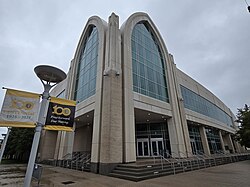
Student life is vibrant and diverse. The student body is predominantly Black or African American (approximately 75.1% as of 2020) and overwhelmingly female (over 75%). Students engage in a wide array of organizations, from the Student Government Association to professional Greek organizations. In athletics, the university's teams, known as the Gold Rush and Gold Nuggets, compete in the NAIA under the Red River Athletic Conference (RRAC).
A Voice for Change: The Xavier Herald
The Xavier Herald, the student newspaper, has been a cornerstone of campus communication since 1925. Originally titled La Cigale (French for grasshopper or cicada), it merged with another publication, Collumni, in 1928. The paper played a pivotal role during the Civil Rights Movement, advocating for more Black faculty and supporting the appointment of Dr. Norman C. Francis as the university's first lay president.
Leadership and Distinguished Alumni
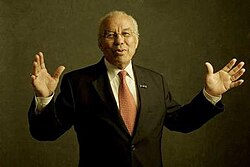
Xavier has been led by a series of dedicated presidents, moving from the religious leadership of the Sisters of the Blessed Sacrament to lay leadership. Dr. Norman C. Francis served as president from 1968 to 2015, followed by the current president, C. Reynold Verret.
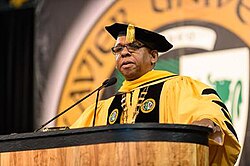
The university's impact is evident in its alumni, who have reached the highest levels of government, arts, and science. Notable graduates include Ernest Nathan Morial, the first African-American mayor of New Orleans, and Regina Benjamin, the 18th Surgeon General of the United States.
| Category | Details |
|---|---|
| Type | Private HBCU / Catholic |
| Location | New Orleans, Louisiana |
| Colors | Gold & White |
| Student/Faculty Ratio | 12.5:1 |
| Athletic Affiliation | NAIA – RRAC |
Frequently Asked Questions
Who founded Xavier University of Louisiana?
The university was founded by St. Katharine Drexel, who established the institution to provide higher education opportunities for Black students.
What are the athletic nicknames for Xavier?
The university's athletic teams are known as the Gold Rush and the Gold Nuggets.
Is Xavier University of Louisiana a religious institution?
Yes, it is a private Catholic university affiliated with the Sisters of the Blessed Sacrament.
What is the significance of the Qatar Pharmacy Pavilion?
The pavilion was made possible by a $17.5 million donation from the nation of Qatar in 2006 to help the university recover from hurricane damage and expand its College of Pharmacy.
Who was the first lay president of the university?
Dr. Norman C. Francis was the first lay president, serving from 1968 to 2015.