Dieppe Raid: The Tragic Lessons of Operation Jubilee
On August 19, 1942, the shores of Dieppe, France, became the site of one of the most controversial and costly Allied operations of the Second World War. Known as Operation Jubilee, this amphibious attack was designed to test the feasibility of seizing a defended port and to gather critical military intelligence. However, what was intended as a daring raid quickly devolved into a military fiasco, resulting in staggering casualties, particularly for the Canadian forces involved.
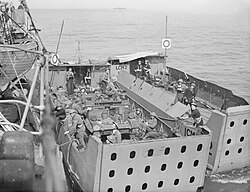
The operation involved over 6,050 infantrymen, predominantly Canadians, supported by a tank regiment and a massive naval flotilla. Despite the scale of the deployment, the raid lasted less than six hours before mounting losses forced a chaotic retreat.
Key Facts
- Date: August 19, 1942
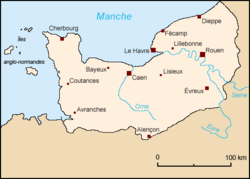
- Location: Dieppe, German-occupied France
- Primary Force: Predominantly Canadian infantry and the 14th Armoured Regiment (Calgary Regiment)
- Casualties: 3,623 Allied men killed, wounded, or captured (68% casualty rate for Canadians)
- Outcome: Decisive German victory
- Naval Strength: 237 ships and landing craft
Strategic Background and Planning
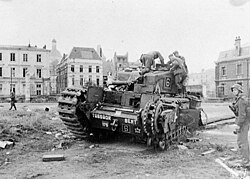
The Dieppe Raid was conceived during a period when the Allies were eager to establish a foothold in Western Europe. Louis Mountbatten played a central role in the planning of Operation Jubilee. A primary objective was to test the defenses of the "Atlantic Wall" and evaluate the effectiveness of amphibious landings against a fortified port.
Naval and Air Support
The Royal Navy provided 237 ships, but pre-landing gunfire support was severely limited. First Sea Lord Sir Dudley Pound refused to risk capital ships—such as battleships—due to the threat of the Luftwaffe (the German Air Force) and the recent loss of the HMS Repulse and Prince of Wales in Malaya. Consequently, support was limited to six Hunt-class destroyers.
The German Defense
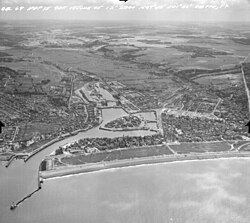
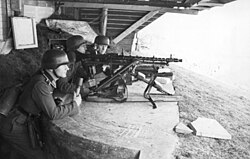
Ironically, the forces defending Dieppe were not the elite units of the Wehrmacht. The 302nd Static Division, formed in Bavaria, consisted largely of older men and second-class troops deemed unfit for the Eastern Front. Despite their lower quality and shortage of motor vehicles, they held a significant advantage: the high ground and reinforced concrete emplacements overlooking the beaches.
The Battle of August 19
The attack was divided into several landing zones, each with specific objectives. While some specialized units achieved their goals, the main assault on the city's beaches was a disaster.
Commando Successes
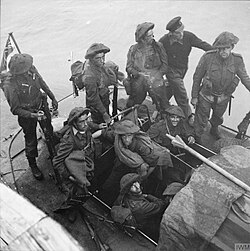
The British commandos achieved the most notable success of the day. No. 3 Commando successfully landed east of Dieppe to silence the "Goebbels" coastal battery near Berneval, preventing it from firing upon the main landing forces.
The Canadian Tragedy
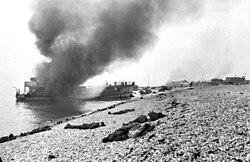
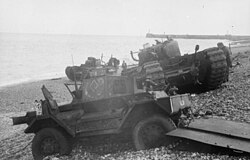
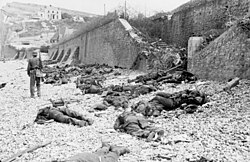
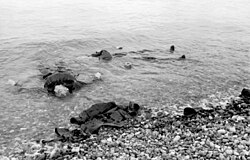
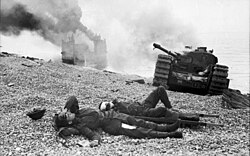
The main Canadian landings at Red and White beaches faced a nightmare scenario. Churchill tanks—heavy infantry tanks designed to support the advance—became bogged down on the shingle beaches or were destroyed by German defenses. The infantry were pinned down on the open beach, exposed to lethal machine-gun and artillery fire.
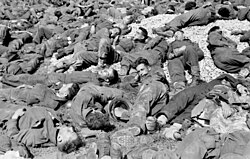
The carnage was immense. The Essex Scottish regiment suffered a 90% casualty rate, with only 52 of 553 men returning safely. The Royal Regiment of Canada, landing at Blue Beach, saw a 94% casualty rate.
The Air Battle
The Luftwaffe engaged the Royal Air Force (RAF) and Royal Canadian Air Force (RCAF) in a fierce struggle. While the Allies had numerical superiority, the German Fw 190 fighter-bombers proved highly effective. The battle was so intense that the Luftwaffe exhausted all its 20mm cannon ammunition available in the West.
Aftermath and Analysis
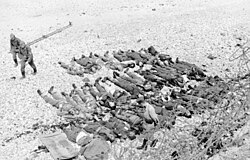
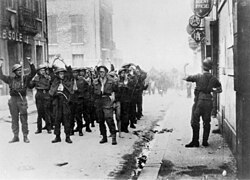
The raid ended in a retreat that left thousands of men dead or captured. The images of abandoned tanks and prisoners of war became a tool for German propaganda.
Controversy and Lessons
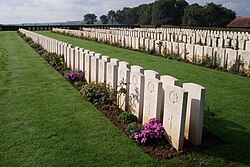
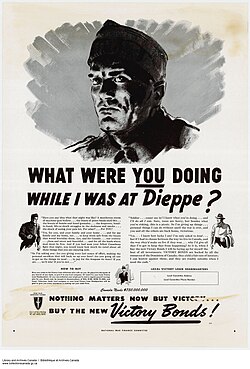
The legacy of Dieppe remains a point of contention. Winston Churchill and Louis Mountbatten argued that the "heavy cost" was justified because the lessons learned—such as the need for specialized landing craft and heavy naval bombardment—were essential for the success of the D-Day landings in Normandy in 1944. Conversely, critics like VC recipient Patrick Porteous dismissed this as "absolute nonsense," arguing that such lessons could have been learned through training exercises without the loss of thousands of lives.
The Crossword Mystery
A strange footnote to the raid involves the Daily Telegraph crossword. Two days before the attack, a clue "French port (6)" appeared with the answer "Dieppe." While the War Office and MI5 investigated whether this was a leak to German intelligence, it was eventually concluded to be a remarkable coincidence.
| Category | Allied Forces (Approx.) | German Forces (Approx.) |
|---|---|---|
| Personnel | 6,086 infantry | 1,500 (302nd Static Division) |
| Armor/Ships | 29 Churchill tanks / 237 ships | Coastal batteries / 1 sub-chaser |
| Casualties | 3,623 (Killed, Wounded, POW) | 311 killed, 280 wounded |
| Air Losses | Various (RAF/RCAF) | 23 Fw 190, 25 Dornier Do 217 |
Frequently Asked Questions
Why was the Dieppe Raid considered a failure?
It is considered a failure because the Allies failed to capture the port, suffered an extremely high casualty rate (especially among Canadians), and gathered very little military intelligence relative to the cost in human lives.
What was the role of the Churchill tanks at Dieppe?
The Churchill tanks were intended to provide armored support for the infantry. However, many became bogged down in the shingle (small pebbles) of the beach or were destroyed by German anti-tank defenses, leaving the infantry without cover.
Did the Allies learn anything useful from the disaster?
Proponents argue that Dieppe taught the Allies that a frontal attack on a fortified port was suicidal and that heavy naval gunfire and specialized landing craft were mandatory for successful amphibious operations, which influenced the planning for the 1944 Normandy landings.
Who were the primary combatants in the raid?
The attacking force consisted primarily of Canadian and British troops, with contributions from Free French, Polish, and Czechoslovak forces. The defending force was the German Wehrmacht, specifically the 302nd Static Division.
How did the Luftwaffe perform during the operation?
The Luftwaffe performed aggressively and effectively, utilizing Fw 190 fighter-bombers to harass Allied ships and troops. They were so active that they depleted their entire stock of 20mm cannon ammunition in the region.