Canadian Armed Forces
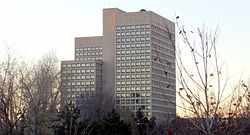
The Canadian Armed Forces (CAF) serve as the unified military force of Canada, responsible for protecting the nation's sovereignty and contributing to international security. Established in its current unified form on February 1, 1968, the CAF integrates three distinct service branches into a single cohesive organization managed from the National Defence Headquarters in Ottawa, Ontario.
The force operates under a clear chain of command, with King Charles III serving as the Commander-in-Chief, represented by the Governor General of Canada. Strategic leadership is provided by the Prime Minister and the Minister of National Defence, while operational command is led by the Chief of the Defence Staff.
![Badge of the CAF from 1968 to 2026[80]](/images/8f/c8/8fc8a1dca83428a20af97b06a9f940d2c8720f7c6a4c602ac28ca933517f62a8.webp)
Key Facts
- Active Personnel: Approximately 67,825 (2026 estimate).
- Reserve Personnel: Approximately 32,440 (2026 estimate).
- Annual Budget: US$ 37.75 billion (2026), representing 1.6% of Canada's GDP.
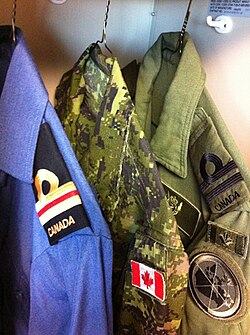
- Service Branches: Royal Canadian Navy, Canadian Army, and Royal Canadian Air Force.
- Conscription: Not practiced; the force relies on voluntary enlistment.
- Military Age: Personnel are typically between 16 and 60 years old.
Organizational Structure
The CAF is organized into three primary environmental branches, each with specialized roles and regional headquarters.
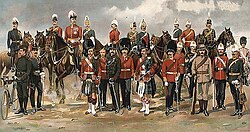
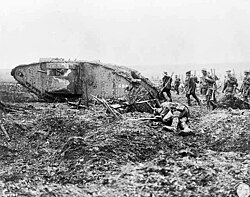
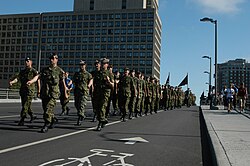
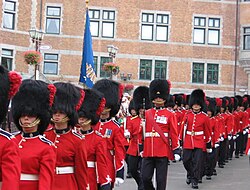
The Canadian Army
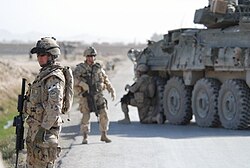
The Army is the land-based component of the CAF, divided into several divisions based on geography:
- 2nd Canadian Division: Based in Quebec (HQ: 2 CDSB Valcartier).
- 3rd Canadian Division: Based in Western Canada (HQ: 3 CDSB Edmonton).
- 4th Canadian Division: Based in Ontario (HQ: Denison Armoury).
- 5th Canadian Division: Based in Atlantic Canada (HQ: CFB Halifax).
The Royal Canadian Navy (RCN)
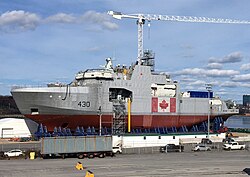
The RCN manages maritime security through two primary regional commands: Maritime Forces Pacific (MARPAC) based at CFB Esquimalt and Maritime Forces Atlantic (MARANT) based at CFB Halifax.
The Royal Canadian Air Force (RCAF)
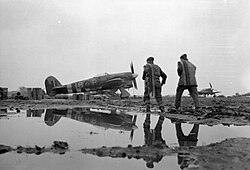
The RCAF is structured into three specialized divisions:
- 1 Canadian Air Division (CAD): Focuses on tactical aviation, expeditionary forces, and NORAD operations across various wings (e.g., CFB Trenton, CFB Cold Lake).
- 2 Canadian Air Division (2 CAD): Dedicated to aircrew and technical training (e.g., CFB Moose Jaw, CFB Borden).
- 3 Canadian Space Division (3 CSD): Manages space operations from Ottawa.
Specialized Commands and Intelligence
Beyond the three main branches, the CAF maintains high-readiness and specialized units to handle complex modern threats.
Special Operations and Intelligence
The Canadian Special Operations Forces Command includes Joint Task Force 2 for counter-terrorism and the Canadian Special Operations Regiment. Complementing this is the Canadian Forces Intelligence Command, which provides imagery intelligence, counter-intelligence, and meteorological data.
Joint Operations
The Canadian Joint Operations Command coordinates regional security through various Joint Task Forces (JTFs) covering the North, Pacific, West, Central, East, and Atlantic regions, as well as the 1st Canadian Division for expeditionary missions.
Personnel and Reserve Components
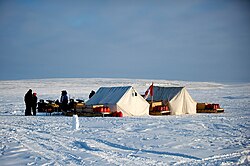
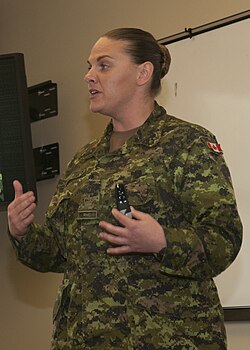
The CAF consists of a Regular Force and a Reserve Force. The Reserve Force is further divided into four sub-components: the Primary Reserve, Supplementary Reserve, Cadet Organizations Administration and Training Service (COATS), and the Canadian Rangers.
The force is composed of various personnel branches, including Naval Operations, the Royal Canadian Infantry Corps, the Royal Canadian Medical Service, and the Military Police Branch, ensuring a wide array of professional expertise.
Strategic Policy and Global Role
Since the Second World War, Canadian defence policy has focused on three primary objectives: the defence of Canada, the defence of North America in cooperation with the United States, and international contributions.
Peacekeeping and Diplomacy
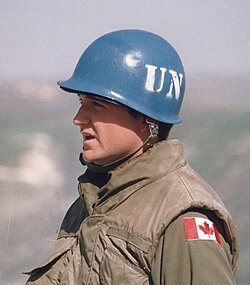
Canada has a long-standing history of peacekeeping, often deploying personnel under United Nations mandates to maintain global stability.
Summary of CAF Force Distribution
| Environment | Number of Personnel |
|---|---|
| Canadian Army | 57,176 |
| Royal Canadian Air Force | 22,138 |
| Royal Canadian Navy | 15,203 |
Frequently Asked Questions
Who is the current Chief of the Defence Staff?
The Chief of the Defence Staff is General Jennie Carignan.
What are the primary goals of Canadian defence policy?
The primary goals are the defence of Canada, the defence of North America in cooperation with U.S. forces, and contributing to international security.
Does Canada use conscription for its military?
No, the Canadian Armed Forces do not use conscription; personnel are recruited on a voluntary basis.
What is the role of the Canadian Rangers?
The Canadian Rangers are a sub-component of the Canadian Armed Forces reserve force, providing a specialized presence in remote and northern regions.
Where is the National Defence Headquarters located?
The National Defence Headquarters is located in Ottawa, Ontario.