Dictionary of National Biography: The Definitive Record of British History
The Dictionary of National Biography (DNB) stands as the gold standard for biographical reference regarding notable figures in British history. Since its inception in 1885, it has evolved from a massive print undertaking into a dynamic digital resource, providing researchers and historians with an unparalleled archive of the lives that shaped the United Kingdom and its global influence.
In 2004, the work was comprehensively updated and rebranded as the Oxford Dictionary of National Biography (ODNB). This modern iteration expanded the scope of the original project, integrating 21st-century scholarship with the foundational research of the Victorian era.
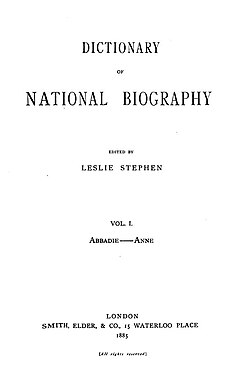
Key Facts
- First Publication: January 1, 1885.
- Original Scope: 63 volumes covering 29,120 lives.
- Modern Scale: The 2004 ODNB contains 50,113 articles covering 54,922 lives.
- Current Format: Available in 60 print volumes and a comprehensive online subscription service.
- Coverage: Includes figures from the UK and its present and former colonies up to December 31, 2000.
The Origins of the First Series
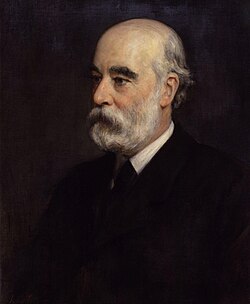
The DNB was conceived in 1882 by publisher George Murray Smith of Smith, Elder & Co. Smith sought to create a universal biographical dictionary inspired by European works like the Allgemeine Deutsche Biographie. However, after consulting with the first editor, Leslie Stephen, the focus was narrowed specifically to individuals from the United Kingdom and its colonies.
The project was a massive collaborative effort. While Stephen and his successor, Sidney Lee (who took over in 1891), provided editorial leadership, the content was produced by a mix of in-house researchers, veteran journalists, and external scholars. By 1900, over 700 contributors had helped complete the initial 63-volume series.
Evolution, Supplements, and Revisions
Because the original DNB only included deceased figures, the work required constant updating. Three initial supplements were released to cover subjects who died between 1885 and 1900, extending the record up to the death of Queen Victoria in 1901.
Throughout the 20th century, the dictionary underwent several transformations:
- 1908–1909: A revised 22-volume edition was issued.
- 1917: Ownership transferred from Smith, Elder & Co. to Oxford University Press (OUP).
- 1912–1996: A series of 12 supplements were published, generally on a decade-by-decade basis, to include figures who died during the 1900s.
- 1993: A special volume was released to include 1,086 "missing persons" who had been overlooked in previous editions.
Beyond the full biographies, a Concise Dictionary of National Biography was also produced, offering shortened entries for quick reference.
The Transition to the Oxford Dictionary of National Biography (ODNB)
In 1992, Oxford University Press began a total overhaul of the work. Under the editorship of Colin Matthew, and later Brian Harrison, the project aimed to modernize the entries while preserving the legacy of the original DNB. The goal was to blend 19th-century records with late-20th-century scholarship.
The resulting Oxford Dictionary of National Biography was published on September 23, 2004. It expanded the definition of British history to include Roman Britain and the pre-independence United States, provided the subjects were functionally part of the Empire. The project involved nearly 10,000 international contributors.
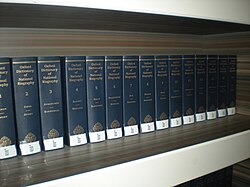
The ODNB is now primarily accessed online, allowing for continuous updates. Since 2005, new biographies have been added regularly, including figures who have only recently become notable through modern historical research.
Summary of DNB and ODNB Versions
| Feature | Original DNB (1885–1900) | Oxford DNB (2004) |
|---|---|---|
| Number of Volumes | 63 (Initial series) | 60 (Print) + Online |
| Lives Covered | 29,120 | 54,922 |
| Number of Articles | Not specified | 50,113 |
| Publisher | Smith, Elder & Co. | Oxford University Press |
| Time Scope | Up to 1900 | Up to December 31, 2000 |
Frequently Asked Questions
Who is the current editor of the ODNB?
Sir David Cannadine took over the editorship in October 2014, and he will be succeeded by William Whyte in August 2026.
How can I access the Oxford Dictionary of National Biography?
The ODNB is available as a 60-volume print set and as an online subscription service. Many UK library card holders can access the online version free of charge.
What is the difference between the DNB and the ODNB?
The DNB refers to the original series started in 1885. The ODNB is the comprehensive 2004 update that expanded the number of biographies, updated the scholarship, and introduced a digital format.
Does the dictionary include people who are still alive?
No, the scope of the dictionary is limited to deceased figures. The ODNB covers subjects up to the end of the year 2000, with subsequent updates adding those who died in the early 2000s.
Was the ODNB ever criticized for inaccuracies?
Yes, some newspapers reported factual inaccuracies upon its release. However, only 23 of the 50,113 articles were publicly queried, resulting in fewer than 100 substantiated amendments, which are corrected in the online edition.